
Related videos:
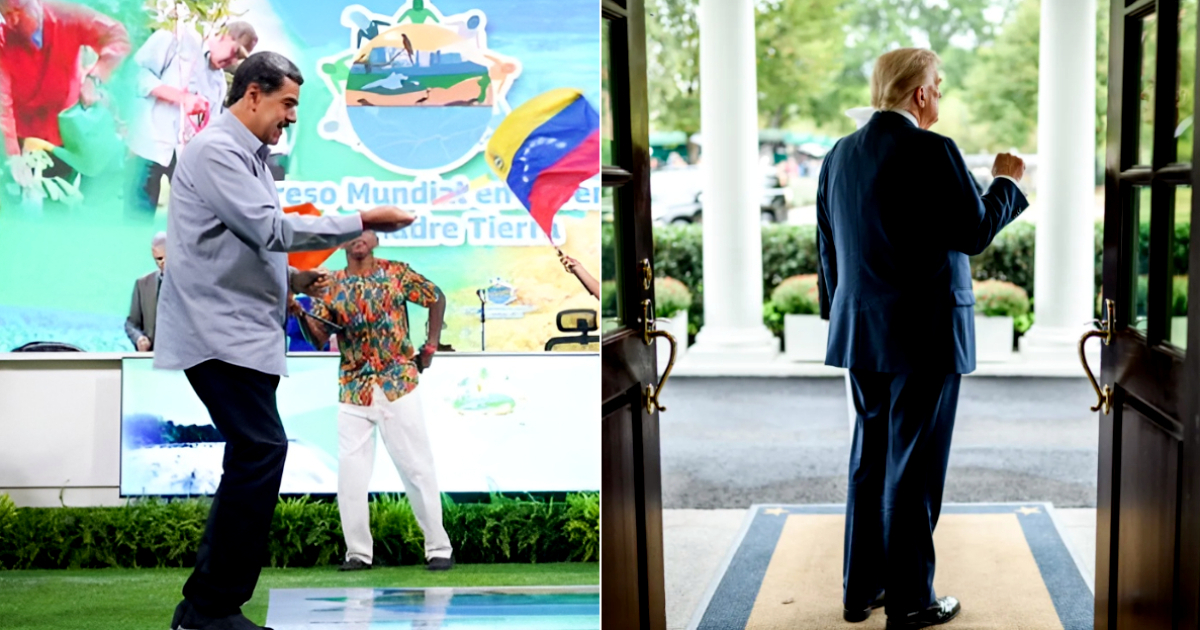
Nicolás Maduro offered the administration of Donald Trump an unprecedented agreement to avoid a potential military confrontation with the United States: granting American companies control over Venezuela's oil and mineral wealth, in exchange for restoring diplomatic relations, according to a journalistic investigation.
A report published this Friday by The New York Times cited several individuals close to the negotiations between high-ranking Venezuelan officials and the then U.S. special envoy Richard Grenell, which reportedly lasted several months before collapsing last week.
According to the consulted sources, Maduro proposed to open all current and future oil and gold projects to American companies, reverse energy exports to Washington —currently dominated by China— and terminate cooperation contracts with Chinese, Iranian, and Russian companies.
In exchange, Caracas hoped to halt the military escalation from the United States, which in recent months had deployed warships in the Caribbean and dismantled vessels accused of drug trafficking from Venezuelan territory.
Washington rejected the offer
Despite the extensive concessions, the White House rejected the offer and severed diplomatic contacts with Caracas, "killing the agreement, at least for now," according to The New York Times.
The Trump administration has maintained a hardline stance against Maduro, whom it considers a “fugitive from U.S. justice”, the leader of the so-called Cartel of the Suns, whose presence in the territory and institutions turns Venezuela into a “narco-state.”
The Secretary of State and National Security Advisor, Marco Rubio has been the main proponent of this pressure strategy, in contrast to Grenell's diplomatic approach. Rubio, of Cuban descent, considers the fall of Maduro a crucial step in weakening the communist regime in Havana.
Closed-door concessions
While publicly the chavismo responded with slogans of resistance and promises to defend Hugo Chávez's "socialist revolution", behind the scenes, according to the report, Maduro himself authorized his emissaries to offer Washington a package of concessions that would have dismantled the nationalist model upon which chavismo was founded.
The point of friction was political: the Venezuelan government refused to negotiate a potential exit of Maduro from power. “The president will not negotiate his departure,” stated the chancellor Yván Gil in remarks reported by the New York newspaper.
Since coming to power in 2013, Maduro has faced multiple internal challenges and has maintained control through the military apparatus, electoral manipulation, and the repression of protests, according to human rights organizations.
Competence from the opposition
At the same time, the opposition leader María Corina Machado, the recent winner of the Nobel Peace Prize, presented an alternative proposal in Washington that promised greater economic benefits for the United States if a democratic transition occurred.
According to The New York Times, Machado stated that U.S. companies could earn up to $1.7 trillion in 15 years if Venezuela returned to the rule of law.
His economic advisor, Sary Levy, warned that Maduro's promises do not guarantee stability: “What he offers investors is not stability, but control maintained through terror.”
Venezuela seeks to reconnect with the U.S.
The article also revealed that the state oil company PDVSA has granted Chevron full control over its joint ventures and negotiated new stakes.
Maduro is also trying to repair relations with ConocoPhillips, which was expelled from the country in 2007, in an effort to rebuild bridges with the U.S. energy sector.
Despite the tensions, the conversations reached their peak in May, when Grenell facilitated the return to Venezuela of a deported girl, and Maduro responded by releasing a U.S. veteran imprisoned in the country.
However, Rubio's resistance and the lack of agreement on the political future of the Venezuelan leader hindered progress.
“Maduro understood that reducing ties with China and Russia was the necessary price to avoid a military intervention,” said a source quoted by the Times. Apparently, it was too late, according to the signals sent by the Trump administration.
Filed under: