
Related videos:
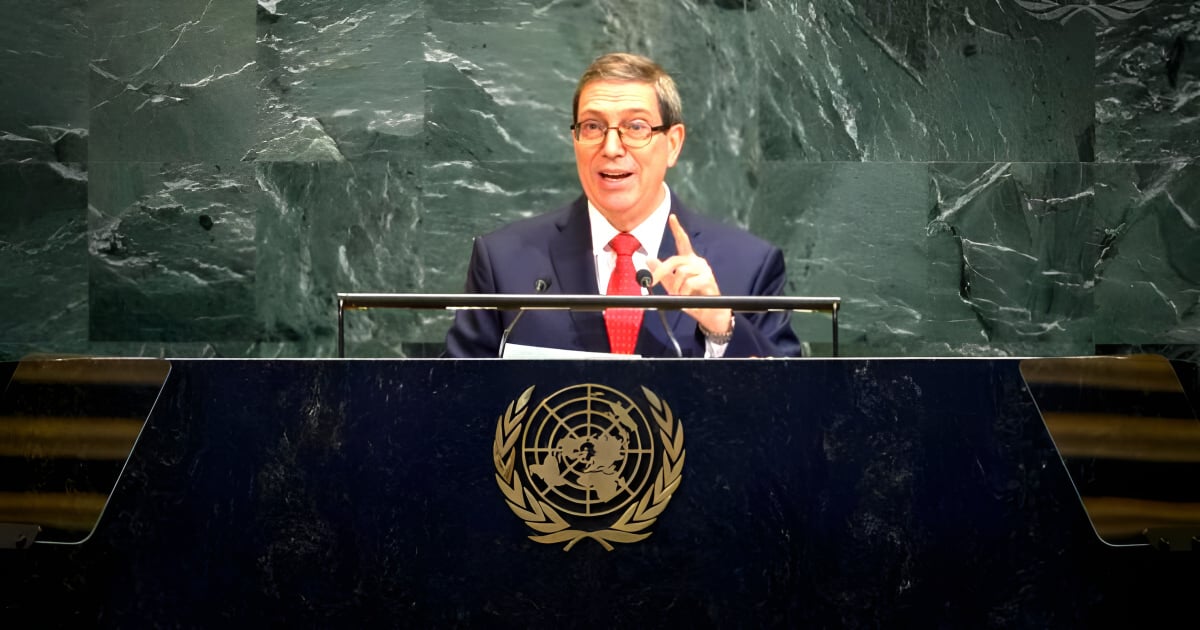
Havana is experiencing days of clear tension. On the eve of a new United Nations vote regarding the resolution that calls for an end to the U.S. embargo, Miguel Díaz-Canel's regime is facing its most adverse diplomatic scenario in three decades.
The accusations that thousands of Cubans are fighting as mercenaries in Russia's war against Ukraine, supported by documents, testimonies, and intelligence data from Ukraine, have ceased to be an uncomfortable rumor and become a central argument for Washington in its international offensive against the regime.
The U.S. pressure has already manifested in an internal cable from the State Department—leaked by Reuters—which instructed its diplomats to persuade their allies to vote against or abstain in the UN vote, where Cuba has historically garnered overwhelming support.
The text described Havana as "the second largest contributor of foreign troops to the Russian aggression after North Korea," estimating that between 1,000 and 5,000 Cubans are enrolled in Vladimir Putin's army.
The diplomatic blow hit directly at the core of a regime that until recently boasted of almost unanimous consensus against the embargo. For the first time since 1992, international support for Cuba could fracture, and the narrative of victimhood could become untenable.
The regime's reaction: Denial and damage control
Hours after the U.S. cable became known, Cuba's Ministry of Foreign Affairs (MINREX) issued an urgent statement categorically denying Cuba's involvement in the Ukrainian conflict and labeling the accusations as "false" and "defamatory."
“Cuba is not part of the armed conflict in Ukraine, nor does it participate with military personnel there or in any other country,” asserted the regime's foreign ministry in a rigid statement that raised more questions than answers and exposed Havana's nervousness. “The government of the United States has not provided and will not be able to provide any evidence to support its unfounded accusations.”
The response, however, repeated the textbook formula: deny, victimize oneself, and invoke the embargo as the cause of all the ills accumulated by a totalitarian regime clinging to power for over 60 years.
In a feeble attempt to demonstrate transparency, the MINREX reminded that between 2023 and 2025, nine judicial proceedings for mercenarism have been carried out against 40 individuals, resulting in 26 convictions and sentences of up to 14 years in prison. These proceedings were initiated by Havana as a firewall following the initial revelations of Cuban mercenaries in Ukraine, and the outcomes of the investigations have never been disclosed, having been shelved by the regime.
Beyond numbers and gestures, the regime has not provided names or details. The supposed legal action announced seems more like a gesture of internal restraint than a genuine inquiry into the networks that operated—and still operate—inside and outside the island.
The evidence, on the other hand, is overwhelming.
Reports from BBC, CNN, Politico, The Wall Street Journal, France 24, Deutsche Welle, RFE/RL, Forbes, América TeVé, and independent Cuban media such as CubaNet, El Toque, and Diario de Cuba document since 2023 the mass recruitment of Cubans in the Russian region of Ryazan, organized by Russian and Cuban intermediaries with the tolerance of Cuban authorities.
Investigations by the Ukrainian project I Want to Live have identified over 1,000 contracts signed by Cuban citizens with the Russian Armed Forces, and Ukrainian intelligence estimates the total at more than 20,000 recruits since the start of the conflict.
Non-governmental organizations such as Prisoners Defenders, experts from think tanks like Chatham House, members of the European Parliament, and officials from the Department of State have endorsed reports confirming the presence of Cuban mercenaries in Ukraine.
The magnitude, dates, and flight routes from Varadero and Cayo Coco—in line with the bilateral agreements between Moscow and Havana monitored by CiberCuba—demonstrate that the traffic of men toward the front lines of war was not an isolated phenomenon, but a state-sanctioned operation.
An unfavorable international context
The nervous reaction of the regime does not occur in a vacuum. The administration of Donald Trump, which returned to the White House in January, has reinstated a doctrine of hemispheric containment aimed at isolating the allies of Russia, China, and Iran in Latin America.
In recent weeks, U.S. troops have deployed to the Caribbean for joint exercises with the Dominican Republic and Barbados, and Southern Command has increased its naval presence off the coast of Venezuela, where Nicolás Maduro's regime is going through an unprecedented internal crisis.
In that framework, the Cuban regime is exposed as a key part of the Moscow-Caracas-Havana axis, dependent on Venezuelan oil and Russian financing, but lacking both economic and political leverage.
While Moscow uses Havana as a logistical and symbolic base for its influence on the continent, the Cuban regime clings to its old ally in search of economic support, paying the price of increasing military subordination.
The weakening of Maduro's regime exacerbates the situation: the Venezuelan collapse is cutting oil shipments to the island, and the Kremlin, preoccupied with its war, has reduced its financial support to historic lows.
With daily blackouts, soaring inflation, and sporadic protests, the Cuban regime approaches this UN vote with its already questionable internal legitimacy further eroded and its international image damaged.
The TIP 2025 Report: The Most Serious Accusation
Diplomatic complaints are joined by a new front: the 2025 Trafficking in Persons Report (TIP) from the State Department, which for the first time includes the recruitment of Cubans for the war in Ukraine as a form of state-sponsored trafficking.
The report states that Cuban authorities facilitated the issuance of passports and omitted exit stamps to conceal the departure of recruits, and that state control over mobility makes it impossible for the regime to claim ignorance. What was once considered recruitment networks is now recognized as a state policy of human trafficking.
Washington's shift elevates the case from the geopolitical to the international criminal level: Cuba is no longer just accused of collaborating with Russia, but also of using its citizens as raw material for war.
A regime in tension and afraid of solitude
In Havana, the atmosphere is one of political and diplomatic tension. The Palace of the Revolution fears a shift in trend at the UN: fewer votes, more abstentions, greater isolation.
For the first time, the embargo will not be the only topic of discussion; the war in Ukraine and Cuban mercenaries have become the focus of an international offensive that directly impacts the regime's reputation.
While Díaz-Canel remains silent and Raúl Castro fades from the public eye, Cuban diplomats are trying to extinguish a fire that is spreading faster than their rhetoric of resistance.
The old tale of the "victim of imperialism" crumbles in the face of images of young Cubans fighting—and dying—in the trenches of Donetsk under a foreign flag.
In the streets of Havana, fear is palpable: fear of the crisis, of loneliness, and of the consequences.
And in the corridors of the MINREX, the nervousness is palpable. Because this time, the UN vote will not only measure the policy of the embargo but also the extent of isolation of a regime that chose to side with the wrong side of history.
Filed under: