
Related videos:
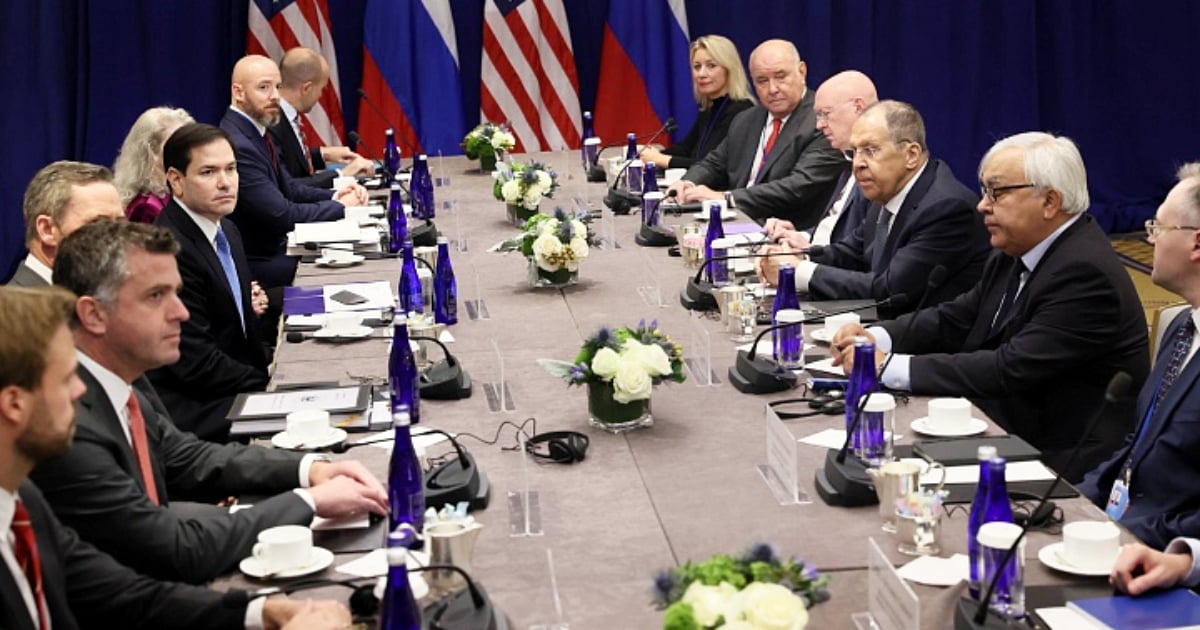
The president Donald Trump has decided to place the Secretary of State, Marco Rubio, in charge of the upcoming negotiations with Russia to be held in Budapest, a move that reshapes U.S. diplomacy and could signify a turning point in the war in Ukraine.
According to The Wall Street Journal, the decision involves the relocation of special envoy Steve Witkoff, whose role in previous negotiations—especially after the Alaska summit—was deemed ineffective by European and Ukrainian allies.
The change is significant. For the first time since the conflict began, the United States will have its highest diplomatic official directly overseeing contacts with Moscow.
The White House hopes that Rubio's authority, combined with his reputation as a pragmatic yet firm politician in the face of autocracies, will help steer a negotiation process that has thus far yielded more benefits for the Kremlin than for Kiev.
Trump, who recently praised Rubio's management following the mediation of the ceasefire in Gaza, trusts that his Secretary of State can translate that experience to the more complex terrain of the relationship with Vladimir Putin.
According to sources cited by the Wall Street Journal, the leader seeks to support his personal diplomacy with a more robust structure and greater capacity to exert pressure on Russia.
The bet is risky: Trump himself acknowledged that his last meeting with Putin in Alaska was "unsatisfactory," and his critics fear that a new summit will give the Kremlin additional time to regroup its attack strategies in Ukraine.
Rubio: The Return of Strategic Thinking
Rubio's selection is not merely a matter of names, but of political orientation. It represents the return of a structured, professional diplomacy driven by national interests, in contrast to the personal and reactive style that had predominated in the initial phase of the talks.
During his years as a senator from Florida and chairman of the Foreign Relations Committee, Rubio distinguished himself by promoting a classical vision of American foreign policy: defending democratic values, containing authoritarian powers, and providing hemispheric leadership.
That line has remained constant. For over a decade, Rubio has warned that the regimes of Cuba, Venezuela, and Nicaragua are part of a network of influence sustained by Russia, China, Iran, and North Korea, which he has described on multiple occasions as a group of autocracies that threaten democratic order and security in the hemisphere.
His new role at the forefront of negotiations with Putin can be interpreted, therefore, as a move that transcends the European scene.
International relations analysts believe that weakening Russia on the Ukrainian front also means reducing its political, financial, and military influence in Latin America, where Moscow has acted as a supporter of authoritarian regimes.
In this sense, Trump's decision could restore strategic coherence to U.S. foreign policy: striking the Kremlin where it hurts the most, in its prestige and its global ability to project power.
The diplomatic structure that was missing
One of the most commonly repeated diagnoses among analysts is that U.S. diplomacy has, until now, lacked a genuine operational process.
From Washington, expert Samuel Charap from the RAND Corporation summarized it this way in statements to the Wall Street Journal: “Trump's impatience had not allowed the process to unfold at the working group level, which made it difficult to determine whether the problem was truly Putin's intransigence.”
With Rubio, that deficiency could become a thing of the past. His style is methodical, institutional, and results-oriented, and his legislative experience has accustomed him to detailed negotiation and the technical reading of agreements.
In contrast, Witkoff had been criticized for his tendency to simplify the terms of conversations and for presenting an unrealistic image of Russian commitment to the White House. His departure, according to European diplomatic sources, was inevitable after the Alaska fiasco.
Rubio inherits, however, a complex situation: Ukraine demands security guarantees and long-range weapons, while Russia insists on maintaining control over parts of the occupied provinces in the east.
Trump, who is trying to sustain his image as a "mediating president," is seeking an agreement that will allow him to declare himself the architect of peace without appearing weak in front of Putin.
A message for Moscow… and for the Caribbean
Beyond the European balances, Rubio's presence at the negotiation table sends a broader geopolitical message.
In Washington, his appointment is interpreted as a reaffirmation of the hemispheric leadership of the United States in the face of regimes that orbit around Moscow. From Havana to Caracas, Russian influence has manifested in military cooperation, intelligence sharing, and financial support for governments in conflict with the West.
Rubio knows that network well: he has been denouncing it for years and considers it part of a strategy to project Russian power in the Western Hemisphere and promote autocracy in opposition to democracies.
His presence in Budapest aims not only to stabilize the Ukrainian front but also to steer the process of redefining Washington's global role in relation to its historical adversaries. In this regard, the new diplomatic leadership could restore the strategic coherence lost by the White House: a foreign policy that combines pressure, alliances, and moral clarity.
Trump and Rubio arrive in Budapest with different but complementary objectives. The former is eager to secure an agreement that strengthens his image as an effective negotiator. The latter is determined to ensure that the agreement does not weaken the power of the United States or strengthen Moscow and its allies.
If both manage to harmonize those goals, Budapest could become more than just a peace summit: it could be the stage where the United States reclaims its classic doctrine of power and reorganizes the global geopolitical landscape.
Filed under: