
Related videos:
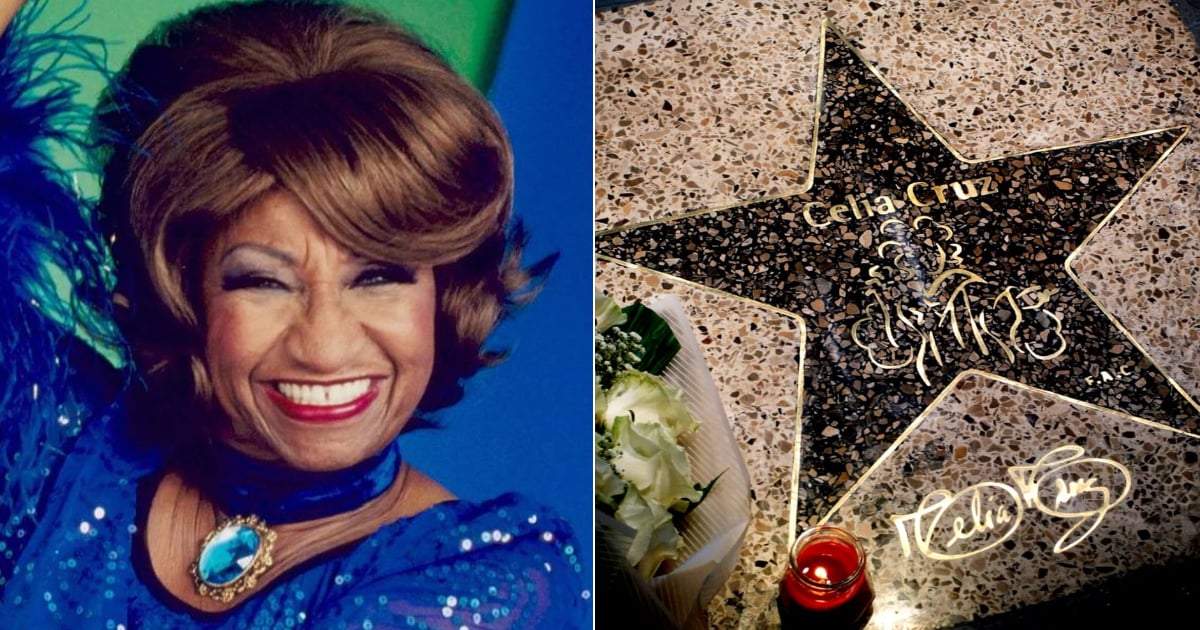
Celia Cruz now has her star in Havana. A hundred years after her birth and after decades of official censorship, the most universal Cuban singer has finally been recognized in her country with a tribute that seemed impossible: a star bearing her name in the heart of the Cuban capital.
The gesture came from the Cuban Art Factory (FAC), which unveiled the star at its venue as part of the FAC Constellation project, dedicated to iconic figures of Cuban culture. The tribute coincides with the centenary of the Queen of Salsa, whose music and legacy were silenced by the regime for decades.
Celia Cruz's star joins a select group of personalities such as Benny Moré, Juan Formell, Chucho Valdés, Alicia Alonso, Leo Brouwer, and Eusebio Leal. “The sole purpose of this tribute is to honor an artist who has left an indelible mark on our music,” expressed the entity led by X Alfonso in a social media post, where they also shared an image of the star, placed on polished granite, along with the artist's signature and a design inspired by her figure.
In the comments, FAC clarified that "the list of stars is completed each year; many names are missing and will gradually be added."
A star behind the shadow of censorship
Days earlier, the Ministry of Culture censored a theatrical gala organized by FAC and the group Teatro El Público to commemorate the centenary of Celia Cruz. The cancellation was announced by the National Center for Popular Music without explanation or mention of the artist's name, generating a wave of indignation among intellectuals, artists, and Cuban citizens.
The researcher Rosa Marquetti, biographer of Celia Cruz, denounced the incident as an act of cultural censorship. “For 60 years they have been afraid of that voice, terrified by its power to mobilize,” she wrote on social media. She also pointed out the hypocrisy of a cultural apparatus that “poured the plantation's misogyny and racism onto her,” while her figure was celebrated worldwide.
Other artists such as Sergio Benvenuto Solás, director of the International Festival of Poor Cinema of Gibara, and the critic Sergio Rafael Vidal condemned censorship with harsh words, equating it with the totalitarian methods of the 20th century.
The Art of Resistance: An Empty Chair
As a symbolic response, FAC carried out an emotional protest action on the day when the censored play was supposed to take place. For one hour, it featured an illuminated empty chair on stage, in complete silence. Then, a DJ played iconic tracks from the Guarachera of Cuba. “A masterpiece that never happened, an empty seat, silence, and the art of resistance... Celia lives,” the institution posted on its social media.
Mass for Celia in Havana: faith and music against oblivion
The tribute to Celia Cruz had another historic chapter on October 21, when a memorial mass for her centenary was celebrated at the Parish of Our Lady of Charity of Cobre, in Central Havana. Under the motto "United for Celia," the ceremony brought together artists, worshippers, and public figures, defying official silencing.
Among the attendees were the singer Haila Mompié, the musician Alain Pérez, the reggaeton artist Yomil Hidalgo, and the head of the U.S. diplomatic mission in Cuba, Mike Hammer. The official Instagram account of Celia Cruz reshared the announcement, and her executor, Omer Pardillo Cid, praised the initiative as an act of love and resistance.
The ceremony was recorded by independent media and the images shared reflected an atmosphere of emotion, respect, and pride. Celia was remembered with flowers, prayers, and songs in the same neighborhood where she was born, more than two decades after her death in exile.
"The Queen of Salsa does not need permission from any government to be what she is. It is we, the people, who need her to rebuild a country that seems to be sinking without remedy," wrote Rosa Marquetti.
Celia Cruz, born in Havana on October 21, 1925, died in exile in 2003 without being able to return to her homeland. Forbidden by the Cuban regime, her music survived in the homes and hearts of generations of Cubans. Today, 100 years after her birth, her ¡Azúcar! remains a cry of identity, freedom, and hope.
Filed under: