
Related videos:
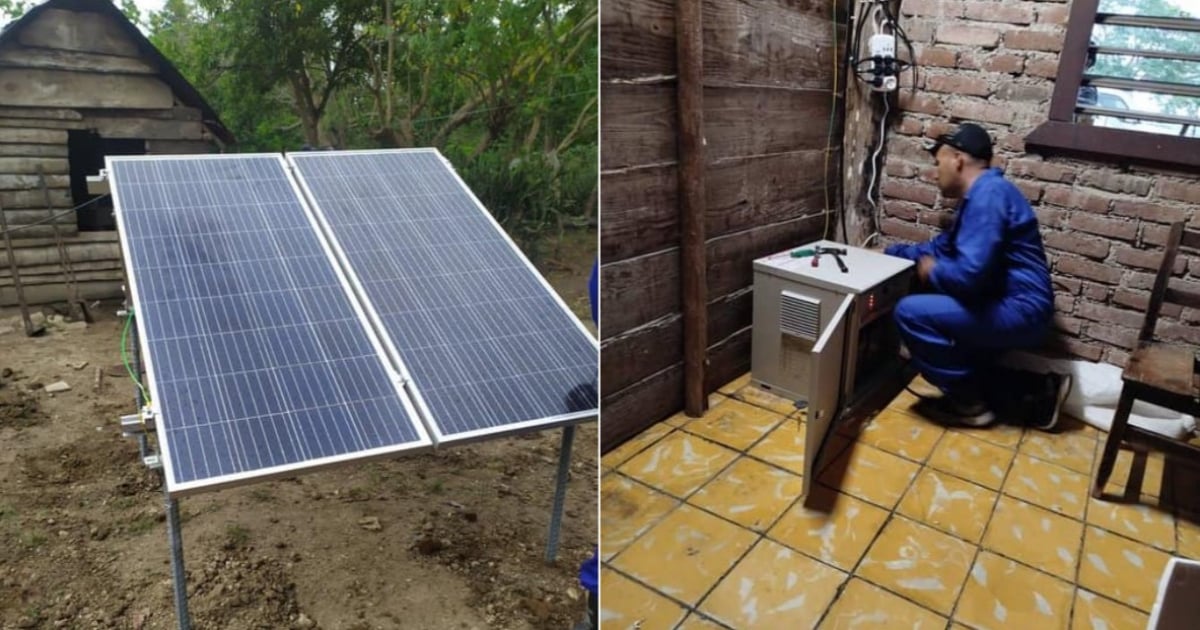
Amid the deep energy crisis that Cuba is experiencing, the Banco de Crédito y Comercio (BANDEC) in Pinar del Río announced the implementation of a new personal loan program for the purchase of equipment that operates with renewable energy sources.
According to the official website Cubadebate, the measure aims to streamline banking procedures and promote the use of sustainable technologies, but in practice, it will only benefit a limited group, becoming yet another measure that increases the gap between those who can access technology and those who cannot.
In this initial phase, loans will be directed exclusively to workers in the public health and education sectors, previously selected by their institutions, the cited source emphasized.
According to Aliden Rodríguez Cabrera, head of the Personal Banking Department at BANDEC in the province, the loans will cover 100% of the purchase price of the equipment and will have a repayment term of up to ten years, depending on the borrower's repayment capacity.
The official stated that the objective is to "facilitate access to clean technologies and ease banking procedures for their acquisition."
However, the announcement has been met with skepticism and, apparently, it has not yet been extended to other provinces.
The internet user Adisbel Alfonso Pérez indicated in a post from the state-run newspaper Girón that, after the announcement was made on social media, she went to a bank branch, apparently in Matanzas, where the employees claimed to have no information about the process and stated that they had not received any training.
"It seems it was just to create expectations, another way to appease without delivering anything concrete. Essentially, as the saying goes, it's smoke and mirrors," he wrote.
While the regime insists on promoting the image of a Cuba moving towards renewable energy, the reality is that access to these technologies still depends on job position, income level, and often, support from family members abroad.
In practice, solar energy remains a luxury on the Island: an option for a few in a country where the majority can barely afford the trickle of electricity that reaches them.
Frequently Asked Questions about BANDEC Credits for Renewable Energy in Cuba
Who can access BANDEC credits for renewable energy equipment in Pinar del Río?
The credits from BANDEC are exclusively directed towards selected workers in the public health and education sectors in Pinar del Río. This program aims to facilitate access to clean technologies, but it is limited to a specific group of beneficiaries, leaving out the majority of the Cuban population that faces a severe energy crisis.
What is the current energy situation in Pinar del Río?
The province of Pinar del Río is facing severe blackouts, with power cuts that can last up to 30 consecutive hours. The energy crisis in Pinar del Río is critical, severely impacting the daily lives of its residents. This situation adds to the national energy collapse, where outdated infrastructure and a lack of investment exacerbate the problem.
How is solar energy contributing to Cuba's energy matrix?
Solar energy in Cuba accounts for less than 5% of the national energy matrix. Photovoltaic solar parks, such as the one in La Barbarita in Pinar del Río, are attempts by the government to mitigate the energy crisis through renewable energy sources. However, the lack of storage systems and reliance on weather conditions limit their effectiveness, especially at night when demand is higher.
What challenges does the Cuban electric system currently face?
The Cuban electrical system faces challenges such as technological obsolescence, lack of maintenance, and the absence of real investments. These issues have led to widespread energy collapse, with prolonged blackouts and a structural inefficiency that prevents the stabilization of the electrical service. Despite efforts to integrate renewable energy, the infrastructure remains insufficient.
Filed under: