
Related videos:
The Cuban Electric Union (UNE) announced this Tuesday that it will not issue a forecast on electrical disruptions due to the approach of Hurricane Melissa, stating that the extent of the outages will depend on the behavior of supply and demand in the eastern provinces of the country.
According to the technical report, the availability of the National Electric System (SEN) at six in the morning was 1,574 MW, compared to a demand of 2,635 MW, resulting in a deficit of 1,099 MW. During peak hours, the impact could reach 1,200 MW, although the state-owned company acknowledged that it will not provide a stable forecast due to weather conditions.
Structural crisis in the electrical system
The report details that the crisis is exacerbated by breakdowns, maintenance issues, and lack of fuel:
- Breakdowns: Unit 3 of the CTE Carlos Manuel de Céspedes (Cienfuegos) and Unit 2 of the CTE Felton (Holguín).
- Maintenance: Units 2 and 4 of Santa Cruz del Norte and Carlos Manuel de Céspedes, as well as Unit 6 of Diez de Octubre in Nuevitas.
- Thermal limitations: 513 MW out of service.
- Lack of fuel and lubricant: 711 MW shut down.
In total, more than 700 MW remain out of service due to a fuel shortage, a figure that reflects the inability of the electrical system to sustain minimum generation even during a national emergency.
The Electric Company of Havana acknowledged that the service was affected throughout Monday and that it has not been fully restored. The maximum impact was 162 MW at 9:40 p.m., and 84 MW are still out of service. The entity admitted that “it has not been possible to adhere to the scheduled times” due to the low availability of the SEN.
Citizen discontent and complaints across the country
Citizen reports from various provinces confirm prolonged blackouts, food shortages, and a lack of official information. Residents of Santiago de Cuba, Holguín, Las Tunas, and Granma describe a critical situation, while users on social media assert that the state-owned company has left the country in the dark and without clear explanations.
The complaints also come from the center and western parts of the island, including the capital, where power outages began even before the first effects of the hurricane. Testimonials from neighbors describe scenes of entire neighborhoods without electricity during the early morning hours, families lacking water and food, and a growing sense of institutional neglect. On social media, many users assert that the state-owned company lied about prioritizing the eastern region, and that the reality reveals a country left in darkness and unattended.
Cuba is bracing for the impact of Melissa amidst an energy crisis
Hurricane Melissa continues to move slowly northward towards Cuba, while the country faces a deeper storm: the energy crisis, misinformation, and a lack of official response.
The UNE, instead of providing certainties, has suspended forecasts and reiterates that the impacts "will depend on demand." Meanwhile, millions of Cubans remain without electricity, cut off from communication, and fearful of what the night will bring, with no real solutions to an electrical collapse that seems to have no end.
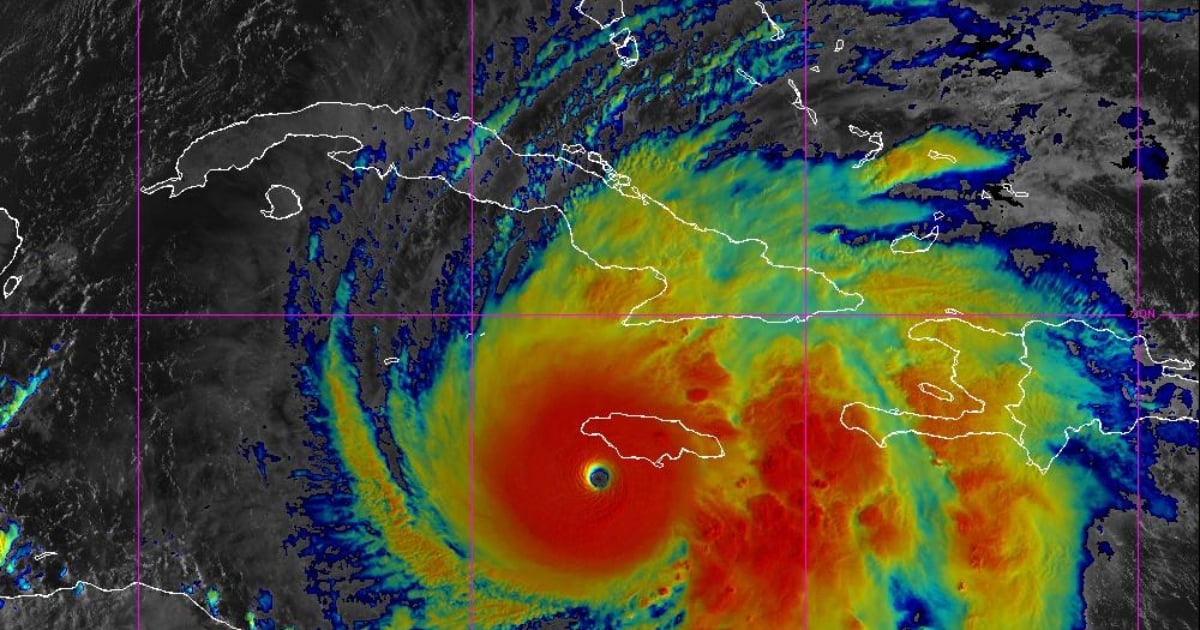
According to the Cuban Institute of Meteorology (INSMET), the hurricane is maintaining sustained winds of 280 kilometers per hour, with gusts exceeding 300 km/h and a central pressure of 901 hPa, clear indicators of its sustained intensification and immense destructive power. The system, with an extensive cyclonic structure, is moving north-northeast at 7 km/h, and its center is located south of eastern Cuba, approximately 285 kilometers from Cabo Cruz and 400 kilometers from Santiago de Cuba.
Meteorological authorities warn that the direct impact on the provinces of Granma, Holguín, and Santiago de Cuba will occur during the early hours of Wednesday, October 29, when Melissa will still maintain her status as a major hurricane. Heavy and intense rains are expected, with accumulations that could exceed 400 millimeters in mountainous and coastal areas, as well as extreme waves of up to seven meters along the southeastern coastline.
INSMET urges the public to stay informed through official reports and to adhere to civil protection measures in light of a meteorological event they classify as "extremely dangerous," due to both its intensity and slow movement.
Filed under: