
Related videos:
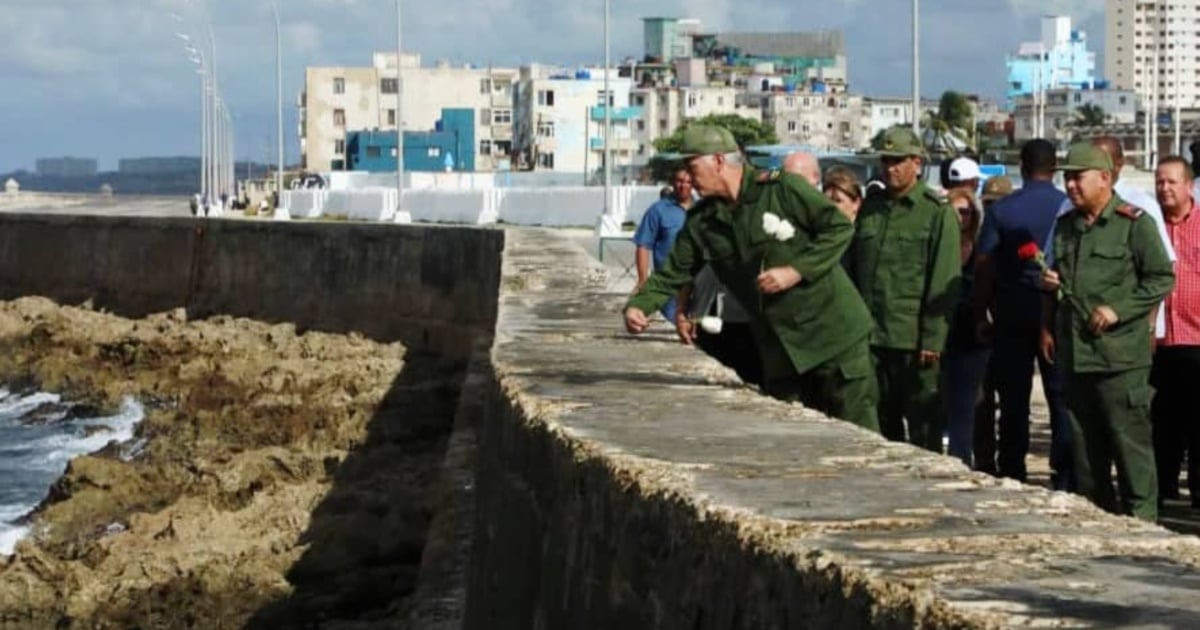
While Melissa poses an extremely dangerous threat, with catastrophic rains and winds, the Cuban leader Miguel Díaz-Canel led the central event at the Havana Malecón in commemoration of the 66th anniversary of Camilo Cienfuegos' disappearance.
The political-cultural ceremony took place in the presence of members of the Political Bureau, veterans of the Revolution, and a representation of the public who came to place flowers in the sea.
The simultaneity of the commemoration with the deteriorating meteorological situation in Cuba and the Caribbean raised questions about the contrast between the ceremonial display and the urgency of civil protection in the lead-up to potentially greater impacts.
In its evening update, the NHC reported that the eye of the hurricane crossed Jamaica—after making direct landfall on the southwest coast—and was emerging over the northern coast, maintaining a scenario of deadly flash floods, landslides, and destructive winds across the island.
The agency emphasized that "very dangerous hours lie ahead" and urged people to stay in shelters.
At the same time, it positioned the center of Melissa moving towards the southeast of Cuba during the night and early morning of Wednesday, with forecasts of widespread damaging winds, storm surge of 8 to 12 feet and rainfall accumulations of 10 to 20 inches, with peaks of up to 25 between Manzanillo, Santiago de Cuba, and Guantánamo; the message was clear: complete preparations and immediate protection in the eastern part of the country.
Even though the weather report called for expedited protective measures in eastern Cuba and maintained alerts for the Bahamas and Turks and Caicos, in Havana, authorities and organizations such as the Ministry of Tourism highlighted their presence and "commitment to historical memory" during the ceremony for Camilo Cienfuegos.
The image of the event at the Malecón —with leaders, guests, and the public— contrasted with the atmosphere of tension and preparations that spread across the eastern provinces, where the Civil Defense was activating evacuation and safety plans.
The contrast sparked criticism for the incongruity of holding a mass and symbolic event in the capital while calling on citizens for discipline, restraint, and focus on protecting life in the face of a powerful hurricane.
According to the NHC, following its passage through eastern Cuba, Melissa would move over southeastern Cuba early Wednesday, maintaining the risk of hurricane-force winds.
In this high-impact regional context, the continuity of the political agenda in Havana reinforced the perception of disconnection between the official discourse and the priorities imposed by the emergency.
With nightfall and the eastern region of the country facing increasingly severe conditions, specialists continue to urge: take shelter, comply with the instructions from Civil Defense, and remain vigilant to official announcements.
Meanwhile, the image of a leadership engaged in patriotic solemnities while a large-scale hurricane threatens millions of Cubans summarizes the paradox of a day in which political ritual competed with meteorological urgency.
Filed under: