
Related videos:
The Cuban government once again made its political arrogance clear, even in the midst of the devastation caused by Hurricane Melissa.
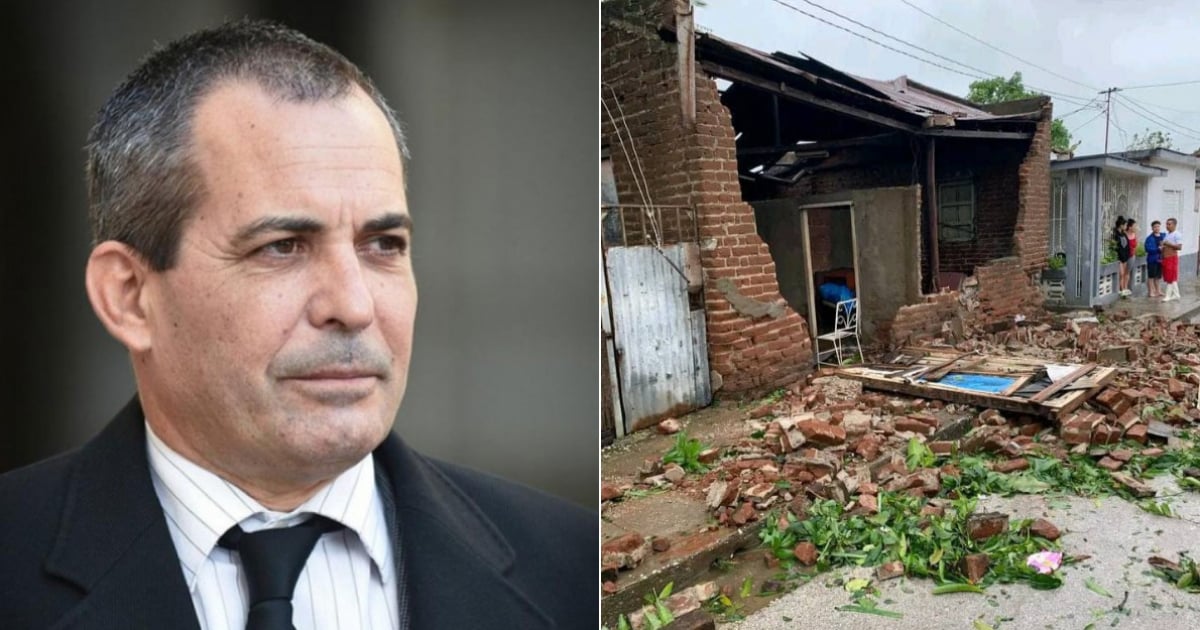
While thousands of families in eastern Cuba remain without electricity, without drinking water, and with destroyed homes, a high-ranking official of the regime described the offer of humanitarian aid from the United States as "handouts."
The comment was made by Juan Antonio Fernández Palacios, the Cuban ambassador to Belgium and the European Union, in a message from Deputy Foreign Minister Carlos Fernández de Cossío, who confirmed that Havana is "in contact" with the State Department to learn the details of the assistance offer.
"No more handouts or conditions. The international community has overwhelmingly stated what needs to be done. Nothing more to say," wrote Fernández Palacios on X, reflecting the regime's traditional disdain for any gestures of U.S. cooperation.
The comment generated outrage among Cubans both inside and outside the country, who questioned the government's indifference to the tragedy and criticized the prioritization of political rhetoric over the well-being of the population instead of accepting help.
"If you truly care about the well-being of the people, accept to step aside and not profit from or weaponize donations as you always do," expressed a user.
"The problem has always been you all, who want to manage the aid to sell it to a starving people. Thieves! Murderers!" said a user.
"I hope they don't back down with the absurdity of refusing help from the USA. Think of the thousands of Cubans who have lost everything!" noted another internet user.
The controversy arises after U.S. Secretary of State, Marco Rubio announced Washington's willingness to provide immediate humanitarian aid to the Cuban people without the regime's intermediaries.
In a statement, the Department of State specified that there are legal exemptions for private donations of food, medicine, and emergency supplies, and urged those who wish to contribute to contact the humanitarian aid office for Cuba directly.
Havana, however, responds with the same rhetoric as always: rejection and distrust, even in the face of an offer that could alleviate the suffering of thousands of affected individuals.
Instead of facilitating the entry of medicines, water, and food supplies, the government becomes entangled in speeches about sovereignty while blaming the "blockade" for the lack of resources to address the disasters.
The humanitarian situation in eastern Cuba remains dramatic.
In provinces such as Santiago de Cuba, Holguín, and Granma, entire communities remain isolated, without power or communication. Hospitals lack basic supplies, and the rains have worsened outbreaks of diseases and food shortages.
Nevertheless, Foreign Minister Bruno Rodríguez Parrilla has not officially commented on the offer from the United States.
His silence contrasts with the speech of Ambassador Fernández Palacios, who seems to speak for a government more concerned with maintaining its ideological narrative than with saving lives.
He is not the only one. Julio Cesar Crespo Diéguez, a Cuban diplomat in Ecuador, stated that Cuba is ready to receive humanitarian assistance "without political conditions."
History repeats itself: in the face of every natural disaster, Havana prioritizes political pride over the well-being of its citizens.
What would be an opportunity for cooperation and relief for other countries becomes yet another ideological battleground for the regime.
Meanwhile, the people - once again - are paying the consequences of the isolation and stubbornness of the authorities.
Filed under: