
Related videos:
The Cuban regime stated on Monday that it "appreciates" the humanitarian assistance offered by the United States for the victims of Hurricane Melissa, but made it clear that all foreign aid will be channeled "in full coordination with the authorities" of the country. This statement contradicts the announcement from Washington and the position of the Catholic Church, which claimed that the aid would be delivered directly and without state intermediaries.
In a statement from the Ministry of Foreign Trade and Foreign Investment (MINCEX), the government acknowledged the offer of three million dollars in material assistance through the Catholic Relief Service of the United States, and noted that this adds to donations from other religious organizations in the same country.
However, the official text emphasizes that the allocation of resources will be carried out “in accordance with the requirements that align with the assessment of damage and more urgent needs” and “in coordination with our authorities,” a formulation that reaffirms state control over the aid process.
"We have a positive experience of years of cooperation related to the humanitarian work of the Catholic Church in Cuba, which has successfully materialized in full coordination with our authorities," the statement notes.
The regime also insisted that state institutions work "to channel contributions in the fastest and most efficient way," and added that humanitarian gestures "are appreciated," but always within the framework of their official mechanisms.
The government's response comes just hours after the Office of Western Hemisphere Affairs at the State Department reported that the aid from Washington would be distributed in direct coordination with the Catholic Church, without the intervention of the state apparatus, to ensure transparency and speed in delivering assistance to the most affected areas of eastern Cuba.
Also, the Conference of Catholic Bishops of Cuba had confirmed that the assistance would be channeled through ecclesiastical institutions, “without going through the structures of the regime,” which many interpreted as a gesture of humanitarian autonomy in response to the emergency.
The contrast between the messages highlights the struggle for political and symbolic control over international aid during times of crisis. While Washington and the Church seek to directly deliver resources to those affected, the regime attempts to maintain its role as a necessary mediator, a pattern that has repeated itself in previous natural disasters and has generated distrust among Cubans due to the lack of transparency in the distribution of donations.
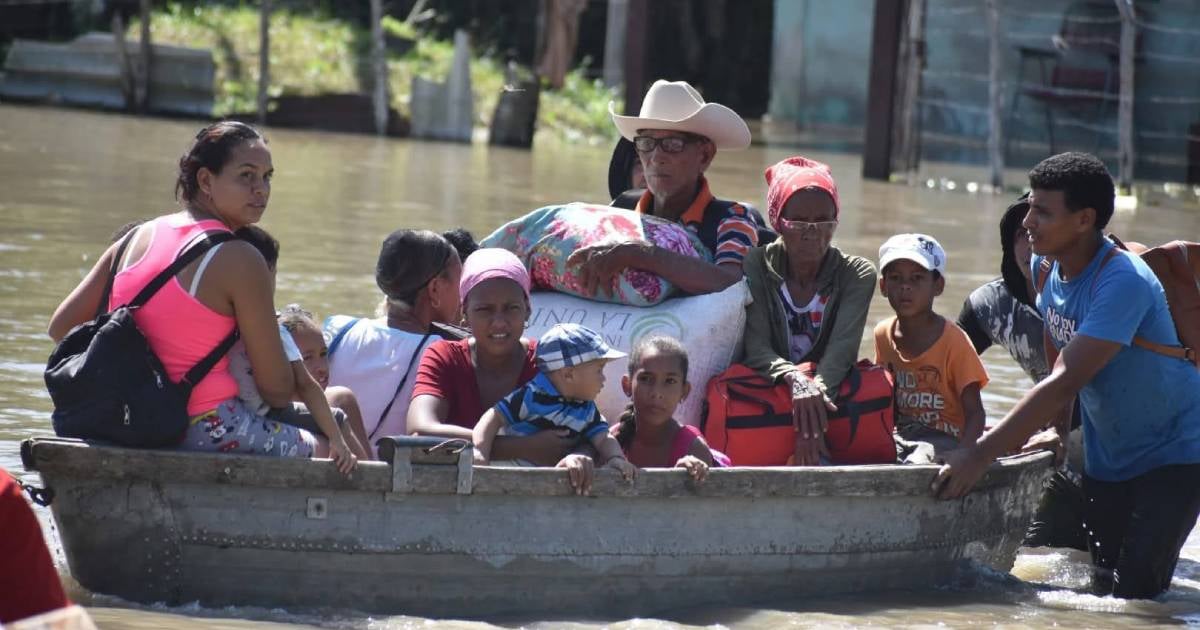
The hurricane Melissa, which struck the eastern part of the country on October 29, caused severe damage to homes, crops, and electrical networks in Guantánamo, Granma, Holguín, and Santiago de Cuba, where thousands of families are still without electricity or stable access to food and drinking water.
Filed under: