
Related videos:
“Each hurricane that passes through the island reveals a Cuba in rags that coexists with us even after 65 years,” wrote the poet, storyteller, and playwright Nelson Simón in a text published on his Facebook profile, regarding the devastation caused by Hurricane Melissa.
From Pinar del Río, one of the provinces most affected by hurricanes in recent years, the author of In the Shadow of the Blooming Boys and Witches, Spells, and Other Nonsense reflected on the deep social fragility revealed by each of these events.
"We should not wait for a disaster to happen in order to show solidarity. Solidarity must be a fundamental part of our social system," he emphasized.
Simón observes in the current wave of solidarity, visible on social media and news outlets, a more complex face that “reaffirms an unequal Cuba where some can donate trucks and tons, while others, even if they wanted to, cannot give even a bar of soap.”
In his opinion, this situation highlights "a poor tax policy and redistribution of wealth" and confirms that the country has moved towards "a society where some live with capitalist standards of living while others exist in a state of precarity that is supposed to be pre-revolutionary."
The writer called for allocating more social funds to eradicate poverty and create genuine development programs that provide opportunities.
"Many of the people living in those conditions are victims, they lack the mechanisms and tools to move forward," she warned.
He also questioned the authorities' lack of foresight regarding recurring damages. "What we see now was obvious to everyone who is alarmed now. It highlights the poor functioning of many structures and organizations," he noted.
According to his analysis, internal emigration is one of the clearest symptoms of that structural crisis. "Did some people think that people emigrate because they want to see El Capitolio or El Malecón?" he sarcastically remarked.
Among its proposals is the establishment of a Disaster Relief Fund and the expansion of insurance policies for homes, crops, and other assets.
“No matter how costly it may seem, it will always be less expensive to prevent,” he states, recalling that the hydraulic works carried out in Pinar del Río after Hurricane Alberto (1982) prevented subsequent flooding.
Simón also criticized the precariousness and improvisation with which recovery processes are often handled.
"Each recovery is done in a hasty, improvised, and provisional manner. We need to apply more innovative and sustainable concepts. The recent hurricanes have shown that we are increasingly vulnerable to climate change, and we cannot build today only to have it collapse tomorrow," he argued
The writer also emphasized the ethics of assistance. "Sensitivity is not only demonstrated by giving; it is also evident in respecting the dignity, privacy, and fragility of the vulnerable. The act of giving cannot be a spectacle," he warned.
Simón concluded his reflection with a call to moral and political responsibility, insisting that "as long as there is a Cuban living in those conditions, every wasted, diverted, lost, or embezzled cent is an affront, a crime, a shame."
He recalled that in Pinar del Río alone, there are still hundreds of families waiting for a roof or housing after previous cyclones.
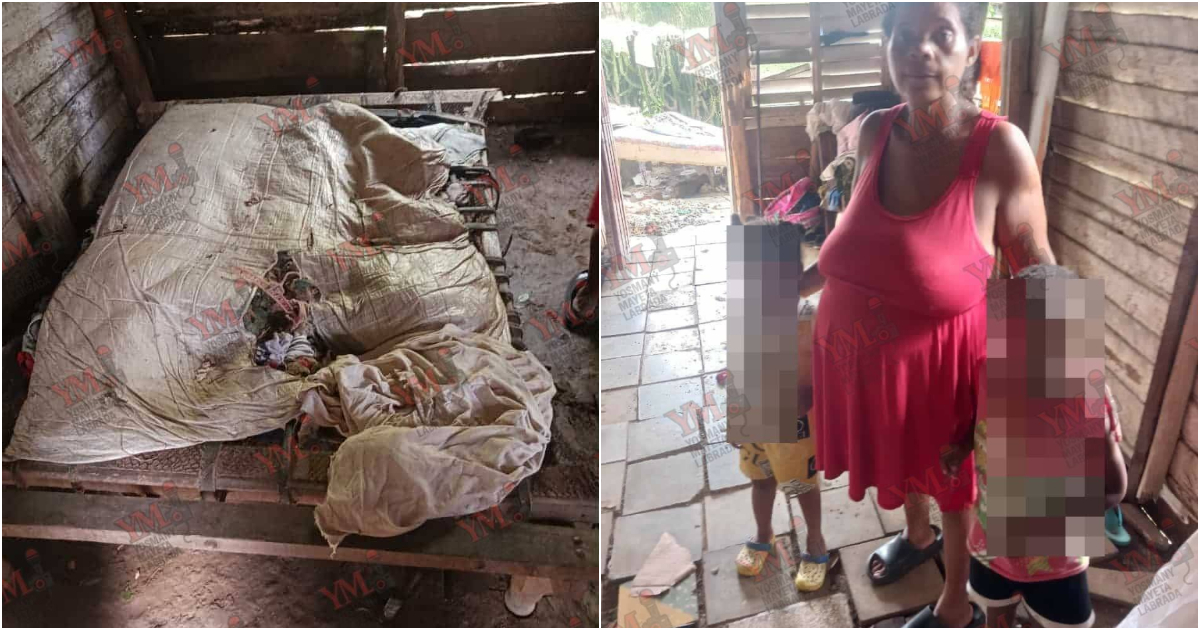
The hurricane Melissa has left numerous families in eastern Cuba living in inhumane conditions, with no access to drinking water, food, or medical care.
Testimonials from those affected confirm the poverty and dire conditions in which many of the impacted individuals lived, many of them without even a bed or a suitable mattress to sleep on.
This Friday, it was reported that a mother with disabilities and her minor child are living in a “varentierra” in the Holguín town of San Andrés after losing their home to Hurricane Melissa, while no one from the government or Civil Defense has responded to their situation.
According to preliminary official figures, at least 45,282 homes were affected by Hurricane Melissa, primarily in the roofs.
Filed under: