
Related videos:
After months in which stores in Havana offered products in dollars to protect against mosquitoes and while epidemics spread across the country, the Cuban regime began to produce –rather late– natural repellents in the province of Granma, when the spread of arboviruses had already resulted in a national health crisis.
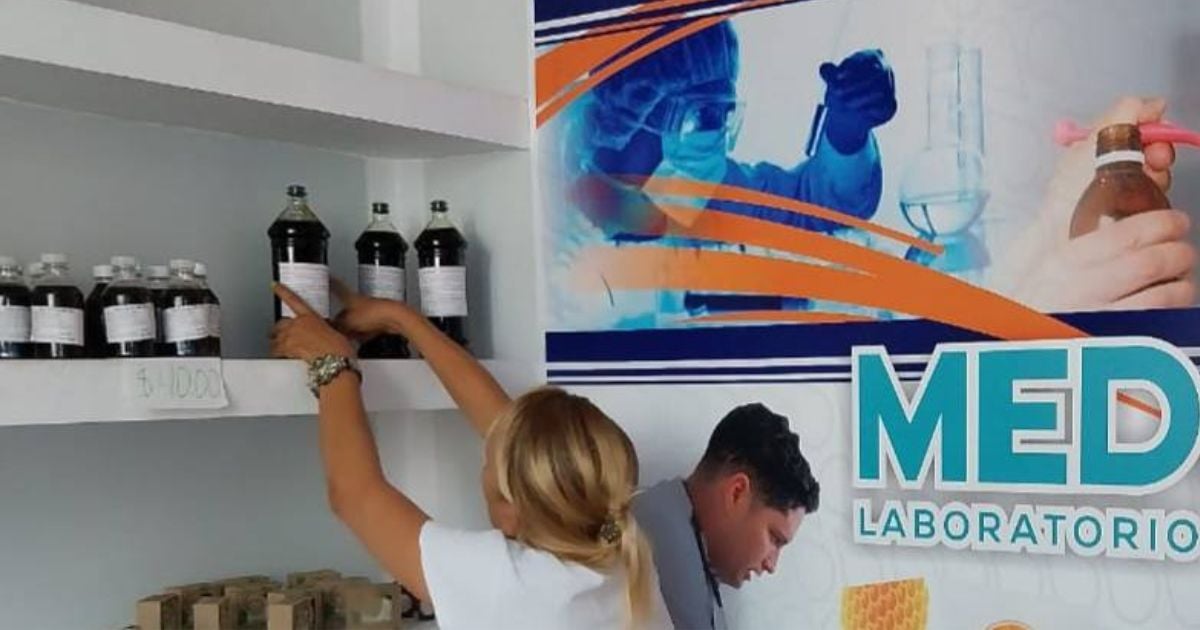
The pharmaceutical company Medilip, in collaboration with the Pharmacy and Optics Company of Granma, has begun the production of a natural repellent aimed at "protecting the population and supporting vector control efforts," as reported by the state channel CNC TV Granma on its Facebook profile.
The product, made with "100% natural" ingredients, contains Neem and Caña Santa tinctures, and is formulated for direct application on the skin.
However, the authorities clarified that its use is not recommended for children under three years old.
Although the note does not mention the price of the product, the shared images show two container sizes, with one priced at 40 pesos and the other at 200 pesos.
In addition to being presented as a preventive measure—and it is indeed timely, especially for those on tight budgets—it arrives amid one of the worst epidemiological crises that Cuba has faced in recent decades, with the simultaneous circulation of viruses such as dengue, chikungunya, and oropouche.
The announcement comes just hours after the Cuban leader Miguel Díaz-Canel acknowledged the magnitude of the outbreak, which has affected 30 percent of the Cuban population, while hospitals are dealing with an overload and a shortage of medications.
Specialists and Cuban citizens, both inside and outside the island, have criticized the government's delay in adopting effective measures, following months of reports on the increase in cases and the proliferation of mosquitoes in communities where fumigation has been insufficient or nonexistent.
The launch of this repellent also occurs without transparent information regarding its availability or whether the initiative will be replicated in other provinces, which reinforces the perception that the regime's health response is inadequate.
Filed under: