
Related videos:
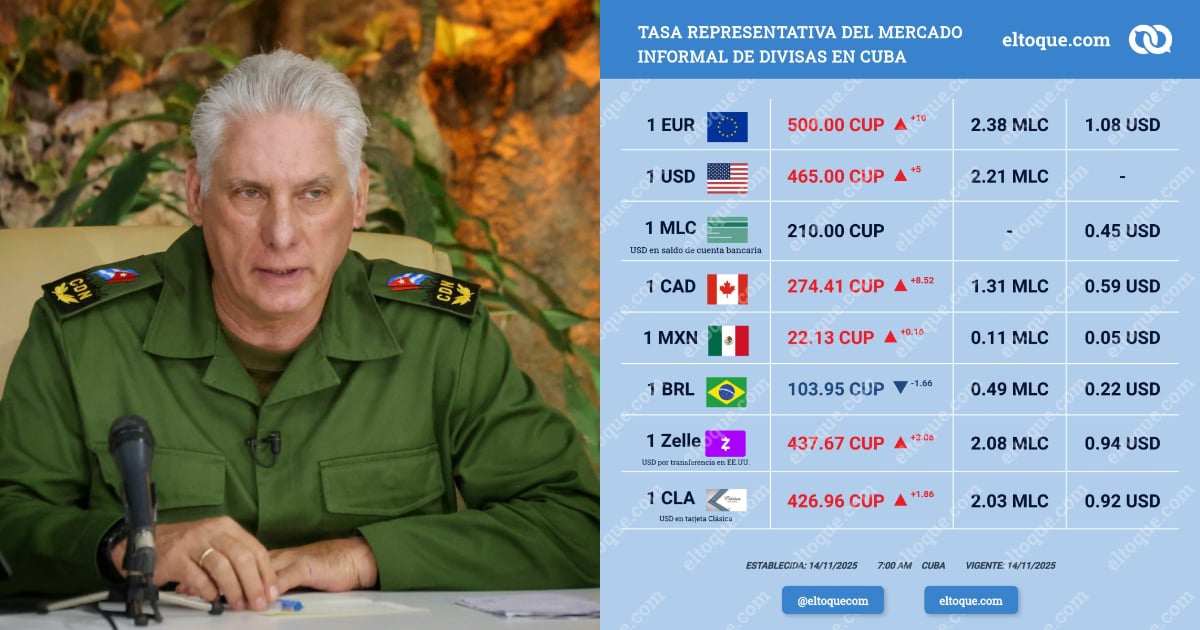
President Miguel Díaz-Canel joined the state campaign against the independent media outlet El Toque this Friday, accusing it of receiving external funding to undermine the Cuban currency and acting as part of an alleged "economic war" against the country.
According to a message from the ruler on his X account, “the economic war against Cuba is designed to depress the income of the Cuban people to the maximum.”
In this regard, he accused the media of embedding itself in that strategy through a "proven funding" aimed at exacerbating the depreciation of the currency.
The statements made by the First Secretary of the Communist Party of Cuba reinforce an institutional offensive that, in the last two weeks, has put the media at the center of an accusation of "speculative manipulation."
Also this Friday, the Central Bank of Cuba (BCC) supported these accusations in a statement where it questioned the legitimacy of the Informal Market Representative Rate (TRMi).
In this regard, he characterized the exchange rate reference published by El Toque as a "distorted signal" that affects prices, expectations, and the decisions of the population.
In addition, the entity stated that it is working on the creation of an official "orderly and transparent" exchange market, without providing specific dates or details.
The escalation began on October 29, when Chancellor Bruno Rodríguez spoke of "evidence" regarding an alleged manipulation of the exchange rate.
Then, the official spokesperson Humberto López accused the media of being part of an “integrated economic warfare program” and of operating a scheme of “financial terrorism,” even suggesting potential criminal proceedings and the inclusion of the project on lists of entities “linked to terrorism.”
The government's accusations and its apparatus of spokespersons contrast with the absence of a functional exchange market, a gap that has led both citizens and companies to rely on the reference value of the informal market.
In response, the official discourse seeks to portray the information published by El Toque as the source of the currency crisis, rather than a consequence of the lack of credible economic policies along with failed strategies.
The activist Amelia Calzadilla argued this Friday that El Toque merely reports daily on the behavior of the informal currency market in Cuba and that the rise of the dollar does not correspond to any imposed algorithm, but rather to decisions made by the government itself, such as selling food, essential items, and appliances in stores that transact in foreign currency, while people earn salaries and pensions in a heavily devalued Cuban peso.
Filed under: