
Related videos:
The Cuban regime presented an updated version of the Program to “correct distortions and re-energize the economy”, approved by the Political Bureau and that will serve as the foundation for a national process of discussion and analysis.
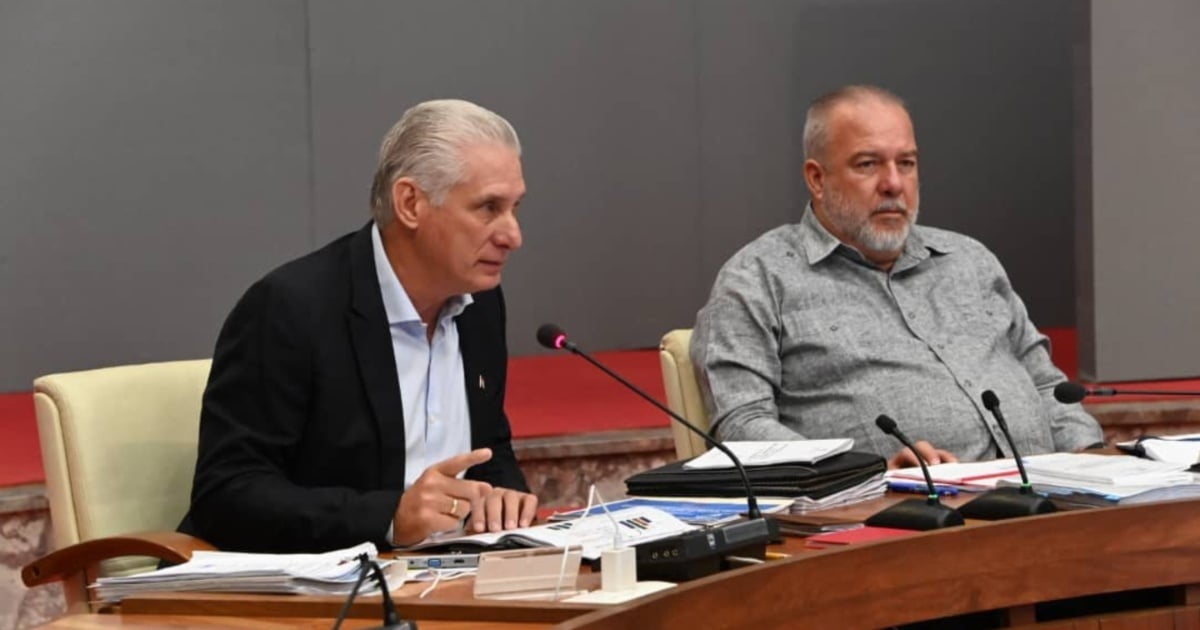
In the Council of Ministers, Prime Minister Manuel Marrero presented the steps taken since July and the central changes of the document, which will be studied with state structures, political organizations, and mass organizations to ddefine specific implementation responsibilities.
According to the report, the plan specifies the scope of the 10 general objectives and updates 39 specific objectives, along with their timeline and the planned actions from September to December.
The methodological guide of the study process seeks "a comprehensive understanding" of the program and to align objectives, goals, and actions in each scenario of the country.
However, no specific data was provided on how these measures have impacted the daily life of Cubans, which is characterized by inflation, scarcity, and the collapse of basic services.
Meanwhile, the Council of Ministers assessed the execution of the State Budget at the end of August.
Finanzas y Precios reported "favorable" results compared to the plan, with a significant reduction in the fiscal deficit due to revenue exceeding expectations and a surplus in the current account, which allows for a focus on financing capital expenditures.
At the same time, there were warnings about failures to execute current and capital expenditures due to unmet activity levels.
By regions, local budgets showed a positive result, according to official information.
Marrero urged to deepen the territorial analysis so that provinces and municipalities can achieve better results, increasing income and management: “A municipality will never achieve full development if it does not reach the condition of being surplus.”
The Executive also reviewed the actions of the Comptroller regarding budget execution, with an emphasis on the use of current transfers in the off-budget business sector.
It was emphasized to strengthen accounting, uphold contracts, demand ethical conduct from executives and employees, increase the participation of labor collectives in management, and enhance internal control at all levels.
With this roadmap, the Government aims to align goals and resources in the short term (September–December) and strengthen fiscal discipline and control as foundations for the economic adjustment.
While the official discourse is cloaked in technical jargon and timelines, it avoids any critical assessment.
There is no self-criticism regarding the impact of the measures, nor transparency in the results. It follows a familiar script: meetings, reports, objectives, and the eternal promise that the worst is about to be overcome.
In practice, Cubans know that those grandiloquent phrases do not translate into economic improvement. The propaganda aims to cover up with words what daily experience reveals harshly: a country where salaries are not enough to eat, the currency is collapsing, and the future remains mortgaged.
Frequently Asked Questions about the Economic Crisis in Cuba and the New Government Plan
What is the new economic plan presented by the Cuban government?
The Cuban government presented an updated version of the program to "correct distortions and reinvigorate the economy." This plan includes 10 general objectives and 39 specific ones, with a timeline for actions planned between September and December. However, no concrete details have been provided regarding how these measures will affect the daily lives of Cubans.
How does the Cuban government intend to address the current economic crisis?
The Cuban government plans to tackle the economic crisis through a program that aims to correct distortions and revive the economy. It focuses on objectives such as stabilizing the macroeconomy, diversifying income, and recovering the power generation system. However, critics point out the lack of concrete details and tangible results in the proposed measures.
What are the criticisms of the Cuban government's economic plan?
Criticism of the Cuban government's economic plan emphasizes that the program lacks transparency and tangible results. Inflation, shortages, and the collapse of basic services are not addressed. Furthermore, it is believed that the official discourse is filled with technical jargon and promises without a critical assessment of past failures.
Why does the Cuban government insist on the socialist model despite the crisis?
The Cuban government insists on the socialist model as the only viable path, despite the economic crisis. Officials such as Manuel Marrero and Miguel Díaz-Canel have reaffirmed their commitment to socialism, arguing that the solution to the crisis lies in fiscal discipline, state control, and the participation of everyone in economic recovery, although this approach has been criticized for its ineffectiveness.
What challenges does Cuba face in implementing its economic plan?
Cuba faces numerous challenges in implementing its economic plan, including high inflation, the collapse of basic services, and shortages of food and fuel. The lack of resources, excessive state control, and the absence of structural reforms are significant obstacles that limit the success of the proposed plan.
Filed under: