
Related videos:
The Cuban government recently inaugurated new health laboratories equipped with high technology and announced the strengthening of the diagnostic network throughout the country. At the same time, the Ministry of Public Health (MINSAP) acknowledged that Cuba is facing an outbreak of chikungunya, with more than 31,000 suspected cases and a "very complex" epidemiological situation.
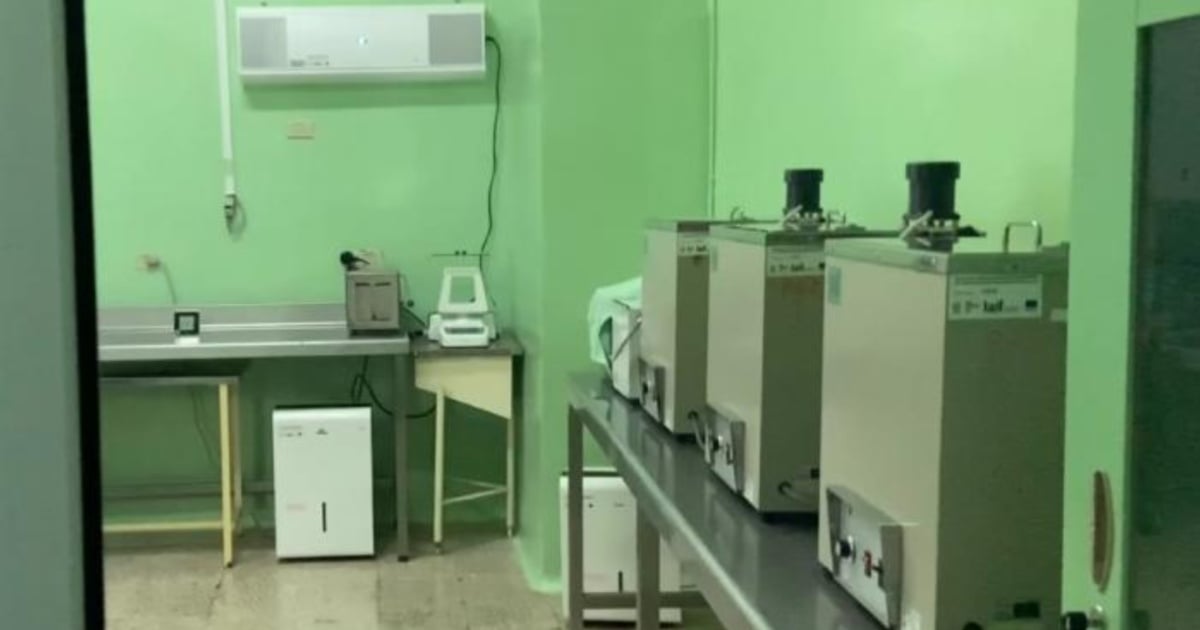
According to the official outlet Granma, during an event held in Havana, attended by Dr. Francisco Durán García representing MINSAP; the Ambassador of the European Union, Jens Urban; the Ambassador of France, Raphaël Trannoy; and other national and international authorities, health laboratories were inaugurated at the National Institute of Hygiene, Epidemiology, and Microbiology (INHEM) and the delivery of new equipment to Provincial Centers of Hygiene, Epidemiology, and Microbiology across the country was confirmed.
According to the official note, these actions are part of a project funded by the European Union and French Cooperation, aimed at strengthening three key institutions of Cuban public health: the Dr. Abelardo Buch López Nephrology Institute, the Pedro Kourí Tropical Medicine Institute (IPK), and INHEM, as well as their affiliates across the national territory.
The stated objective is not only to modernize the equipment but also to improve working conditions, knowledge and the "ways of doing" for the staff working in the network of laboratories and hospitals.
The open laboratories at INHEM now feature new technologies for the detection of contaminants —heavy metals, biological toxins, mycotoxins, and other compounds— in food, water, air, and environmental samples, as well as for the rapid diagnosis of foodborne pathogenic bacteria.
Health authorities stated that, at the same time, staff are being trained in the use of this equipment.
Similarly, it was reported that health laboratories across all regions of the country benefited from the acquisition of equipment that will expand the diagnostic range and improve epidemiological surveillance systems.
The project aims to contribute to environmental protection and the monitoring of the effects of climate change by researching and providing data on pollutants in various ecosystems, as well as improving food and water analysis services available in the country, both from the public and private sectors, and preventing diseases caused by chemical and microbiological contaminants.
During the inauguration, the European Union ambassador, Jens Urban, emphasized the importance of having “healthy and good” water and laboratories that meet national and international standards, something that, he said, represents “an added value not only for Cubans but also for everyone.”
For his part, the French ambassador, Raphaël Trannoy, stated that it is not just about opening a laboratory, but rather “a door to a safer, healthier future full of opportunities for all Cuban families.” He emphasized that France is “proud to be part of this story” and of a “deep friendship” with Cuba that translates into concrete actions.
At the conclusion of the event, Dr. Francisco Durán noted that this project places the country in “better conditions for future responses to health and epidemiological events” and thanked the cooperation of the European Union and France, “without which such advancements would not have been possible.”
Cuba in epidemic
While the government showcases the modernization of its laboratory infrastructure, the MINSAP itself has confirmed that the country is facing an epidemic of chikungunya, with 31,513 people diagnosed as suspected cases, widespread dissemination of the virus, and coexistence with dengue, which continues to show endemic behavior.
In an intervention on the television program Buenos Días, Dr. Durán explained that chikungunya, transmitted by the mosquito Aedes aegypti, is currently circulating in 14 provinces, 99 municipalities, and 164 health areas, which “constitutes a sustained epidemic behavior.”
In just the last day, 753 new suspected cases of chikungunya and 847 confirmed cases of dengue were reported, highlighting the simultaneous occurrence of both diseases in the population.
Durán detailed that 5,713 patients are hospitalized with suspected chikungunya, of which 5,607 are at home and the rest in medical institutions; furthermore, 95 individuals are in intensive care units, 77 are in serious condition, and 18 are in critical condition. Among those in serious condition, 63 are under 18 years old, and among those in critical condition, 16 are children.
The epidemiologist warned that the infestation rate of the mosquito Aedes aegypti remains at 0.73, a figure he characterized as a “high transmission risk,” pointing out Camagüey, Pinar del Río, Sancti Spíritus, and Villa Clara as the most affected provinces.
He also acknowledged limitations in fumigation efforts: on the previous day, 142 teams did not operate, 109 due to a lack of personnel and 33 due to breakdowns, and no outdoor adulticidal treatments were conducted in Mayabeque, Matanzas, Camagüey, Las Tunas, or in the special municipality Isla de la Juventud.
The chikungunya crisis
Durán recalled that chikungunya leaves lifelong immunity, but it can cause sequelae and a reappearance of symptoms after apparent improvement, and he emphasized that there is still no effective vaccine against this virus.
Nonetheless, he assured that the healthcare system will continue working "to address the situation as much as possible," emphasizing the need to improve sanitation in homes and workplaces and to seek medical services at the first signs of alarm.
Official statements have not alleviated the concerns of the population, who have been denouncing on social media for months the spread of the virus, the lack of medications, the shortage of fumigation, and the collapse of the healthcare system.
In this context, the announcement of sophisticated laboratories funded by international cooperation coexists with the reality where thousands of Cubans deal daily with debilitating pain, overcrowded hospitals, and a lack of basic resources, highlighting the gap between the image of technological modernization promoted by the regime and the concrete health crisis experienced in neighborhoods and communities across the country.
Filed under: