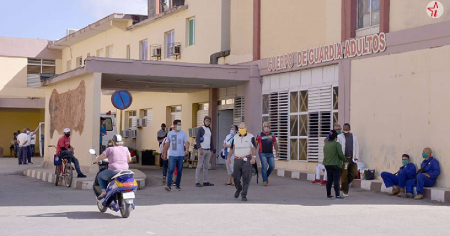
The Cuban regime reported this Monday the death of 33 people due to mosquito-borne diseases, amid a complex epidemiological situation marked by the spread of dengue and chikungunya, and a lack of resources to address the current health crisis.
According to the official newspaper Granma, the Deputy Minister of Public Health, Carilda Peña García, detailed that out of this total, 12 deaths are attributed to dengue —seven of whom are under 18 years old (the exact ages are not specified)— and 21 to chikungunya, with 14 victims also being minors (again, the exact ages are omitted).
Peña specified that three of the 33 reported deaths this Monday had already been included in the official dengue death report released in October.
Although the Ministry of Public Health (Minsap) claims that the surveillance system indicates a general decline in febrile syndromes, the official warned that most provinces are experiencing an upward trend and that the endemic corridor is "in an epidemic zone" in nearly the entire country, with the exception of Matanzas and the special municipality of Isla de la Juventud.
On numerous occasions, officials of the regime have acknowledged that minors represent the group most affected by chikungunya in Cuba.
The number of infections continues to rise. In just the last week, 5,717 new cases of chikungunya were reported, most of which were considered suspected based on clinical diagnosis.
The national total stands at 38,938 patients, of which 1,260 were confirmed by PCR. Dengue, for its part, remains active in all 14 provinces and 43 municipalities of the country.
The government explained that, given the magnitude of the outbreak, cases with clinical suspicions are considered positive, a practice that is part of the Cuban diagnostic protocol in epidemic situations.
The deputy minister also acknowledged an increase in the infestation rate of the Aedes aegypti mosquito, which has reached 0.89%, with Camagüey, Pinar del Río, Santiago de Cuba, Sancti Spíritus, and Havana among the most affected areas.
While the government tries to contain the spread, the Cuban population faces a shortage of insecticides, a lack of medicines, and a general deterioration of sanitary conditions that worsen the epidemiological situation.
Filed under: