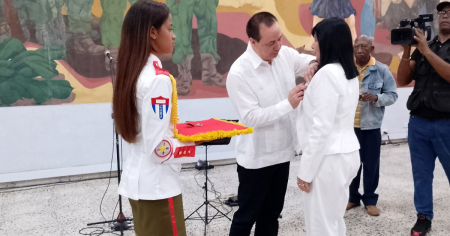
The Deputy Minister of Public Health of Cuba, Dr. Carilda Peña García, reported this Tuesday on the television program Buenos Días that the country is facing a "complex" situation with the spread of febrile and infectious diseases, particularly chikungunya, which continues to spread across several provinces.
During her appearance, the deputy minister stated that "there is a slight improvement" in the country's epidemiological situation and called on the public to report irregularities in the polyclinics, hygiene units, and municipal health departments, acknowledging unusually the deficiencies in medical care and vector control efforts.
"The phones of our Ministry of Public Health are open to the public to report any issues. (...) We have a duty to respond to an inappropriate situation," emphasized the official, while acknowledging the state's difficulties in controlling the transmitting mosquito, warning that the infestation will persist as long as there are hundreds of infection hotspots in the country.
According to Dr. Peña, yesterday in Cuba there were 3,488 reported cases of unspecified febrile syndrome, while 38,553 remain hospitalized due to this cause. She assured that no cases of Zika have been detected and no infections from the Oropouche virus have been reported since September.
The deputy minister specified that 464 new cases of chikungunya were diagnosed, but only 17 have been confirmed through PCR tests, highlighting the limited diagnostic capacity of the Cuban health system. In total, there have been 39,600 suspected cases since the onset of the epidemic, and only 1,318 have been officially confirmed.
The provinces most affected are Villa Clara, Artemisa, Holguín, and Havana, according to data from the Ministry of Public Health (MINSAP).
The official also reported that 77 patients are in intensive care units, of which 65 are in serious condition and 12 are in critical condition. "The majority of these critical cases in therapy (10) are children under 18 years old," Peña said, although she did not disclose the ages or details regarding the clinical progression of those patients.
The chikungunya epidemic is hitting Cuba amid a deep health crisis, with overwhelmed hospitals, a shortage of medications, and a lack of basic supplies, while the regime insists on attributing the failures of the healthcare system to the U.S. embargo, despite the obvious internal causes such as corruption, poor management, and institutional neglect.
Filed under: