
Related videos:
While Venezuela is experiencing one of its most tense moments in recent years—with a U.S. military presence in the Caribbean, an economic crisis, and increasing social unrest—Tourism Minister, Leticia Cecilia Gómez Hernández, is attempting to project an image of normalcy, progress, and stability.
From her Instagram account and at public events, the official appears smiling, leading the International Tourism Fair of Venezuela (FITVen 2025) in Puerto Cabello. She even organized a "5K walk" with hundreds of participants, seemingly more of a propaganda exercise than a civic activity.
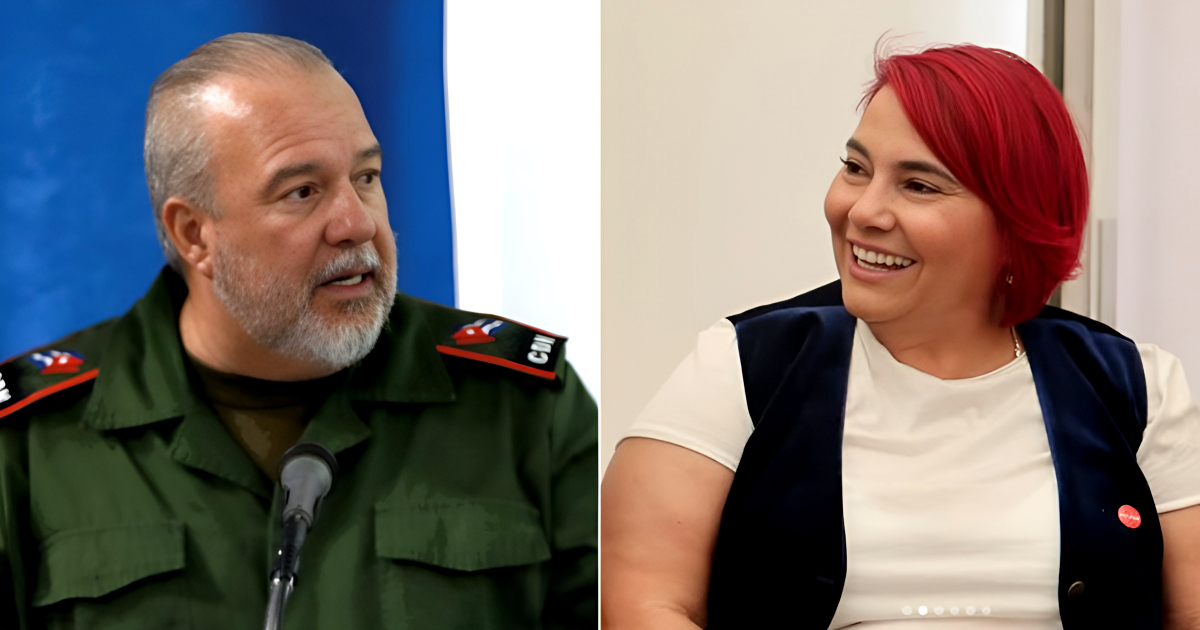
While the country wavers, the minister —a Cuban nationalized Venezuelan— strictly follows the script of her mentor, the Prime Minister of Cuba, Manuel Marrero Cruz: to use tourism as a facade of prosperity in the midst of the collapse.
A Political School Exported: From Castroism to Caracas
Leticia Gómez is not an unprepared figure. She arrived in Venezuela in 2001 "under the guidance" of Marrero Cruz, who was then the head of the hotel group Gaviota S.A., owned by the military conglomerate GAESA, the economic heart of the Cuban regime.
Under the guidance of Marrero Cruz, Gómez rose from managing expropriated hotels to the presidency of the state-owned Venetur, and later to the Ministry of Tourism, under the government of Nicolás Maduro.
Her career reflects the exportation of the Cuban model of economic and political control: disciplined technocrats in the service of a military state, with tourism as a means to attract foreign currency and maintain the power structure.
The method is unmistakable. In Cuba, Marrero Cruz has turned tourism into his political lifeline, even during the worst moments of the national crisis. While the country endures blackouts, inflation, and unprecedented migration, the prime minister insists that “Cuba needs foreign currency and will continue to bet on tourism.”
Under his leadership, the regime has opened hotels to foreign investment, relaxed payments in foreign currency, and removed health restrictions for visitors, despite the fact that tourist arrivals have plummeted by more than 35% compared to 2019.
For Marrero, the message is clear: maintain the illusion of growth even as the country sinks. In April 2025, at the Cuban tourist fair FITCuba, he once again promised “new opportunities for foreign investment” amid daily blackouts and resource-starved hospitals.
While the majority survive on salaries equivalent to 15 dollars a month, the government allocates more than 40% of national investment to the construction of empty hotels.
That cynicism has become doctrine. And Leticia Gómez, educated in that school, applies it with precision in Venezuela.
Tourism and propaganda in times of crisis
The FITVen 2025, which Gómez promotes as "the grand showcase of Venezuelan tourism," seeks to convey a political message more than an economic one: "The country endures, tourism is growing, Venezuela is moving forward." However, the context contradicts that narrative.
The Venezuelan Finance Observatory estimates that the annual inflation rate exceeds 230%, the average salary barely reaches 40 dollars per month, and more than 70% of the population lives below the poverty line.
Inbound tourism accounts for only 2% of GDP, and international arrivals have dropped by 60% since 2018. Blackouts, insecurity, and the collapse of transportation make it nearly impossible to talk about "tourism reactivation."
Despite this, the minister insists on promoting fairs, tours, and international campaigns. In her speech, tourism emerges as the engine of national recovery, exactly the same narrative that Marrero Cruz repeats in Cuba: tourism as the "locomotive of the socialist economy."
Both officials share the strategy of "feigned optimism": denying the crisis through images of prosperity, investment announcements, and carefully orchestrated events for state television.
Hard data: The reality behind the tourism discourse
Venezuela: inflation at 230%, poverty exceeding 70%, tourism reduced to 2% of GDP, and a 60% drop in international visitors.
Cuba: 35% fewer tourists than in 2019, inflation estimated at 500%, widespread power outages, and 40% of state investment concentrated in hotels, while agriculture and energy are collapsing.
Comparison: both regimes allocate more resources to tourism than to health or housing. In Cuba, for every dollar spent on hospitals, $1.70 is invested in hotels. In Venezuela, the budget for the Ministry of Tourism for 2025 exceeds that of Science and Technology.
The numbers are clear: neither Cuba nor Venezuela is experiencing a real recovery. Tourism primarily serves to keep power structures afloat and to secure foreign currency that citizens never have access to.
A network of control and privileges
Tourism under these regimes is not a normal economic activity; it is a network of political control.
In Cuba, GAESA —the military conglomerate that manages everything from hotels to banks— controls the main hotel chains, airports, and free trade zones. In Venezuela, Gómez replicates this model, connecting military personnel, allied entrepreneurs, and structures of Chavista power.
Under the guise of "tourist cooperation," both countries have woven opaque mechanisms for money laundering and evasion of international sanctions, often through joint ventures or shell companies. Tourism thus becomes a valve for economic and political survival, rather than an open or transparent industry.
The minister Gómez, in this regard, is more than just an official: she is a bridge between Havana and Caracas, a key player in the exportation of the Cuban economic-military model.
The Paradox of Normality
The fact that a tourist fair is being held in Caracas while the country faces power outages, shortages, and the threat of war reveals a strategy of manipulation.
It is about using the appearance of normalcy as a propaganda tool. The same script that Marrero Cruz applies in Cuba: photos of gleaming hotels, empty beaches, and promises of investment amidst a national collapse.
FITVen is not a trade fair; it is a branding operation. It serves to project an image of a stable, open Venezuela to the world, while the reality suggests otherwise. Above all, it reinforces the Chavista regime's narrative of resilience: "We stand strong, even under foreign threat."
In Cuba, Marrero Cruz has refined this method. He has gone so far as to state that "Cuba is experiencing a favorable moment for foreign investment," even as the island faces its worst economic crisis since the 1990s.
The figures tell a different story: tourism has plummeted, the population is experiencing blackouts of up to 12 hours a day, and the Cuban peso is devaluing at a historic rate.
That contrast between discourse and reality —between the official's smile and the people's hardships— is the hallmark of Marrero Cruz's style: a cynicism that denies the crisis, redefines ruin as opportunity, and turns propaganda into state policy.
Final reflection
Leticia Gómez Hernández represents the continuity of the marrerista model: a tourism without tourists, a prosperity without people, and a propaganda without shame.
Her smile in Puerto Cabello, her fairs and walks, are part of a script learned by heart: projecting joy amidst disaster, showing order in chaos, pretending stability when everything is collapsing.
In both Cuba and Venezuela, tourism is now a pretext: a facade to attract foreign currency, a backdrop for the official photo, and an excuse to maintain political control.
But reality, stubborn as ever, always seeps through. While the minister celebrates her fair, Venezuelans continue to emigrate, international flights are suspended due to military tension, and inflation devours wages. As Marrero proclaims "new opportunities," Cubans stand in endless lines to obtain bread or fuel.
Both the teacher and the disciple speak of prosperity in countries that are crumbling. And perhaps that is the greatest lesson Leticia Gómez learned from Marrero Cruz: that in the socialist regimes of the Caribbean, the appearance of normalcy is worth more than the truth.
Filed under: