
Related videos:
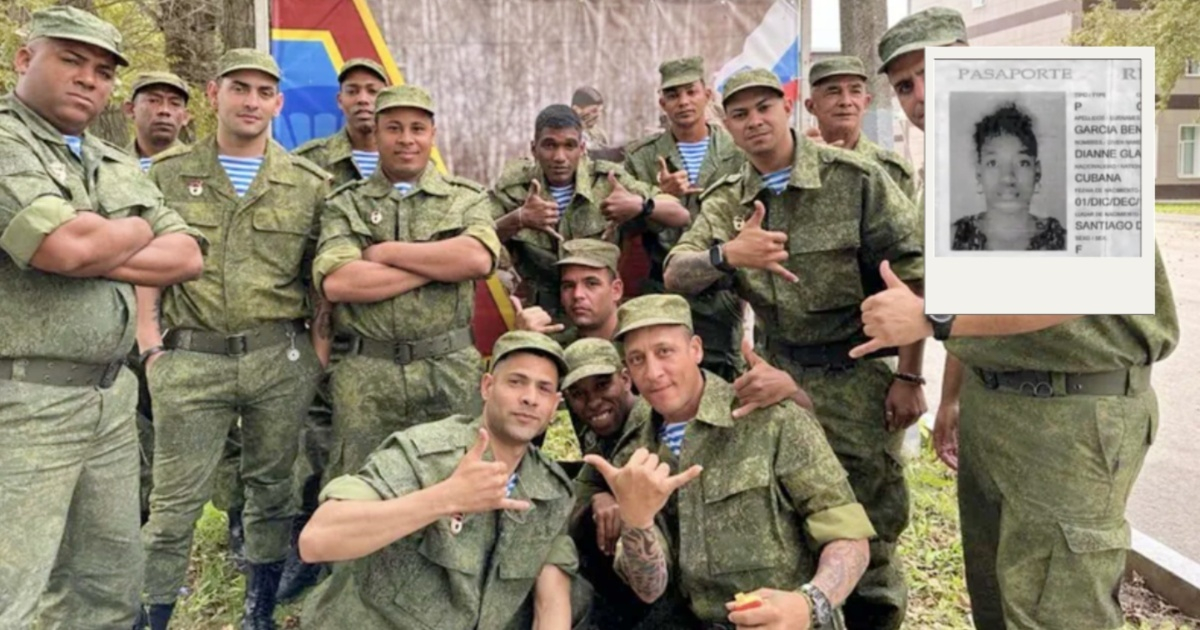
Cuba is among the top countries that contribute the largest number of mercenaries to the Russian army in the invasion of Ukraine.
Among the main contributors are Uzbekistan (2,715), Tajikistan (1,599), Kazakhstan (1,190), Belarus (1,338), and Cuba (1,028), reported the Ukrainian Center for Countering Disinformation (CCD).
However, the country that contributes the most is North Korea, with approximately 12,000 recruits.
In total, around 18,000 foreigners from 128 countries have participated in the invasion since 2022 as part of the Russian forces, attracted by deceit, coercion, or promises of financial compensation, the source claims.
"Russia has built a global system to recruit foreigners, using fraudulent and criminal mechanisms," the report reads
They also warn that international recruitment is part of a systematic practice involving state actors and private military companies.
Recruitment agencies present themselves under the guise of employment or cultural programs, targeting economically vulnerable populations.
Citizens from dozens of countries, from Asia to Africa, have been sent to the front lines, where many have died or been captured under this scheme.
The report also reveals that, starting in mid-2025, Russia intensified its online recruitment efforts: one in three military contract advertisements was aimed at foreigners, particularly from Central Asia, Africa, South Asia, and the Middle East.
It is the approach that Putin's government has found to compensate for the high number of casualties and to avoid a full national mobilization.
Between 1,000 and 25,000 Cubans have been sent to Russia to fight in Ukraine.
Recently, it was revealed that Ukrainian authorities have managed to identify the bodies of 39 deceased Cubans and stated that they are willing to continue working to determine the identities of more compatriots and inform their families "about what has happened to these men," as explained by Deputy Maryan Zablotskiy, chairman of the Pro-Cuba Libre Committee of the Ukrainian Parliament, at a press conference in Miami.
Zablotskiy detailed that, in addition to the 39 identified, there are “hundreds of dead Cubans” whose identities have yet to be determined.
It stated that Ukraine is holding four Cuban prisoners, whom it claims are being treated humanely, and proposed two possible ways to resolve their situation: exchanging them for Ukrainian prisoners held by Russia or considering their release on humanitarian grounds if the Cuban government, in parallel, frees a group of political prisoners on the Island.
The deputy also emphasized that, since the beginning of the invasion, Russia has not requested the exchange of foreign fighters, only Russian citizens, leaving mercenaries from other countries in a more vulnerable situation. According to his data, the largest foreign contingent among Russian ranks is Cuban, according to reports from their foreign ministry.
During the conference, organized by the Assembly of the Cuban Resistance and the Cuban Democratic Directorate, Zablotskiy presented a list shared with the media Cubanet that listed 1,028 Cubans recruited by Russia, including the 39 deceased; however, during his speech, he mentioned a total of 41 deaths.
The document details that only three Cubans died in 2023, while 36 passed away in 2024, with ages ranging from 23 to 58 years, illustrating the predominantly young profile of the recruits.
The revelations from the Ukrainian legislator are part of broader estimates from Ukrainian authorities and exile sources, which calculate that up to 25,000 Cuban citizens may have been recruited by Russia to fight in the invasion, a figure that illustrates the magnitude of the phenomenon.
The main incentive is financial: according to Forbes magazine, Russia offers salaries around 2,000 dollars per month, an enormous amount compared to the 20 dollars earned on average by a worker on the Island.
However, behind the salary lure lies a web of deceit and exploitation.
False job offers for civilian positions have been documented in Russia that, once in the country, end up with the signing of military contracts and deployment to the front without training or clear information.
Many signed documents in Russian without an official translation, leaving them legally vulnerable.
Ukraine's Defense Intelligence (HUR) interprets the use of foreign fighters as a low political cost strategy for the Kremlin: if recruits from other countries die, there are no social benefits to pay or pressure from dissatisfied Russian families over the number of casualties.
In this scenario, the video of a Cuban mercenary pleading not to go to Russia or sign contracts to fight in Ukraine adds to the information emerging from Kiev and the exile community: hundreds of Cubans dead, thousands recruited under dubious promises, with families on the Island not knowing whether their children are alive or dead.
Filed under: