
Related videos:
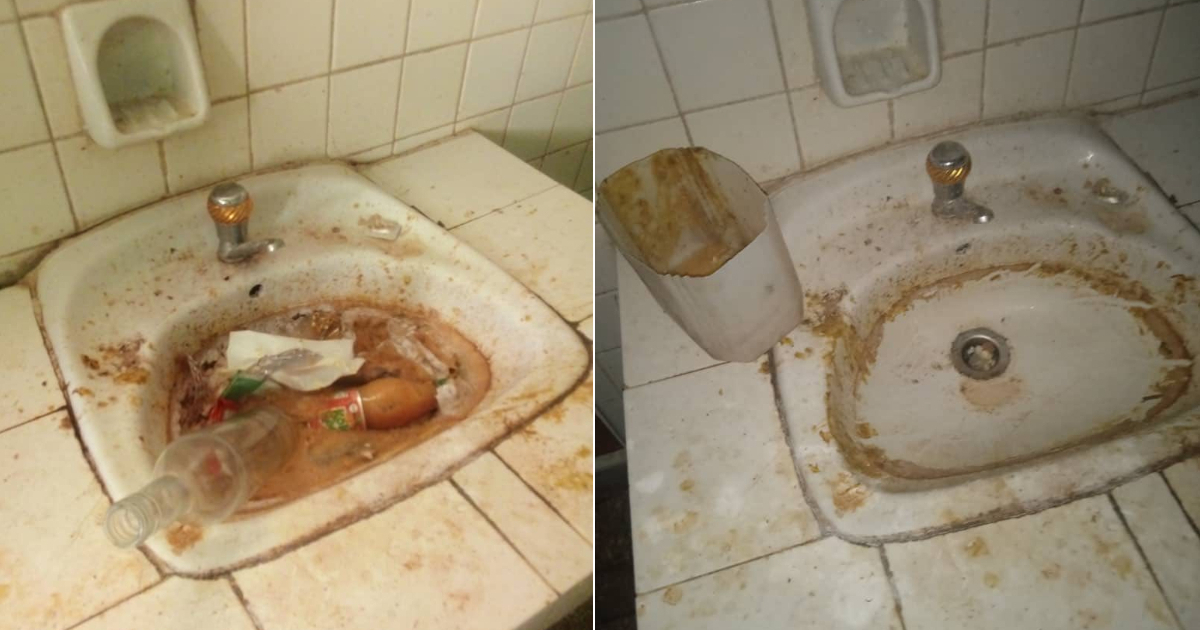
A report published on Facebook by Cuban Yois Ramos highlighted with images the deterioration and lack of hygiene at the Orlando Pantoja Tamayo General Hospital, located in the municipality of Contramaestre, Santiago de Cuba, where collapsed bathrooms, accumulated dirt, and conditions that reflect the severe decline of the healthcare system on the island are observed.
In his message, Ramos -who, according to information on his profile, is a digital creator originally from Santiago de Cuba and residing in Miami- described the situation as “terrorism against the people,” stating that there is no need for bombs or war to destroy Cubans, because “the dictatorship itself delivers the self-inflicted blow.” The whistleblower asserted that the medical center “is a reflection of communist decay and a system that has resorted, in order to save itself, to killing its own people.”
Ramos listed a series of deficiencies: “dirt, grime, worms, bathrooms in total disrepair, lack of maintenance, lack of hygiene, cockroaches, and rats.” He stated that these conditions represent the true face of public health in the municipality: “Saving lives or killing people, what will be the function?”
According to the publication, the hospital lacks medications, food, water, stretchers, and ambulances. “Patients' clothing is completely torn and discarded,” he wrote, emphasizing that even the healthcare professionals —whom he described as “good but abandoned”— do not have the minimum resources to work.
The complainant also referred to alleged cases of corruption and embezzlement: “A computer valued at over 2 million pesos approved by finance and prices, medications and tanks of alcohol found in warehouses for illegal sale, and the use of the hospital budget for parts of the director's car and food diverted to private businesses.” According to Ramos, all these incidents were detected in internal audits, but “those responsible washed their hands of it.”
The post was accompanied by several photographs and a video showing destroyed, filthy bathrooms with accumulated waste, visually confirming the complaints. The images also depict stained walls, rusted doors, and sinks covered in debris.
In the text, the author questioned the lack of action from the authorities: “Where to turn if those responsible do not act, if those responsible steal, if those responsible hide the truth?” and concluded with a warning to the regime: “The people who wait, who suffer, who agonize. We can still have them for 62 millennia. Or to the one who reaches an emergency, give them a dipyrone.”
Citizen outrage
The post generated dozens of comments of outrage. Users described the images as “a total disaster” and “a shame for the country.” One person wrote that it is “a facade to show the world that Cuba continues to be a medical powerhouse when everyone knows it is a complete disaster.”
Others pointed out that the hospital "looks like a breeding ground for bedbugs," while some claimed that "it's better to die at home than in such decay." There were also those who highlighted the responsibility of the local government: "When a municipality allows its hospital to deteriorate, it also allows life to deteriorate."
Among the reactions, phrases like “what a horror,” “total lack of respect,” and “pure Cuban reality” are repeated. Some recalled that the conditions of other hospitals in the country are similar, mentioning that “the hospital in Mayarí, Holguín, is in the same situation.” Others denounced the lack of cleaning staff, institutional neglect, and the official indifference toward a problem they described as “a crime against the people.”
A user summarized the general sentiment: "The people do nothing, they remain silent and forget the brave ones of July 11. That's why we continue like this, enduring between misery and illness."
Similar reports in Santiago de Cuba
The conditions at the Contramaestre Hospital are part of a series of recent complaints about other health centers in the province. At the Juan Bruno Zayas Hospital, patients and relatives reported broken toilets, flooded hallways, and areas in disrepair. At the “La ONDI” North Children's Hospital, mothers reported a lack of water, the presence of bedbugs, and long waits in the emergency room.
Both cases reveal a systematic deterioration in the hospitals of Santiago de Cuba, where a shortage of resources, lack of hygiene, and structural neglect have become part of everyday life.
Shortage of medications and diversion
The lack of medications is another factor worsening the health crisis. A police operation in Morón against the illicit sale of drugs was met with backlash on social media, where Cubans questioned the government's approach: “They go after those selling medicines on the street, but do not supply the pharmacies,” commented an internet user. The complaint from Contramaestre aligns with these concerns, noting that many medications “are sold on Revolico because people are resourceful to avoid dying.”
Epidemic outbreak and healthcare collapse
The reports emerge amidst an ongoing epidemiological crisis. Cuba is facing an outbreak of dengue and chikungunya that, according to official data collected by state media, has resulted in 33 deaths — mostly among minors — and more than 38,000 infections nationwide. Santiago de Cuba remains one of the most affected provinces. Meanwhile, the number of patients in intensive care for arboviral diseases continues to rise, according to recent reports, confirming that the healthcare system is overwhelmed and unable to respond effectively.
The combination of poor hospital hygiene, corruption, shortages of medication, and epidemics reflects the collapse of a system that was once regarded as a "medical powerhouse" and now barely survives amidst scarcity and distrust.
Filed under: