
Related videos:
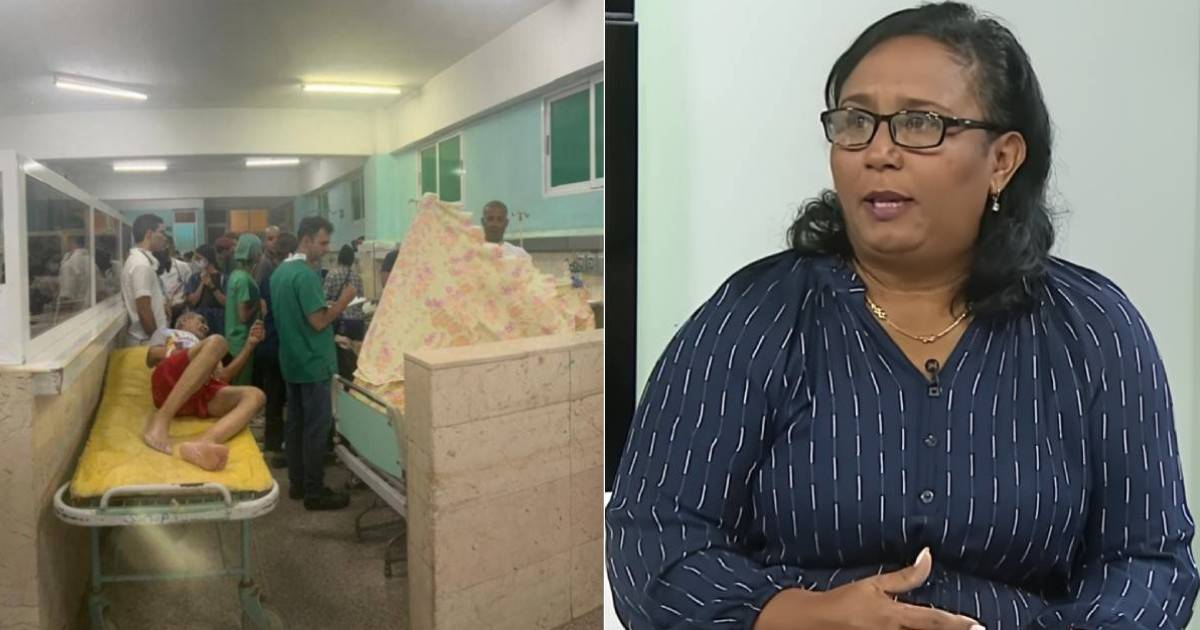
The statements by the Deputy Minister of Public Health, Carilda Peña García, asserting that the Cuban healthcare system is “better than that of many countries”, sparked a wave of outrage among Cubans both on and off the island, especially as the epidemiological crisis due to dengue and chikungunya faces one of its toughest moments and has already resulted in a devastating toll of 33 deaths, 21 of whom are minors, according to official data released this Monday.
The statement made by the deputy minister during a televised appearance on Canal Caribe struck a blow to thousands of families who have been reporting overwhelmed hospitals, delays in care, shortages of medication, and a visible decline in the sanitary conditions of the country for weeks.
Comments on social media reflect exhaustion, pain, and disbelief. Many Cubans question how one can speak of a "superior" system while they themselves face endless lines, overcrowded emergency rooms, and entire neighborhoods affected by a lack of fumigation and neglect of community services.
Among the most frequently expressed sentiments is the lament that doctors "do what they can," but without resources, without medications and without equipment, while the population lives surrounded by garbage dumps, sewage, and mosquito breeding grounds.
Others comment that those who defend the supposed strength of the system should visit a municipal or provincial hospital to see the "harsh reality" of families bringing everything from painkillers to the basic supplies needed for an operation.
Several users called for respect regarding the number of children who have died, which they consider an indicator of the real collapse, rather than the one presented in official media.
The figures confirm this contrast. In just one week, Cuba reported 5,717 new cases of chikungunya, the majority diagnosed solely based on clinical criteria due to a shortage of reagents and PCR tests.
The national total reaches nearly 39 thousand patients, while Aedes aegypti continues to show high infestation rates in provinces such as Camagüey, Pinar del Río, Santiago de Cuba, Sancti Spíritus, and Havana.
Additionally, there is a shortage of insecticides, the breakdown of targeted treatment machines, and a decrease in the workers responsible for spraying—issues that the Deputy Minister ultimately acknowledged.
Many Cubans reacted with helplessness to the official speech. "How much longer will they keep lying and mocking the people?", they asked time and again in the comments, denouncing that while "calm" is being requested from television studios, in the neighborhoods, people cannot find a Duralgin to reduce their children's fever, nor an antibiotic, nor a hospital bed available in already overwhelmed hospitals.
The gap between what is said and what is lived grows wider every day. The epidemic advances, trust in institutions collapses, and the pain of affected families accumulates in silence. And although the authorities insist that "everything is done in Cuba to save lives," for thousands of Cubans, those words feel increasingly distant from their daily reality.
Filed under: