
Related videos:
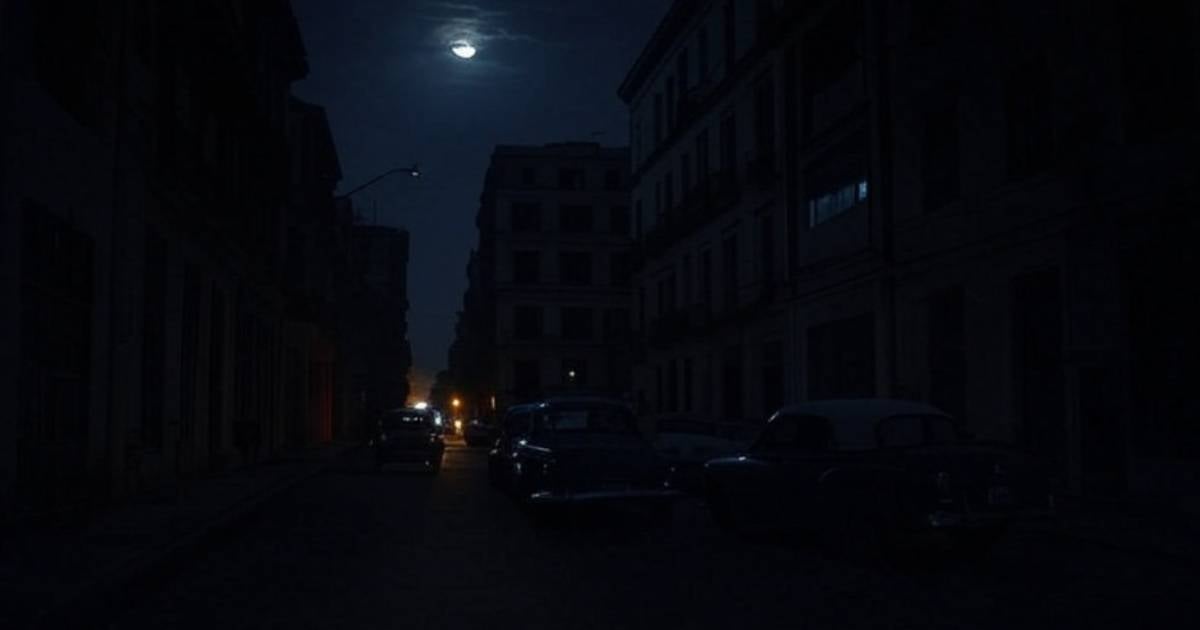
The massive blackout that left several western provinces without electricity this Wednesday was neither an isolated accident nor a technical surprise. For Cuban engineer Jorge Piñón, director of the Energy Program for Latin America and the Caribbean at the University of Texas, what happened is the latest evidence of an electrical system in "total collapse" with no real possibility of recovery in the short term.
In statements made to the program “Cuba al día” on Martí Noticias, the expert asserted that the SEN “has no short-term solution,” and that the failures on Tuesday and Wednesday are the direct consequence of decades without capital maintenance, obsolete equipment, and poor-quality fuels. “The patches they apply don't work,” he stated.
The widespread blackout affected provinces from Pinar del Río to Cienfuegos, leaving millions of Cubans in the dark since dawn. According to the Electric Union, a fault in the transmission line between Santa Cruz del Norte and the Guiteras caused the division of the electrical system and the outage of several thermoelectric plants.
But for Piñón, this new collapse confirms a rapid deterioration that Cuba can no longer conceal.
"2026 will be worse": oil at risk and a dying SEN
Piñón warned that Cuba currently relies on 25,000 to 30,000 barrels of Venezuelan oil per day, a supply that is increasingly uncertain. “If Venezuela collapses and Cuba loses those 30,000 barrels, the outlook will be critical. The year 2026 will be worse,” he insisted in Martí Noticias.
Mexico, another key supplier in recent years, has also drastically reduced its shipments: "Neither the Delsa, nor the Vilma, nor the usual tankers have been seen at Mexican terminals in months," he warned.
In September, Piñón had told CiberCuba that he did not see any solution for 2026 and that Cubans could expect “continuity” of the crisis: blackouts similar to those in 2024 and 2025. He then reiterated that the solar parks announced by the Government were “a fairy tale,” as, without batteries, they only generate electricity during the day.
According to calculations made with his students, Cuba would need between 3 and 5 years, and an investment of 8 to 10 billion dollars, to begin its recovery.
A crisis that impacts daily life: 102 power plants halted due to fuel shortages
The blackout this Wednesday adds to weeks of daily 24-hour blackouts in various areas of the country. According to official reports, distributed generation has 102 power plants shut down due to a lack of fuel and others due to a lack of lubricant, while demand easily doubles the actual capacity of the national electrical system.
Havana and other provinces have been publishing schedules of disruptions for days that are never followed, because the deficit is more severe than what is publicly acknowledged.
By mid-September, Cuba had recorded five nationwide blackouts in less than a year, an unprecedented figure that reflects the extreme fragility of the system.
Filed under: