
Related videos:
The official page Santiago de Cuba Travel, linked to the Ministry of Tourism, published a promotional image on Facebook this Monday claiming that "Santiago vibrates at Christmas", along with the phrase: "where history is illuminated with hope and every corner vibrates with joy".
The post depicted a clean, well-lit city adorned with a large Christmas tree, but the image—seemingly generated by artificial intelligence—provoked an avalanche of mockery and criticism for its complete disconnection from reality. Hours later, the post was removed from the official profile following comments that labeled it as a mockery, deception, and digital fantasy.
In the original post, the people from Santiago expressed their outrage: “Is this Santiago de Cuba?”, “I’ll pay anyone who can light a little tree”, “This must be AI because they would have already taken the decorations”, “This must be Santiago de Chile, because it’s not from Cuba”, or “The happiness of the people in Santiago is dimmed.” Others lamented that the regime's propaganda uses fake images to disguise the misery: “Only God can light the paths of my city,” “Christmas in Cuba is a nightmare,” and “Since when does the regime openly celebrate Christmas?”
The post was also shared on the page of CiberCuba Noticias, where readers responded with an even more critical tone. “Santiago has never had a Christmas tree like that in his life,” one wrote. Others were more direct: “With all the joy generated by the blackouts and misery,” “If Santiago is vibrant, it's from grime, blackouts, and calamities,” “The story may be illuminated, but Santiago is dark; there is no hope or joy,” “How ridiculous, what Christmas,” “Tell me with what light you are going to light up that little tree made with AI.”
The overall tone was one of indignation and sarcasm, reflecting the contrast between tourist propaganda and daily life in a city steeped in darkness.
Luminous propaganda in a country in darkness
The controversy erupted just a day after the Electric Union (UNE) confirmed that the national electrical system is facing one of its worst moments in years, with power outages exceeding 20 hours a day in several provinces, including Santiago de Cuba.
In its official statement, the state-owned company once again blamed the “U.S. blockade” for the crisis, ignoring decades of mismanagement, corruption, and technical neglect. "Without an end to the financial blockade, there will be no lasting energy stability," stated the UNE. However, the reality is that the thermal power plants are collapsing due to lack of maintenance, technological obsolescence, and misallocation of resources, while the regime continues to prioritize the construction of hotels and tourist propaganda.
Power outages have also spread to the capital. This Monday, several municipalities in Havana experienced nighttime protests due to the lack of electricity, while the government screened films on giant screens at 23 and 12, as part of the Latin American Film Festival. While thousands of families endured the heat and darkness, the regime attempted to project an image of "cultural normality."
That disconnection between propaganda and reality is not new. Just a few days ago, the Ministry of Tourism (MINTUR) was heavily criticized for promoting the Iberostar Selection La Habana as a “vibrant” destination, amidst an ongoing electrical and economic crisis. Cubans reacted with irony: “Build a 5-star thermoelectric plant, let's see if we can end the blackouts,” “Vibrant? Havana is dark and destroyed,” or “How many years do I need to save for a night if I earn 4 dollars a month?”
Tourism in decline and the country in shadow
Despite the official propaganda, the regime's own data shows that tourism is not on the rise. According to the National Office of Statistics and Information (ONEI), Cuba received just 2.1 million travelers by October 2025, a 20% decrease compared to the previous year and far from the levels seen before the pandemic.
Canada, Russia, and the United States—major emitters—saw significant declines, while only Argentina and Colombia showed slight increases. This setback directly impacts foreign exchange income and employment, as the government continues to invest in empty hotels and image campaigns like "Santiago vibrates at Christmas."
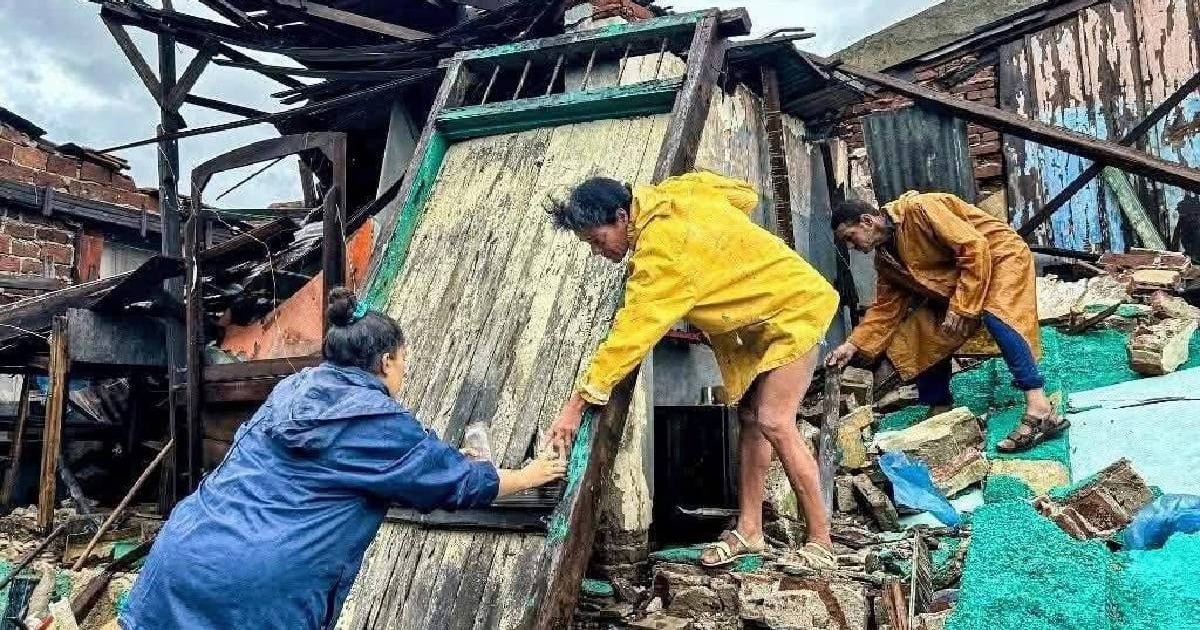
The contrast is striking: while the regime allocates resources to create non-existent tourist postcards, the Cuban people live in darkness, scarcity, and despair. In Santiago de Cuba, far from "vibrating with joy," people are trying to survive without light, without water, and without hope. The only real vibration is that of popular anger, which grows stronger each day in the face of the official lie.
Filed under: