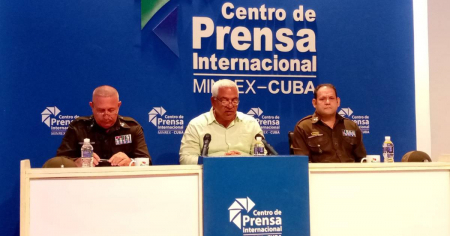
The Ministry of the Interior (Minint) attributed the source of the "chemical" circulating in Cuba to the U.S. market and stated that, despite new detection capabilities, vulnerabilities persist that fuel trafficking and consumption in the country.
Members of the National Drug Commission warned that the global expansion of new psychoactive substances has also impacted the island, which has necessitated the strengthening of prevention and response mechanisms, they explained during a press conference held in Havana this Thursday, as reported by state television in a report.
From 2024 to the present in 2025, 72 operations related to marijuana, cocaine, methamphetamine, and synthetic cannabinoids have been prevented, coming from 11 different sources, noted Colonel Juan Carlos Poey Guerra, head of the Specialized Drug Combat Unit of Minint.
The official emphasized that the internal market today shows an increasing presence of synthetic drugs, particularly the so-called “chemical” or “paper,” and stated that this substance “comes from abroad, from the United States.”
Poey noted that border violations, the diversion of landings, and the cultivation of marijuana within the country are the main sources of supply for illicit trafficking.
The Minister of Justice and President of the National Drug Commission, Oscar Silvera Martínez, emphasized that the core focus of official policy remains prevention.
He outlined the involvement of agencies such as Education, Labor, Culture, Tourism, and Agriculture in a strategy aimed at "consolidating a culture of rejection of consumption."
According to the information released, the Minint has prioritized strengthening the detection of new psychoactive drugs and preparing specialized forces, including canine units, as well as cooperating with drug enforcement services from other countries.
The official narrative claims that Cuba maintains a policy of "zero tolerance" toward the production, possession, and trafficking of drugs, although the authorities themselves acknowledge that the situation has become more complex and that the impact of "chemicals" continues to grow within the national territory.
The conference, in which the authorities denied any connection with drug trafficking, aimed to mitigate the political impact of the explosive revelations from the former head of Intelligence of Nicolás Maduro, Hugo "El Pollo" Carvajal, who directly linked Havana to the strategy of the Cartel of the Suns.
At the end of November, two men were arrested in Ciego de Ávila after being caught by the police while selling the synthetic drug known as “químico.”
Through publications about police operations and "exemplary" trials, the authorities report on the offensive against the growing trafficking of synthetic cannabinoids or designer drugs, commonly referred to as “químico” or “papelito”, that has surged to unprecedented levels in cities and neighborhoods across the country in recent years.
The Minint reported in mid-September that, from the beginning of the year until that date, more than 1,500 people had been arrested for drug-related offenses; 81 kg of narcotics, 11,000 plants, 23,000 seeds, five firearms, and traffickers' assets were seized, and five criminal networks operating from José Martí International Airport in Havana were dismantled.
In the middle of the year, the Supreme Court approved a ruling that increased the prison sentences for those who possess or distribute synthetic drugs, which are highly toxic and cause serious consequences for those who consume them.
Filed under: