
Related videos:
The murder of a teacher in Guantánamo on December 8 was the fourth gender-based crime recorded in just over a week and brought the total to 45 femicides in Cuba in the final stretch of 2025.
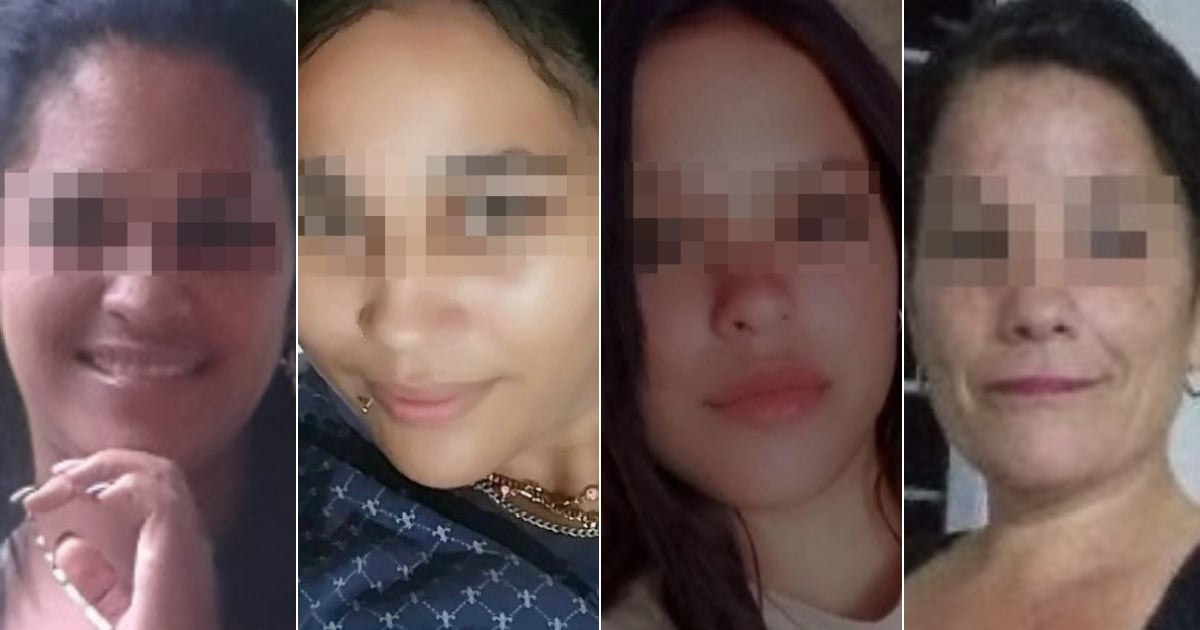
The femicide of Yinet Labañino Acosta, 40 years old, followed the misogynistic crimes that claimed the lives of Rosa Idania Ferrer Pérez, 46; Heidi García Orosco, 17; and Elianne Reyes Gómez, 26, in a violent sequence that began on November 30th of last year, as confirmed by the Gender Observatory of the magazine Alas Tensas (OGAT) and the platform Yo Sí Te Creo en Cuba (YSTCC).
Independent organizations warned that this chain of fatal events "clearly outlines the map of feminicide violence in Cuba: intimate aggressors, homes turned into scenes of death, young and adult victims, devastated families, and a structural lack of protection that recurs case after case".
In addition to the 45 femicides, OGAT and YSTCC documented up to December 11 two murders of men for gender-related reasons, 16 attempted femicides, and three cases that require access to the investigation for clarification.
A report published on the website of Alas Tensas specified that both observatories continue to investigate other suspected femicides and incidents of extreme violence in Santiago de Cuba, Camagüey, Artemisa, Villa Clara, and Granma, in "a context marked by the absence of transparent and disaggregated official statistics."
Four tragedies that shake Cuba
Yinet Labañino Acosta was murdered in her home, in the locality of Cabacú, in the municipality of Baracoa, and along with her, the assailant also killed her partner, for “reasons related to machismo and misogyny,” the monitoring groups specified. Yinet had two minor children.
The information, which initially circulated on social media, was confirmed by the official pro-government Facebook page "Guantánamo y su Verdad," which also identified the alleged criminal as Justo Matos Castillo.
OGAT and YSTCC questioned the report's attribution of the double homicide to "personal and passionate conflicts" between the perpetrator and the victims, as the official narrative often presents these crimes; and they warned that such labels tend to dilute and render invisible the "structural dimension of misogynistic violence."
The femicide of nurse Rosa Idania (Rosy) Ferrer Pérez also occurred within her home in the Elpidio Gómez batey, in the municipality of Palmira, Cienfuegos, on November 30th. Arisbel Suárez, known as "Felipillo," her partner, was arrested for the crime.
Rosa Idania was the mother of two daughters—one of whom was a minor—worked at the community polyclinic where she lived, and was "very well-liked by patients, colleagues, and neighbors," stated the platforms.
Raquel Pérez, her cousin, revealed to Alas Tensas that her murderer had a history of domestic and community violence, which confirms the lack of protection for Cuban women against violent offenders.
Around two in the afternoon on December 5th, the teenager Heidi García Orosco was still wearing her school uniform after returning home from classes at the Pedro Pablo Rivera Cué Pre-University Institute, when her boyfriend took her life.
Within her own home—a place that should have been safe—in the rural settlement of Finca Alcancía, in the municipality of Jovellanos, Matanzas, she was stabbed to death by Naviel Núñez Ramos. The attacker fled, but hours later, his father turned him in to the police.
OGAT and YSTCC emphasized that this crime corroborates the patterns documented in the Annual Report 2024, where they noted a high incidence of feminicides among individuals aged 15 to 30, murders committed by partners or ex-partners, and occurring within the victims' homes.
The young mother Elianne Reyes Pérez lost her life on December 7, at the hands of her partner and within her home in the municipality of Madruga, in Mayabeque. Her little daughter is now in the care of her family.
Upon confirming the murder of Elianne, both observatories corroborated the recurrence of repeated patterns, as it involved "an intimate femicide, occurring at home, perpetrated by the partner, in a context where there are no shelters or accessible public protocols for women who need to leave violent relationships."
At the time, OGAT and YSTCC stated that this crime confirmed documented trends in the previous year's report: 76.8% of femicides involved victims who were women aged between 15 and 45; 55.4% of the incidents occurred within the home; and, up to that date, 17 of the victims were aged between 15 and 30.
Independent observatories argue that structural impunity fuels femicides in Cuba, as despite the mention of violence against women in the Penal Code, the country does not have a comprehensive law on gender-based violence and there is also no standalone definition of femicide. Additionally, there are no shelters or accessible protection protocols for women and girls at risk.
They argue that these institutional shortcomings "leave thousands of women exposed to known aggressors—partners, ex-partners, neighbors, relatives—and facilitate impunity, while authorities continue to fail to publish complete, disaggregated, and transparent statistics on femicides."
Filed under: