
Related videos:
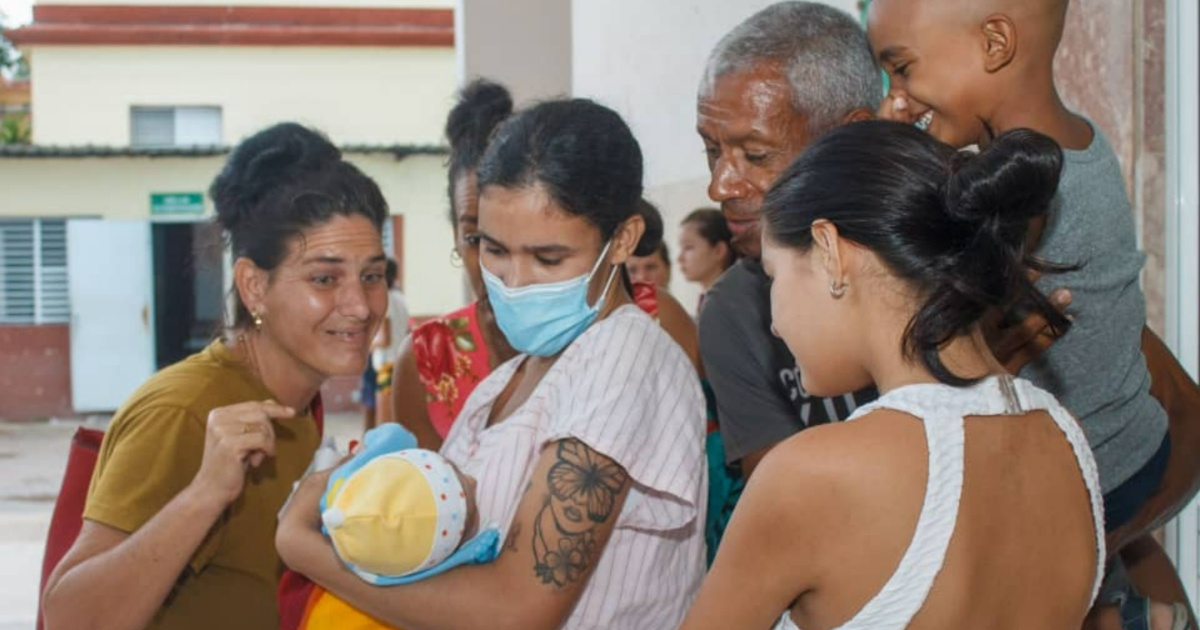
New images of the baby from Matanzas who overcame chikungunya after 46 days of being intubated were released this Monday, moving hundreds of Cubans.
The images shared by the official newspaper Girón and taken by photographer Raúl Navarro Fuentes show young Maylom Martínez Abreu and the joy of his mother, Litzaidis de la Caridad Abreu Piña, along with family, friends, and the medical team.
The photos were taken on December 9 when the baby was discharged from the José Ramón López Tabrane Gyneco-Obstetric Hospital in Matanzas, after 63 days of hospitalization and an extreme battle that began even before birth.
The case
The baby contracted chikungunya vertically during gestation and spent 46 days intubated, in such a critical condition that, according to his doctors, many doubted he would survive.
Her recovery is extraordinary news amidst a country plunged into a health emergency that is spiraling out of control.
The case was handled by the Neonatology Service at the hospital in Matanzas, where a team of pediatricians, neonatologists, intensivists, physiatrists, nurses, and physical therapists worked tirelessly to keep the newborn alive, who was born in fetal distress, with meconium aspiration, and in the context of confirmed arbovirus infection.
Her mother, Litzaidis de la Caridad Abreu Piña, was admitted with 38.5 weeks of pregnancy, high fever, and a positive diagnosis for chikungunya, which necessitated an emergency cesarean section.
Maylom was born weighing 3,910 grams (8.62 pounds), but his condition was so fragile that he was placed on mechanical ventilation from the very beginning.
On the second day of life, he/she suffered from disseminated intravascular coagulation, one of the most serious episodes a newborn can face.
For weeks, he remained in critical condition.
Doctor Liliana Amieva Ruiz, head of Neonatology, explained to the weekly Girón that the process was a learning experience for the entire department, as they had never dealt with a positive case of chikungunya in a newborn before.
The arbovirus epidemic—primarily chikungunya and dengue—has overwhelmed the system in a context marked by deteriorated hospitals, extreme shortages of supplies, absence of personnel, and thousands of patients without adequate care. Dozens of children, one of the at-risk groups, remain in serious condition in hospitals across the island, according to official reports.
In Santiago de Cuba, for instance, children and adolescents account for nearly 65% of hospitalized severe patients due to arboviral illnesses, in a context characterized by the simultaneous circulation of dengue and chikungunya and a high health risk.
Filed under: