
Related videos:
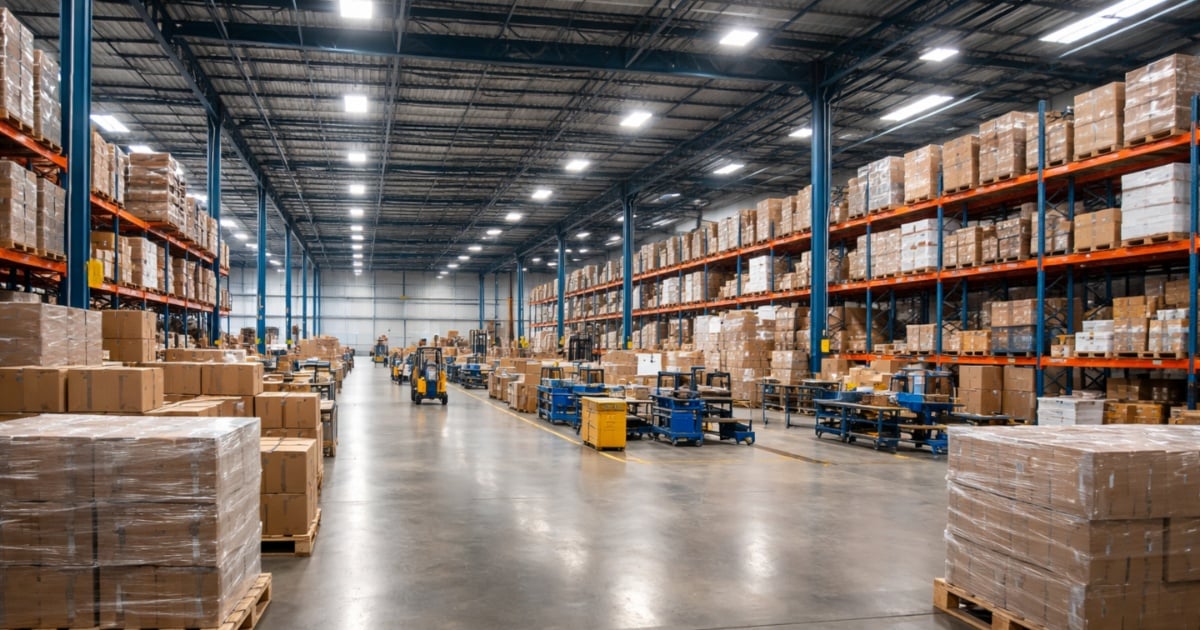
The administration of President Donald Trump is seeking contractors to reform the U.S. immigration detention system with a plan that includes converting industrial warehouses into large centers capable of incarcerating more than 80,000 immigrants simultaneously, according to a draft bid reviewed by The Washington Post.
Instead of transferring detainees across the country "to any place where there is space," as is currently the case, ICE plans to establish a "deliberate feeding system" to accelerate deportations, according to the document.
The plan provides that the recently arrested individuals will be taken to processing centers for several weeks and then sent to one of seven large warehouses, each capable of holding between 5,000 and 10,000 people, where they would be "prepared" for their expulsion.
The draft also mentions 16 smaller facilities, each with a capacity for 1,500 detainees.
According to the draft of the bidding, the large warehouses would be located near major logistical hubs in Virginia, Texas, Louisiana, Arizona, Georgia, and Missouri.
Among the cited examples are proposed facilities with a capacity of up to 10,000 detainees in Stafford (Virginia), another with 9,500 in Hutchins (near Dallas, Texas), and one with 9,000 in Hammond (Louisiana).
The document would not be final: ICE plans to share it with private detention companies to gauge interest and adjust the plan before a potential formal request for proposals.
Consulted by The Washington Post, Tricia McLaughlin, spokesperson for the Department of Homeland Security (DHS), stated that she "cannot confirm" the information and declined to answer questions about the warehouse plan.
The bid states that the new facilities would aim to “maximize efficiency,” “minimize costs,” reduce processing times, and expedite the deportation process, in addition to promoting “safety, dignity, and respect” for individuals in ICE custody.
In parallel, the interim director of ICE, Todd M. Lyons, defended treating the system “like a business” and compared the goal to Amazon's logistics: “Like Prime, but with human beings,” according to statements cited in the report.
Experts cited warn that warehouses are designed for storage and transport, not for human habitation: they often have poor ventilation, imprecise temperature controls, and may lack appropriate plumbing and sanitation infrastructure for thousands of people.
The defender Tania Wolf, from the National Immigration Project, described the idea as "dehumanizing," stating that people are treated "like cattle."
Nevertheless, the draft outlines significant renovations to include reception areas, lodging units with showers and bathrooms, kitchen, dining rooms, medical unit, recreational areas, legal library, and administrative offices; some facilities would include spaces for families in custody.
The plan is part of Trump's push to stop and deport millions of immigrants and to expand the detention system, backed—according to the report—by $45 billion allocated by Congress for the imprisonment of immigrants.
The administration has reactivated inactive prisons, repurposed sections of military bases, and promoted camps of tents; the text mentions, for example, the camp at Fort Bliss (Texas), noted as the largest ICE facility at that time.
Furthermore, the document does not establish a timeline for the start of construction, but it indicates that the facilities should begin receiving detainees between 30 and 60 days after construction begins.
Former officials and cited reports also point to practical obstacles, such as a lack of trained personnel and issues already identified by inspectors in new facilities.
Filed under: