
Related videos:
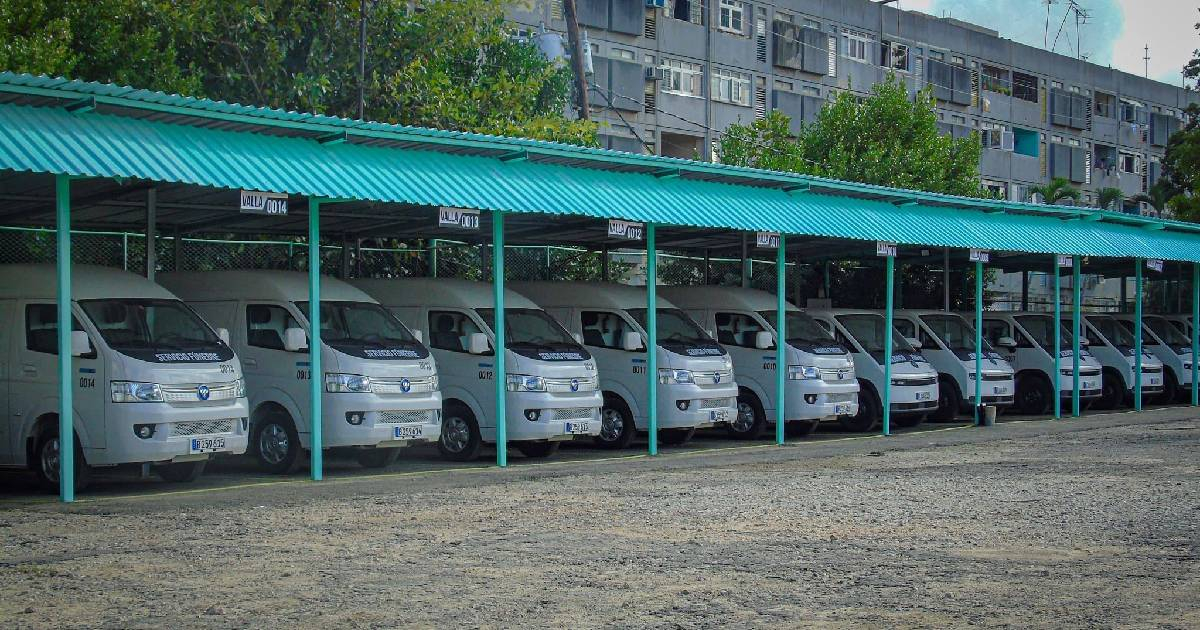
A new fleet of 15 electric hearses began operating this Saturday in Havana, offering free service to the public and featuring its own energy support, reported the Minister of Transport, Eduardo Rodríguez Dávila.
According to a note from Rodríguez on his Facebook profile, the project was developed rapidly over the last month and was recently supervised by President Miguel Díaz-Canel along with the main authorities of the Party and the Government in the capital.
He specified that the vehicles belong to the state-owned company Servi Axess, which is part of the Commercialization Company AXESS, which in turn is affiliated with OSDE/GEA of the Ministry of Transportation (Mitrans) and will be used exclusively for transfers within the Cuban capital.
The head of Transport specified that the costs of the service will be covered by the State budget, so the public will not have to pay for this type of transportation.
So far, this responsibility has rested with the Budgeted Unit of Necrological Services of the Provincial Government of Havana, which operated, as acknowledged by the minister himself, "under difficult conditions."
The new park aims to strengthen the coverage of funeral services, in response to a directive from the country's leadership regarding the collapse of funeral services in the main Cuban city, as well as throughout the country.
Rodríguez emphasized that, since these are electric vehicles, the charging infrastructure is fully supported by solar panels and energy storage systems.
As a final level of security, an emergency generator was also installed. The entire system operates automatically to prioritize the use of renewable sources, he explained.
He also assured that the vehicle supplier will take on the maintenance and necessary repairs, with the aim of preserving the technical condition of the equipment and preventing the lack of resources or usual limitations from degrading the quality of service over time.
Although the project started in Havana, the minister stated that it is part of a broader plan that includes the rest of the provinces of the country and the special municipality of Isla de la Juventud.
This program foresees the gradual incorporation of new electric and combustion equipment that has already been contracted.
The financing in foreign currency comes from the funds for the Sustainment and Development of Public Transportation, a mechanism implemented this year based on foreign currency revenues from the sector and taxes derived from the commercialization of vehicles.
According to Mitrans, these resources have enabled the purchase of electric tricycles, Fotón microbuses, ecomobiles in Sancti Spíritus, the V2V catamaran, as well as tires, batteries, and other supplies.
Funeral services in Cuba are facing a sustained collapse due to a lack of maintenance for hearses, a shortage of fuel and materials for coffins, and poor management.
Serious incidents such as coffins falling on public roads and bodies left untransferred for hours have highlighted the severity of this crisis.
The situation is particularly critical in provinces outside of Havana, where families face the impossibility of saying goodbye to their loved ones in a dignified manner.
Filed under: