
Related videos:
The National Center for Seismological Research (CENAIS) reported on an earthquake recorded in eastern Cuba, which was felt by the population in areas of at least two provinces: Santiago de Cuba and Granma.
The phenomenon occurred at 9:41 p.m. (local time), with a magnitude of 2.9 on the Richter scale, and was detected by the network of stations of the Cuban National Seismological Service.
The information was confirmed through Informative Bulletin No. 14, issued by the Central Station of the National Seismological Service, based in Santiago de Cuba.
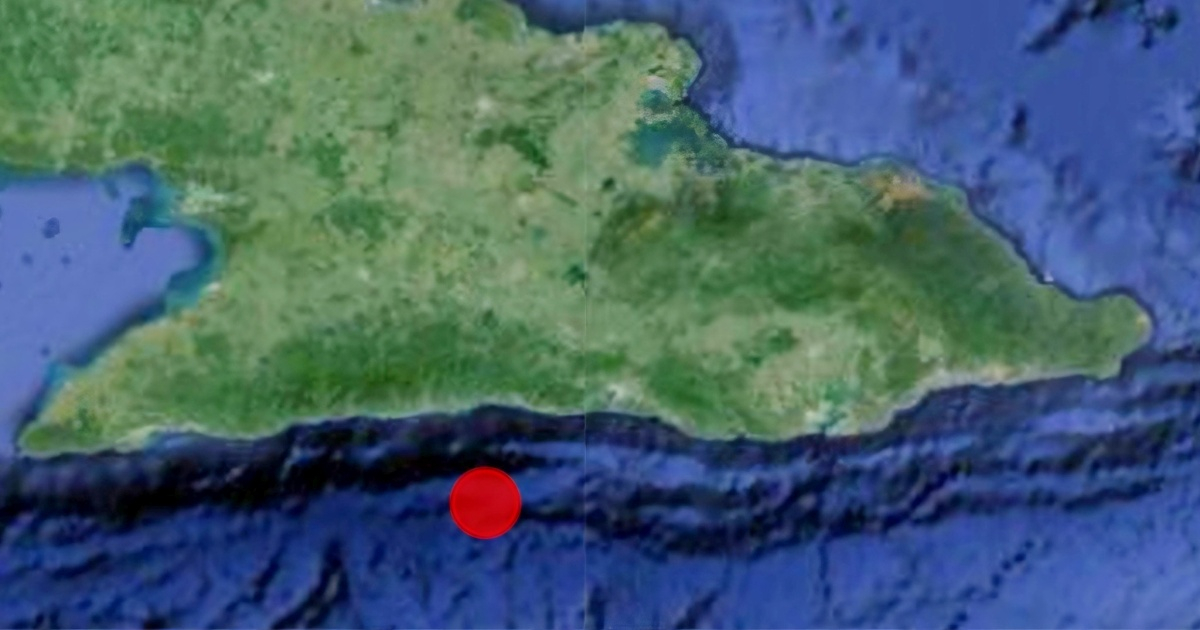
In the official report, it is specified that the epicenter of the tremor was located 5 kilometers deep, and 17 km southwest of the city of Santiago de Cuba, off the coast of the municipality of Guamá.
It is located exactly at the coordinates 19.70 degrees north latitude and -76.26 degrees west longitude.
The news was announced on social media by Enrique Diego Arango Arias, head of the Seismological Service and specialist at the National Center for Seismological Research (CENAIS), who stated:
"Preliminary data on a noticeable earthquake recorded at 9:41 PM today, December 29, with an epicenter south of the municipality of Guamá, Santiago de Cuba province. It is reported to be perceptible in several localities in the provinces of Santiago de Cuba and Granma. The information statement from the Central Station will be available shortly."
Although Arango Arias initially estimated the magnitude of the phenomenon at 3.2 and at a depth of only 0.7 kilometers, the official bulletin later revised these figures to 2.9 degrees and a depth of 5 kilometers.
The official note from CENAIS specified that citizen reports of perceptibility had been received from various areas in the provinces of Granma and Santiago de Cuba.
No material damages or casualties related to the event were reported.
A historically seismic area
The eastern part of Cuba is located in one of the most seismically active areas of the archipelago, due to the interaction between the Caribbean and North American tectonic plates.
Despite the low magnitude of this tremor, its shallow depth and relatively close proximity to populated areas made it perceptible to some residents.
The depth of only 5 km and the proximity of the epicenter to the coast explain why, despite not being a strong event, it was felt by the population.
Earthquakes with these characteristics often produce a brief sensation of movement or vibration, which may go unnoticed by most people, but can cause concern for those in high floors or lightweight structures.
More than three months without noticeable events
Since September 17, no noticeable earthquakes had been reported in Cuba. That day, two earthquakes measuring 2.9 and 3.2 on the Richter scale were felt in the municipality of Pilón, in Granma province.
In that case, the first seismic event was recorded at 6:34 p.m. (local time), at a depth of 7.4 kilometers, located at 19.88 degrees latitude north and -77.40 degrees longitude west, seven kilometers west of Pilón
At 6:40 p.m., the network of seismological stations detected a second tremor, with a magnitude of 3.2, at a depth of 10 km and at the coordinates 19.82 degrees north latitude and -77.33 degrees west longitude, 10 kilometers south of the same eastern locality.
In that case, the reports of perceptibility came from the towns of Pilón and Niquero, in the province of Granma.
More than 3,000 earthquakes were recorded in Cuba in the first half of 2025
During the first half of 2025, 3,623 earthquakes were recorded in the region, of which 3,273 occurred within the geographical area of Cuba, according to data published in July by the National Seismological System.
Despite the high number of seismic movements in the first half of the year, only 10 were perceptible to the population, nine of which were related to the plate boundary area south of eastern Cuba.
The day with the highest seismic activity was January 27, with 60 events in 24 hours.
The most active area was Pilón–Chivirico, with 1,849 earthquakes recorded, most of which were aftershocks of the earthquake that occurred on November 10, 2024; while the area with the most energy was Santiago–Baconao.
Filed under: