
Related videos:
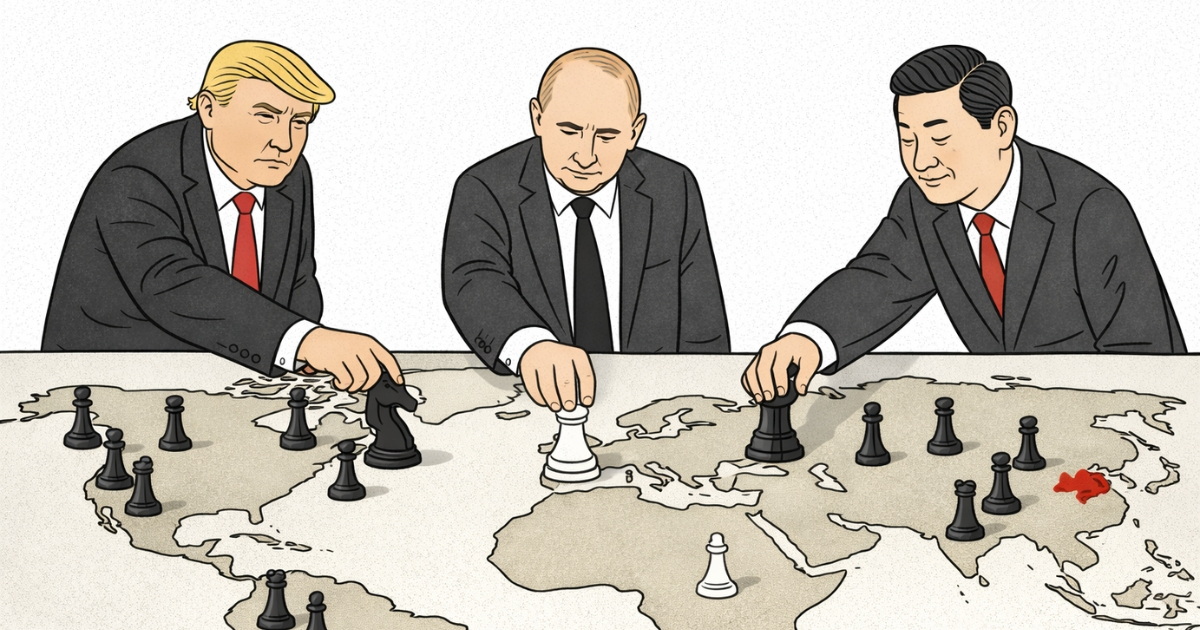
The world bids farewell to a year marked by a new escalation of geopolitical tensions, with active hotspots in Eastern Europe, Asia, and Latin America. In the last 24 hours, negotiations between Russia and Ukraine have been shaken by mutual accusations, China has conducted unprecedented military maneuvers around Taiwan, and the United States, under the leadership of Donald Trump, has intensified direct pressure on the Venezuelan regime, announcing an attack that still raises questions.
Russia and Ukraine: Negotiation under tension and accusations of drone attacks
Discussions for a potential ceasefire between Russia and Ukraine have entered a new phase of tension after the Kremlin reported a supposed drone attack on Putin's presidential residence within Russian territory. Moscow directly accused Kiev of attempting to sabotage the diplomatic process and announced that it would adopt a firmer negotiating stance.
The Ukrainian government categorically denied the accusation, labeling it as a provocation and a propaganda maneuver aimed at justifying new Russian demands or future military actions. So far, there is no independent verification to confirm the attack reported by Russia.
This episode confirms the extreme fragility of the negotiations: any incident, whether real or fabricated, can be used to alter the political balance of the dialogue. Meanwhile, the conflict continues without clear progress on the ground, and the likelihood of an agreement remains more dependent on strategic calculations than on real concessions.
China surrounds Taiwan with the largest military maneuvers to date
In Asia, China has drastically increased pressure on Taiwan by conducting its largest recorded military maneuvers around the island. For over 10 hours, the People's Liberation Army deployed dozens of aircraft and vessels, carried out live-fire exercises, simulated maritime blockades, and practiced coordinated attacks from the air, sea, and underground.
Beijing justified the maneuvers as a direct response to the recent approval of a significant arms package from the United States to Taiwan, accusing Washington of interfering in China's internal affairs. Taiwanese authorities condemned the actions as a direct threat to regional stability, although they stated that they are maintaining a defensive and non-provocative approach.
International analysts warn that these types of exercises are no longer just symbolic demonstrations, but operational drills aimed at showcasing China's actual ability to isolate or exert military pressure on the island in the event of a major crisis.
U.S. and Venezuela: Trump announces attack, but doubts remain
In Latin America, the spotlight was on Venezuela after U.S. President Donald Trump publicly announced that the United States "struck" a Venezuelan port facility used, in his words, to load boats linked to drug trafficking. Trump spoke of a large explosion and significant damage in the area.
However, neither the CIA, nor the Pentagon, nor the White House have officially confirmed the operation, and so far there is no independent verification of the announced attack. Nicolás Maduro's regime has not provided clear details, although official media have reported a new "imperialist aggression."
What is confirmed is that the United States has been conducting a sustained maritime anti-drug interdiction campaign in the Caribbean since September, with over 30 attacks on vessels accused of transporting drugs. This operation, which has resulted in fatalities, has been criticized by international organizations due to a lack of judicial processes and transparency.
For many analysts, Trump's announcement represents a dangerous turning point: if it is confirmed that there was a direct action against infrastructure on Venezuelan territory, we would be facing the largest military escalation by the U.S. against the Chavista regime in years, amidst a context of international isolation, economic crisis, and growing internal pressure on Maduro.
Filed under: