
Related videos:
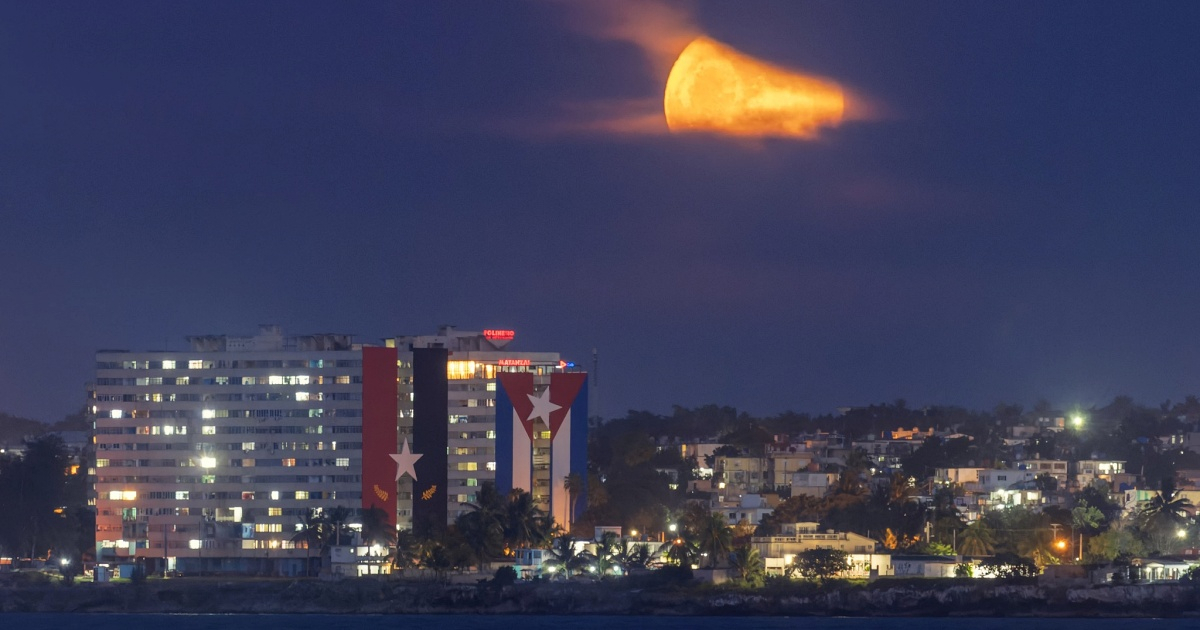
The beginning of 2026 will be marked by one of the most striking astronomical events on the calendar: the first full moon of the year will coincide with a supermoon, traditionally known as the Wolf Moon, and its presence in the night sky will be accompanied by the peak of one of the most intense meteor showers of the year, the Quadrantids.
According to the specialized site Star Walk, the first supermoon of 2026 will be visible on January 3, when the Moon is positioned in the constellation of Gemini.
However, the lunar disc will be fully illuminated for several days, starting from January 1, so the characteristic brightness of the full moon will be noticeable even before the central date of the phenomenon.
A supermoon is defined as the coincidence of the full moon phase and perigee, the point in the orbit where the Moon is closest to the Earth. In this case, perigee will occur on January 2 at 2:00 AM (Spain time), when the distance between the two bodies will be approximately 360,431 kilometers.
Although the Moon will not be completely full at that time, it will show a brightness of 97%. By the following night, when it is in its full phase, the satellite will have moved about 3,000 kilometers away, a variation that is imperceptible to the casual observer.
According to NASA, when a supermoon occurs, it appears up to 14% larger and 30% brighter than the dimmest moon of the year, although this difference is not always easy to perceive with the naked eye.
The Wolf Moon gets its name from ancient traditions of Indigenous peoples in North America, who associated full moons with hunting and harvesting cycles. In the depths of winter, the howls of wolves would have inspired this designation.
This year will be particularly special in terms of lunar phases: there will not be 12 full moons, as is usual, but 13, due to the presence of a "blue moon" on May 31, when the satellite will appear for the second time in the same month.
The supermoon on January 3 will coincide with the peak of the Quadrantids, one of the three most prominent meteor showers of the year. These originate from the remnants of the asteroid 2003 EH1 and are named after a constellation that is no longer officially recognized.
Under ideal conditions, this phenomenon can offer between 120 and 200 meteors per hour; however, the intense brightness of the supermoon will considerably reduce this figure.
According to the American Meteor Society, during the peak—which will occur between the night of Friday and the morning of Saturday—observers may see fewer than 10 meteors per hour, in contrast to the nearly 25 meteors per hour that are typically seen in dark skies.
Mike Shanahan, director of the planetarium at the Liberty Science Center, recalled that the full moon is the main obstacle to fully enjoying these meteor showers.
Still, both phenomena will be visible without the need for special equipment.
The supermoon will remain visible during the night of January 3rd to 4th from anywhere in the world where it is nighttime and the sky is clear, while the Quadrantids are mainly observed from the northern hemisphere.
To try to see the meteors, it is recommended to move away from urban lights, allow your eyes to adjust to the darkness, avoid looking at screens, and look for areas where the light of the Moon may be partially hidden by mountains, trees, or other natural obstacles.
This event also marks the end of a streak of supermoons that began in October and lasted for four consecutive months.
The next supermoon is not expected until the end of 2026, making the Wolf Moon a special opportunity for astronomy enthusiasts.
Filed under: