
Related videos:
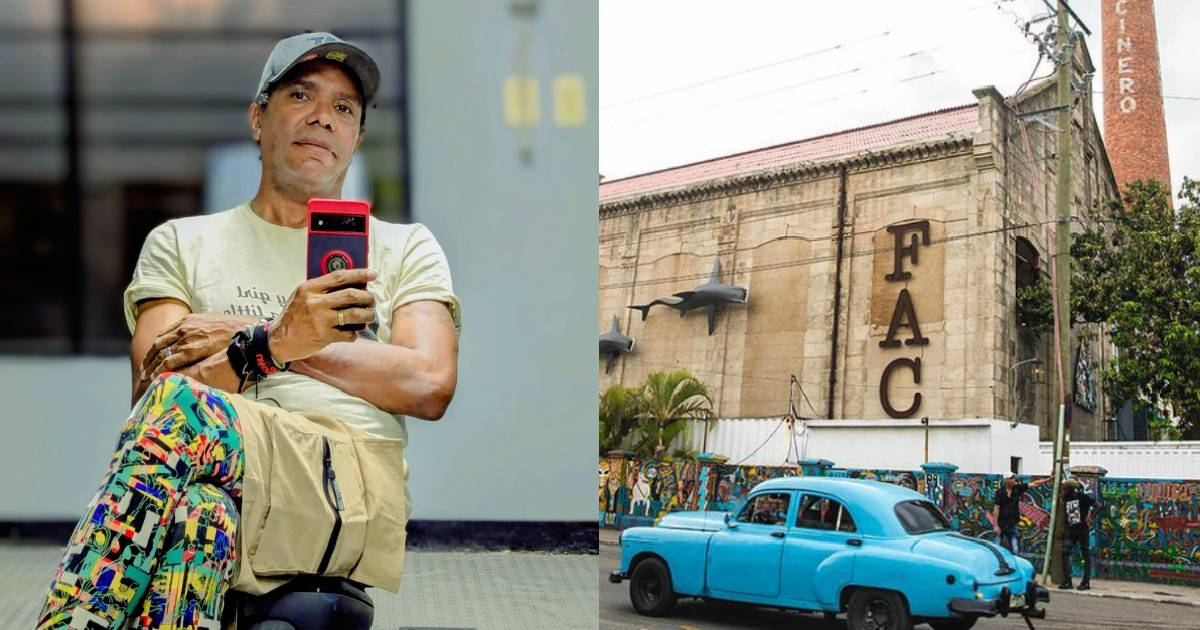
The Cuban troubadour Raúl Torres publicly defended the Fábrica de Arte Cubano (FAC), describing it as “a sanctuary to be protected,” amid the controversy sparked by accusations of racial discrimination against the cultural space led by the musician and composer X Alfonso.
In a lengthy post on Facebook, Torres stated that he spoke “with caution, but with clarity,” and rejected the criticisms against the FAC that arose after an incident in which a young man reported, at the end of December, that he had been prevented from entering the venue under the argument of “the right of admission.”
According to the musician, "too much dust" has been stirred around a project that he considers unique within the Cuban cultural landscape.
Torres shared his personal connection with FAC, where he once performed years ago at the invitation of Carlos Alfonso, and stated that, although his artistic path took a different direction afterward, he was never expelled or banned from the venue.
He also recalled a conversation with X Alfonso that he described as an example of honesty, in which the creator of the FAC made it clear that he was not accountable to the government or state institutions.
The troubadour denied having witnessed or felt any racist attitudes within the space. “I never believed it,” he wrote, and he assured that the FAC has always been a refuge where “the only thing that segregates is beauty.”
In his opinion, it is a creative workshop where skin color dissolves in shared culture and where art functions as a common ground.
Without defending a "perfect" institution, Torres called for the protection of what he defined as "a daily miracle" and criticized the accumulation of resentments and the political manipulation of the conflict.
"We have bigger problems to solve," he pointed out, while urging not to destroy one of the few cutting-edge cultural spaces that, he said, still exist in the country.
The singer-songwriter's statements come after the FAC publicly responded to accusations from the Cuban Institute of Music and other official media, describing them as "false, embarrassing, and defamatory."
In a statement released on social media on January 1st, the FAC denounced an official campaign aimed at discrediting an independent project that has promoted inclusion and diversity for over a decade.
The cultural center stated that the controversy intensified following the decision to pay tribute to Celia Cruz (1925-2003) for the centenary of her birth, an event that was censored at the last minute by the authorities.
It also emphasized her economic and artistic independence, as well as her community work during emergencies and throughout the pandemic.
Artists, intellectuals, and social media users have expressed their support for the FAC, including musicologist Rosa Marquetti and many citizens who consider the official attack unjust.
For many, the controversy reflects the increasing tension between autonomous cultural spaces and the institutional apparatus of the regime, in a context marked by attempts at control and censorship.
Filed under: