
Related videos:
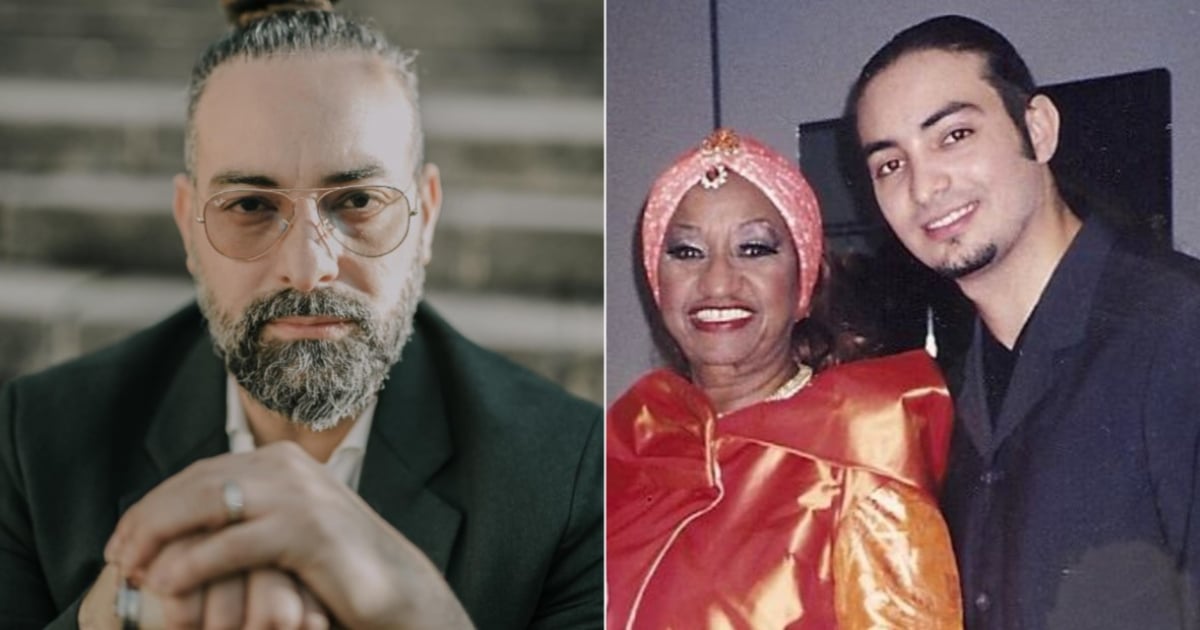
The Cuban musician Alain Pérez criticized the censorship and the silence of the authorities regarding the tributes to the centenary of Celia Cruz.
“It's unfortunate... And I personally believe that at this point in the world, institutions make a mistake by trying to blind and limit the significance of Celia,” said Pérez in an interview with EFE during a mass at the Cathedral of Havana for the artist's centenary.
The words of Pérez, who was the musical director for some tours of the Queen of Salsa and worked with her as an arranger and composer, were shared last Tuesday during the aforementioned memorial mass for the centenary of Cruz's birth, the most universal Cuban singer.
The mass took place at the Parish of Our Lady of Charity of El Cobre, in the heart of Central Havana, with the attendance of artists, diplomats, and faithful individuals who came to pay tribute to the Queen of Salsa.
The temple, a symbol of faith for Cubans both on and off the island, hosted a ceremony that few imagined possible: a tribute to the artist who was censored for decades by the regime.
Among the attendees were also singer Haila Mompié, reggaeton artist Yomil Hidalgo, and the head of the U.S. diplomatic mission in Cuba, Mike Hammer, who took part in an event that combined faith, music, and memory, according to images shared by journalist Wilfredo Cancio.
The mass, held under the slogan "United for Celia," marked one of the most emotional moments of the international commemorations for the 100th anniversary of the birth of the performer of "Life Is a Carnival."
The tribute was carried out peacefully, silently defying the censorship that days earlier prevented the celebration of an artistic gala in honor of Celia, organized by Teatro El Público and the Fábrica de Arte Cubano (FAC).
That cancellation sparked a wave of outrage among artists and citizens. In response, the FAC carried out a symbolic action: a lighted empty chair on stage, accompanied by the message “Celia lives.” Today, that phrase resonated within the walls of the Havana temple, transformed into a prayer and remembrance.
Celia Cruz, who died in exile in 2003 without being able to return to her country, remains one of the most beloved figures among the Cuban people. Her voice, which filled the homes of several generations with rhythm and pride, transcended politics and borders. A hundred years after her birth, her “¡Azúcar!” continues to be a cry of national identity, a way of saying “we are here,” even in the midst of silence.
The mass on this October 21 not only remembered the artist but also the history of a country that bid her farewell without being able to embrace her. Amid flowers, prayers, and songs, Celia returned—at least spiritually—to Havana, to the neighborhood where she was born, and to the land where her voice was forbidden but never forgotten.
The faces of the attendees reflected the excitement of a reunion that censorship could not prevent: Celia Cruz returned to Cuba, this time through the door of faith.
Filed under: