The United States seized the Olina tanker early Friday in Caribbean waters, in an operation conducted by U.S. Marines and sailors as part of a renewed offensive against the so-called "ghost fleet" of Venezuela.
The vessel, which had set sail from the South American country completely loaded with crude oil, was intercepted "without incident" by the Joint Task Force Southern Spear, launched from the aircraft carrier USS Gerald R. Ford, according to U.S. Southern Command.
“Once again, our joint interinstitutional forces sent a clear message this morning: 'there is no safe haven for criminals’”, stated Southern Command via the social network X, quoting words from Secretary of Defense, Pete Hegseth.
The images shared by Southern Command showed a U.S. helicopter descending onto the deck of the Olina, while marines conducted a visual inspection of the vessel.
Although the participation of the Coast Guard has not been confirmed - as was the case in previous similar operations - the political and military message is clear: the United States reaffirms its maritime dominance in the region and its determination to block the flow of Venezuelan oil under sanctions.
The operation, as detailed by both Reuters and AP, took place during the early hours and was part of a broader campaign driven by the administration of Donald Trump to exert strict control over the global distribution of Venezuelan oil.
The seizure takes place in the context of the tightening of sanctions following the capture of the ruler Nicolás Maduro by U.S. forces on January 3.
The fifth ship seized in an escalating offensive
The Olina is the fifth sanctioned oil tanker intercepted by U.S. forces in recent weeks.
Previously, it operated under the name Minerva M and had been under sanctions since January of last year, when Washington identified it as part of a network of vessels that make up the "ghost fleet."
They are vessels that sail without clear regulations, with little to no insurance, and using flags of convenience.
According to data from the public maritime database Equasis, the Olina was falsely flying the flag of Timor Leste.
He had departed from Venezuela loaded with crude oil and was returning to the region as part of a fleet of at least a dozen vessels, all headed to Venezuela.
According to Reuters, the ship's AIS tracker had been inactive for more than 50 days, with its last recorded location within the Venezuelan exclusive economic zone, northeast of Curaçao.
“The seizure occurs after a prolonged chase of tankers linked to sanctioned shipments of Venezuelan oil in the region,” stated the British risk management firm Vanguard.
A ghost fleet that is retreating
The Olina was not the only vessel under U.S. scrutiny. Other oil tankers that were part of the same fleet began to return to Venezuelan waters.
According to an industry source cited by Reuters, three of them -Skylyn, Min Hang, and Merope- reportedly turned back on Thursday, while seven additional vessels loaded with Venezuelan crude were expected to return on Friday and Saturday.
In addition, another vessel, the M Sophia, also belonging to the fleet, was seized by U.S. forces earlier this week.
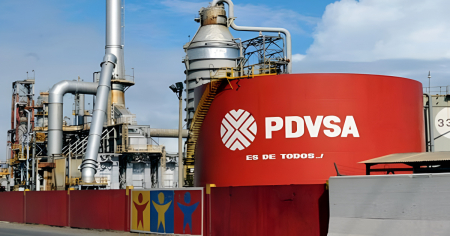
All of these vessels are transporting crude oil owned by PDVSA, the state oil company of Venezuela, which did not provide any comments after being contacted by the media.
The US offensive aims to suffocate the export routes of Venezuelan oil, even as they are masked under clandestine mechanisms.
"The U.S. blockade on sanctioned Venezuelan oil remains in full effect 'anywhere in the world'," emphasized Defense Secretary Pete Hegseth last Wednesday.
Today's operation is set against the backdrop of the political collapse of Maduro's regime, which was overthrown in an unprecedented nighttime operation and is currently under U.S. custody.
Since then, American foreign policy has shifted towards consolidating a new order in Venezuela, blocking the routes that economically supported the previous government.
What's next?
It is still unclear whether Washington will seize the other tankers heading back to Venezuela.
However, the pattern indicates that the United States is not willing to tolerate violations of sanctions at any latitude.
The operation against the Olina and other vessels of the Venezuelan ghost fleet serves as a direct warning to shipping companies, insurers, and countries that collaborate—either directly or indirectly—with the oil exports of the previous regime.
The persistence in using false flags, turning off tracking systems, and navigating in low-surveillance areas is no longer sufficient to evade U.S. controls.
With each new seizure, Washington expands the scope of its sanctions policy and makes it clear that, in the geopolitical landscape of the Caribbean, the shadow of the Venezuelan fleet is under increasingly precise surveillance.
Filed under: