
Related videos:
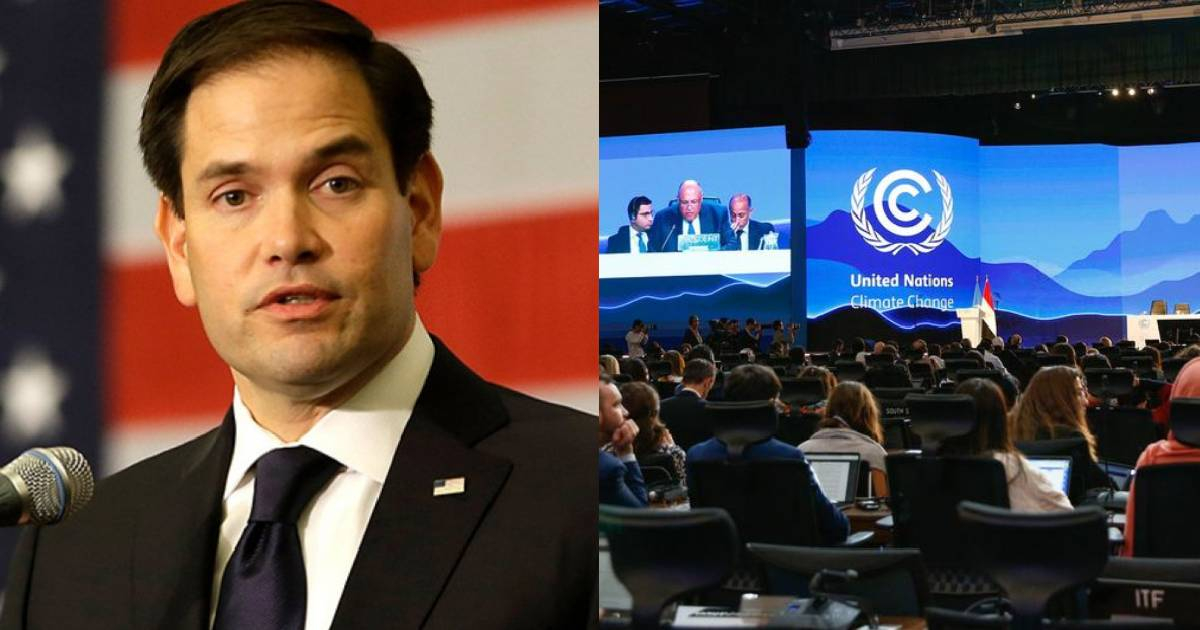
The Secretary of State Marco Rubio stated this Saturday that the withdrawal of the United States from 66 international organizations marks the end of a model of multilateralism that, according to Washington, has treated the American taxpayer as a funder without results or accountability.
In a message posted on the social network X, the head of U.S. diplomacy stated that President Donald Trump's decision sends "a clear message" that it is no longer acceptable to allocate public funds to institutions that do not demonstrate effectiveness, transparency, or respect for the national interests of the United States.
Similarly, the State Department reinforced this stance by stating on the social media platform itself that Washington rejects a model of global governance that turns the country into the main financial supporter of an extensive and inefficient international bureaucracy.
The withdrawal was ordered by a presidential memorandum signed this week by Trump, directing federal agencies to carry out the exit "as soon as possible."
The document is based on Executive Order 14199, issued on February 4, 2025, which tasked the Department of State with reviewing U.S. participation in international organizations, treaties, and intergovernmental agreements.
According to the White House, the process concluded that 66 entities "no longer serve American interests."
Of these, 35 do not belong to the United Nations system, and 31 are directly part of the UN. Among the organizations mentioned are the Intergovernmental Panel on Climate Change (IPCC), the International Renewable Energy Agency (IRENA), UN Women, the United Nations Population Fund, and the UN Framework Convention on Climate Change.
In a text signed by Rubio, the State Department stated today that many of these institutions have overlapping mandates, poor financial and ethical management, and have become platforms for political activism or instruments that operate against the interests of the United States.
The text cited examples of organizations linked to climate policies, ideological agendas, or initiatives that, according to Washington, undermine national sovereignty.
It further argues that American taxpayers have spent billions of dollars on these entities with "few concrete results," while some of them openly criticize U.S. policies or promote agendas contrary to its values.
In the case of UN agencies, withdrawal means ceasing participation or suspending funding "to the extent permitted by law."
Rubio insisted that the decision does not signify international isolation, but rather a rethinking of American leadership.
"Sometimes true leadership involves knowing when to step back," he stated, while warning that the review of other international organizations is ongoing and that Washington will only continue its support for those that can demonstrate tangible results.
The measure is announced amid a climate of increasing diplomatic friction. Days ago, the United States faced criticism in the UN Security Council following the capture in Caracas of Nicolás Maduro, accusations that Washington rejected by describing the operation as a lawful action against a figure linked to drug trafficking and organized crime.
Filed under: