
Related videos:
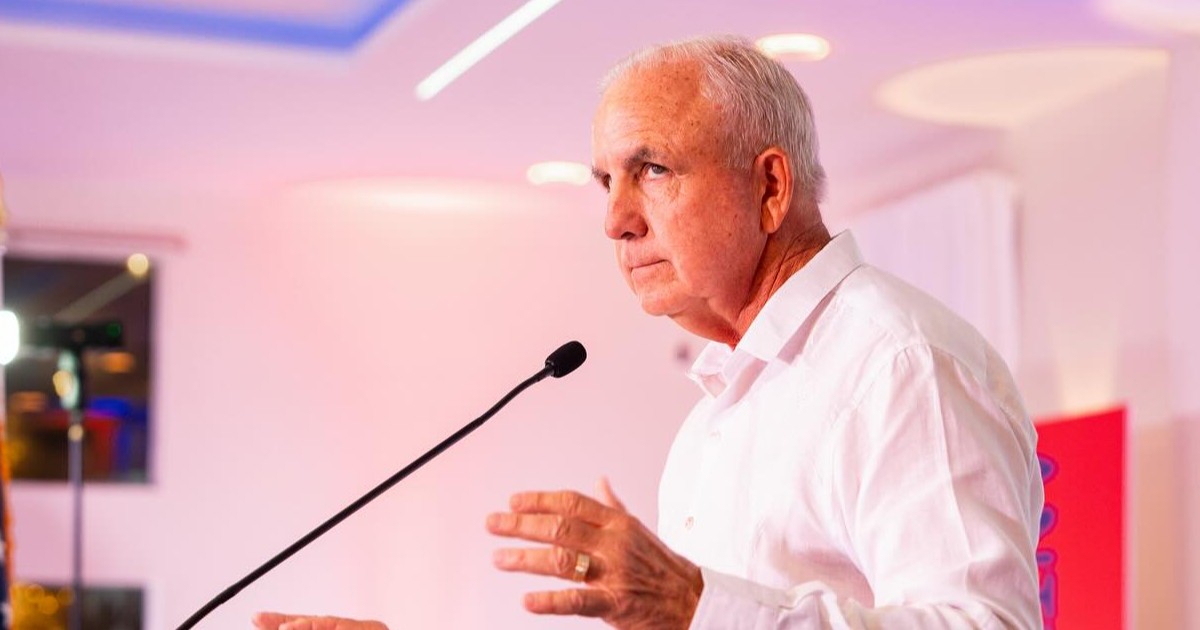
The Republican congressman Carlos A. Giménez issued stern warnings to the Mexican government regarding the shipments of oil to Cuba, cautioning that "in the United States Congress, we are deeply disturbed by Mexico's pathetic subsidies to the narco-terrorist dictatorship in Cuba."
In his account on X, the Cuban-American legislator questioned the policy of President Claudia Sheinbaum and stated that instead of giving away oil to a decaying regime, it could be better used to benefit the Mexican people.
"We want to be good allies to our friends in Mexico, but if this troubling trend continues, my colleagues and I will have no issue in imposing severe consequences on the Mexican government," he warned.
In a second tweet, the congressman stated that the president is too "lavish" with the resources of the Mexican people, but that Congress is working to stop those "pathetic gifts that attempt to undermine U.S. policy."
"We are Mexico's largest partner and we do not tolerate this great betrayal," he assured.
Lastly, the politician accused Claudia Sheinbaum of seeking the enmity of the United States to benefit the narcoterrorist dictatorship in Cuba, and stated that this has serious consequences for the Mexican people, who are facing shortages.
The context of Giménez's warnings coincides with a historic shift in Cuba's energy supply following the capture of Nicolás Maduro.
Months ago, Mexico became the main supplier of crude oil to the Island.
Data from the company Kpler and the newspaper Financial Times indicates that in 2025 Mexico exported an average of 12,284 barrels daily, which accounts for about 44% of total Cuban imports and represents a 56% increase compared to the previous year. In contrast, Venezuela contributed only 9,528 barrels daily, a 63% decrease from 2023.
Pemex, through its subsidiary Gasolinas Bienestar, confirmed average daily shipments of 17,200 barrels of crude oil and 2,000 of refined products during the first nine months of 2025, valued at approximately 400 million dollars.
President Sheinbaum defended the operation, stating that everything is being carried out within the legal framework and in accordance with prior agreements or humanitarian assistance.
There is no increase in oil shipments beyond historic levels. "There is no specific shipment," Sheinbaum stated last Wednesday in response to questions regarding whether the administration had increased the volumes of crude oil sent to Cuba.
However, he acknowledged that Mexico has become a key supplier in light of the sharp decline in Venezuelan supplies and the energy crisis affecting the Island.
The increasing dependence of Cuba on Mexico has raised alarm in Washington.
Senator Marco Rubio recently described these shipments as a "red line" that could jeopardize bilateral relations, accusing the Mexican administration of "supporting a criminal dictatorship with oil."
Experts in hemispheric politics emphasize that the shipments could further strain regional cooperation, especially at a time when the United States exerts strategic control over Venezuela following the capture of Maduro.
In parallel, the Cuban regime is facing a critical energy situation: frequent blackouts and an increasing reliance on external supplies have forced the government to concentrate its crude oil reserves on ships operated by GAESA.
Satellite images show at least six tankers anchored in the bay of Matanzas, while a seventh is heading to the area, in what could be an effort to redistribute strategic reserves to ensure power generation in the coming days.
This scenario reflects the urgency and fragility of Cuba's energy supply, which now significantly depends on support from Mexico.
Giménez's warnings, in this context, are not merely rhetorical: they convey a direct political and economic message toward Mexico, linking oil shipments with the renegotiation of the T-MEC, and making it clear that the U.S. administration is closely monitoring any actions that could strengthen the Cuban regime.
The pressure comes at a time of heightened geopolitical sensitivity, with the Caribbean island facing its worst energy crisis in decades and the United States closely monitoring every move that could impact regional stability.
Filed under: