
Related videos:
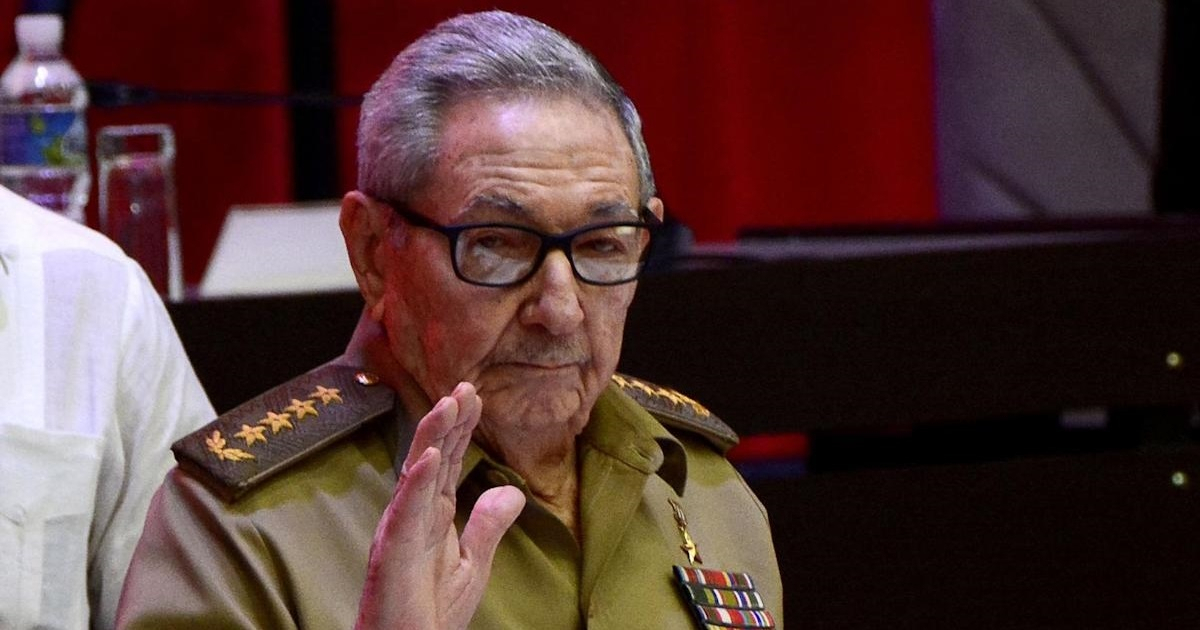
Since U.S. forces captured Nicolás Maduro on January 3rd, Raúl Castro, the veteran 94-year-old commander who continues to pull the strings of power in Cuba, has not made any public appearances or official statements, a notable fact at a time when the survival of the Cuban regime seems increasingly uncertain.
In times of great political and geopolitical tension, when regional leaders react vehemently to the decline of chavismo and the consequences this has for Havana, Raúl has maintained absolute silence.
He has not made any statements, given speeches, or issued any communications, nor has he been seen at official events related to the current crisis.
His public absence is particularly striking given the role he continues to play behind the scenes, controlling key power factors such as the economic-military conglomerate GAESA and exerting influence over Miguel Díaz-Canel.
The only gesture that indirectly references him from the Cuban government was an official tweet from the Foreign Ministry published last Friday, featuring a quote from one of his speeches at the III CELAC Summit: "We will not be provoked, but we will also not accept any attempts to advise or pressure us regarding our internal matters."
But that is not a direct or current communication from Raúl himself; rather, it is merely a reuse of his words from a context prior to the current events.
His absence was noticeable during an event that the regime organized to show support for Maduro immediately after his capture: the mobilization at the Antimperialist Tribunal José Martí in Havana, scheduled to condemn what the Government termed an "imperialist military aggression by the United States against Venezuela."
The event was attended by Díaz-Canel and the top brass of the Communist Party, but not by him.
The last time Raúl Castro appeared at a public event was last December, during the final session of the sixth regular period of the National Assembly of People's Power.
On that occasion, he was once again presented as the "leader at the forefront of the Cuban Revolution," attending the plenary alongside Díaz-Canel and being applauded by the deputies.
The scene reinforced the perception that, despite having officially stepped down from his positions in 2021, he still holds symbolic and political weight within the state apparatus.
However, since then—especially after the capture of Maduro, a historical ally of Havana who provided Cuba with vital resources such as subsidized oil—there have been no visible signs of him in any public or political arena.
This silence coincides with a critical moment in which the Díaz-Canel government is facing a deep economic and social crisis, now exacerbated by the collapse of its main regional partner.
Raúl's absence has also sparked external speculation and discussions on social media, where many interpret his silence as a sign of the fragility of Cuban leadership and a potential evasion of taking a stand during a moment of structural crisis.
That the regime's "strongman" has not uttered a single word, has not appeared at public events, and has not even been symbolically displayed—as is often done when power feels threatened—reveals an atypical pattern.
In previous crises (the death of Fidel, the protests of July 11, migratory outbreaks, constitutional changes), Raúl's image was used as a guarantee of continuity, cohesion, and control. Today, it is not.
In a climate where historical consequences for the Cuban regime are becoming apparent following the decline of chavismo, its "disappearance" adds even more uncertainty to the political future of the Island.
Filed under: