
Related videos:
Dictatorships thrive on a dangerous illusion: confusing duration with impunity. They believe that time protects them, that the uniform shields them, and that fear replaces legitimacy. But history insists otherwise: impunity is fragile, and military power, when the time comes, does not always exist.
For other dictatorships that still believe they are eternal, the lesson is simple and urgent: listen in time, withdraw or negotiate while there is still room to do so
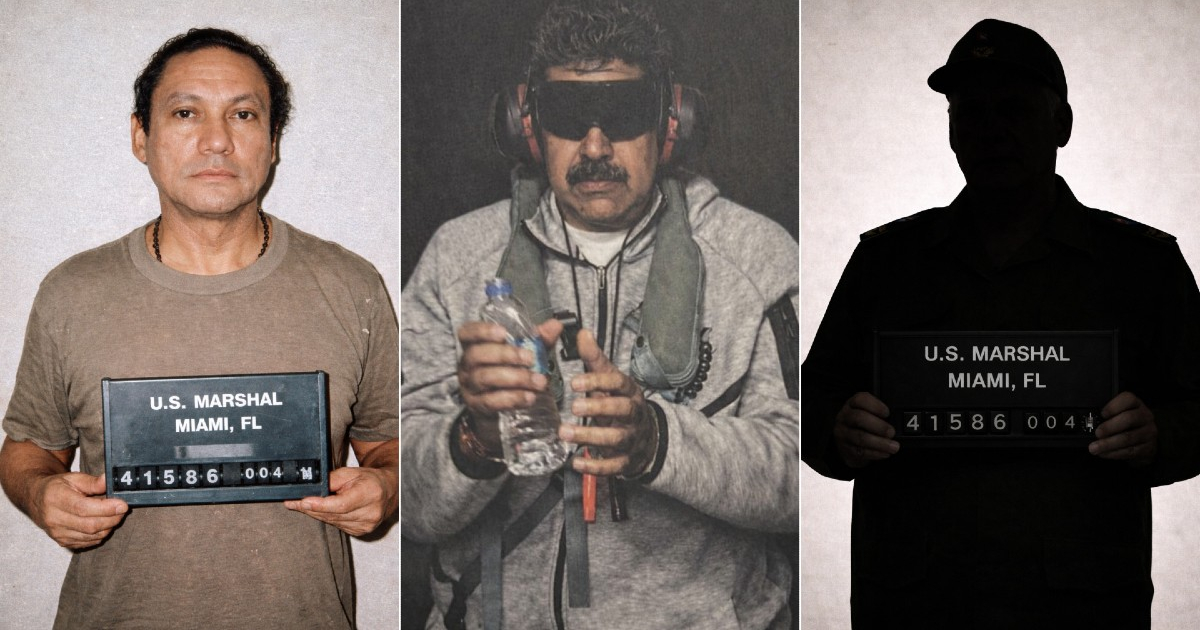
Manuel Noriega governed convinced that he controlled the game. He had armed forces, intelligence services, and an effective repressive apparatus. He seemed untouchable. Yet, when the balance shifted, all that power evaporated. The army did not save him. "Sovereignty" did not protect him. He ended up out of the country and in front of a foreign tribunal.
Nicolás Maduro followed a similar path. For years, he presented himself as impregnable, backed by generals, parades, and slogans. However, military power in dictatorships tends to be hierarchical and dependent, effective for repressing civilians but not for withstanding firm external decisions. When the decisive blow arrives, the chain of command breaks, and the leader realizes he was in control less than he believed.
The Venezuelan “great military power” did not fire a single missile nor launch a single aircraft. Not because they didn't exist in the inventories, but because the real power was absent when it was needed. The muscle displayed over the years turned out to be mere scenery: useful for parades and internal repression, but useless in the face of a firm external decision.
The proverb is not just a saying; it is a warning. He who does not heed counsel does not reach old age… nor ends well. For other dictatorships that still believe they are eternal, the lesson is simple and urgent: listen in time, withdraw, or negotiate while there is still room. Because there is always a moment when a dignified exit is possible. And beyond that threshold, decisions are no longer made at home.
The story reveals two paths. One leads to a negotiated transition, imperfect but our own. The other ends far away, handcuffed and before a judge in the United States.
Choosing is not an act of weakness. It is the ultimate act of real power.
Filed under:
Opinion article: Las declaraciones y opiniones expresadas en este artículo son de exclusiva responsabilidad de su autor y no representan necesariamente el punto de vista de CiberCuba.