
Related videos:
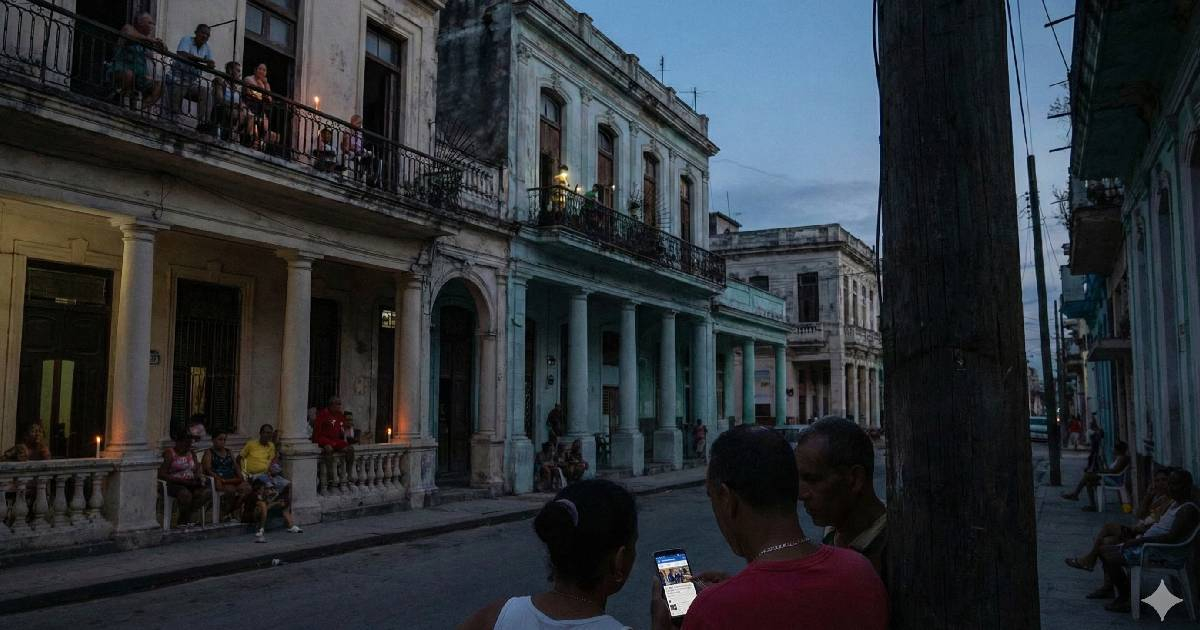
The electricity generation deficit in Cuba reached 1,760 MW during the peak hour on Saturday and could rise this Sunday to as much as 1,685 MW, confirmed the daily report from the Electric Union (UNE).
The electricity service was affected for 24 hours the previous day and continued to experience interruptions in the early morning.
The greatest impact due to generation capacity deficit occurred at 6:30 PM, when there was a shortfall of 1,760 MW to meet the demand.
At 6:00 AM this Sunday, the availability of the National Electric System (SEN) was 1,495 MW against a demand of 2,010 MW, resulting in an impact of 547 MW.
For the midday hours, a larger deficit is expected, with blackouts that could reach up to 850 MW.
Among the main incidents are breakdowns in five thermal power units: units 5 and 8 of the Mariel thermal power plant (CTE), unit 6 of the Nuevitas CTE, unit 2 of the Felton CTE, and unit 3 of the Antonio Maceo CTE in Santiago de Cuba.
Maintenance work is also being carried out on unit 2 of the Santa Cruz del Norte power plant and unit 4 of the Carlos Manuel de Céspedes power plant in Cienfuegos.
The limitations in thermal generation keep 537 MW offline.
However, the greatest impact continues to be on distributed generation due to a lack of fuel and lubricants: 96 power plants are shut down, representing 884 MW, along with an additional 153 MW unavailable due to a shortage of lubricant, for a total of 1,037 MW affected by this issue.
The UNE reported that the 34 new photovoltaic solar parks contributed 3,207 MWh during the day, with a maximum output of 617 MW at noon, providing partial relief that does not fully address the structural shortcomings of the system.
Although the report initially referenced the inclusion of unit 8 of the CTE Máximo Gómez (Mariel), with 50 MW, for the peak night hours, the UNE indicated shortly after that it was already online.
With that contribution, the estimated availability would be 1,545 MW against a maximum demand of 3,200 MW, resulting in a deficit of 1,655 MW and a projected impact of up to 1,685 MW.
In Havana, the Electric Company reported through its Facebook profile that the service was disrupted since 4:58 AM on Saturday, with a maximum interruption of 215 MW at 6:30 PM.
The disruption was restored at 9:35 PM, and according to the entity, there were no outages during the early morning hours, nor was there a deficit at the time this report was issued, although it warned that future disruptions will depend on the overall situation of the SEN.
Cuba has relied for decades on Venezuelan oil for both domestic consumption and to fuel its thermoelectric plants, and although this dependency has decreased with the entry of other suppliers such as Mexico, the recent capture of Nicolás Maduro and the announcement that there will be no more oil or money from Caracas implies a sudden interruption of one of the island's most vital energy sources.
This decision, announced by the administration of Donald Trump, intensifies a crisis already characterized by a lack of fuel, prolonged power outages, and a shortage of foreign currency to purchase crude oil on the international market.
This is compounded by the deterioration of the electrical grid and the aging of the generating plants.
Filed under: