
Related videos:
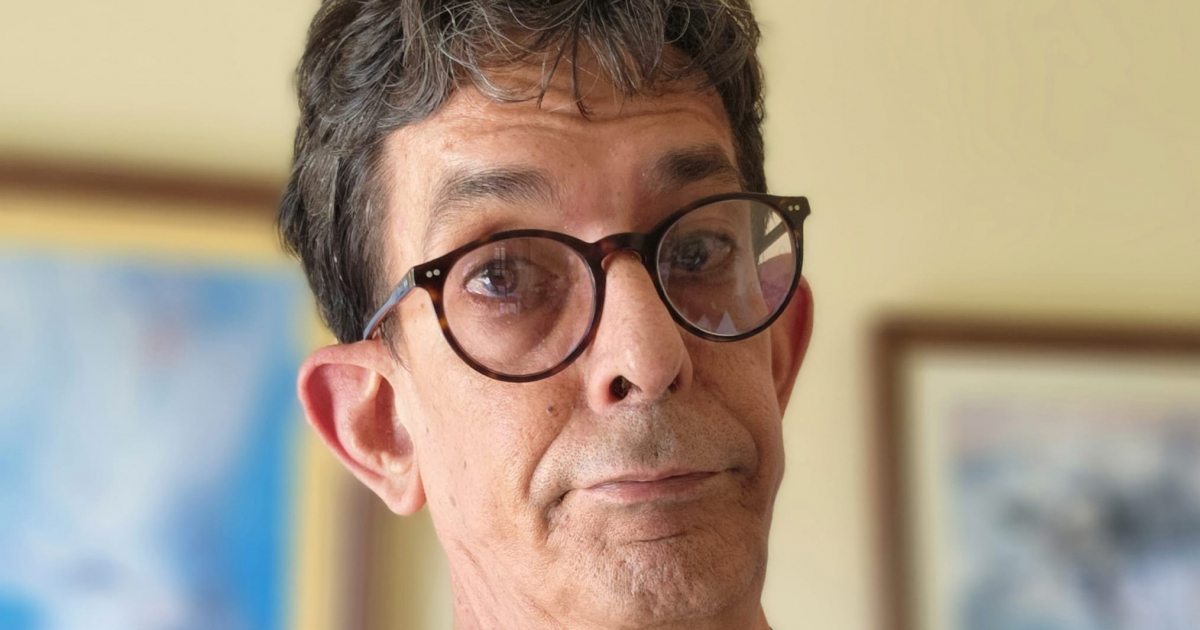
The Cuban comedian Ulises Toirac offered a harsh and clear reflection on the true state of patriotism in Cuba.
In a comment shared on Facebook, Toirac dismantles the official discourse that still appeals to extreme sacrifice "for the homeland" and suggests that this concept no longer resonates or mobilizes, and, above all, it fails to find support among a population that knows it has no say in its own country.
His analysis arises amidst speculations about international tensions and potential confrontations, and it points directly to an uncomfortable truth for those in power: the Cuban people are not willing to die for an outdated discourse that does not correspond to their everyday experience or their actual position within the system.
A homeland that no longer decides and no longer represents
Toirac emphasizes that the deterioration is not just economic or material. Beyond the precariousness of resources, the empty hotels devoid of tourists, or the fragile infrastructures, the core of the problem is political: the concept of "homeland" has eroded to the point of losing its ability to unite people.
The comedian explains that the model of confrontation historically employed by the Cuban State has always assumed that, in the event of a potential occupation by the United States, the people would engage in a "war of attrition" with their active participation.
However, that hypothesis can no longer be upheld. A people without a voice or a vote, who do not decide their own fate, do not recognize a homeland worth defending at the cost of their lives.
"When the people have seen a thousand times that they cannot decide in their own country, that the Assembly applauds any harmful foolishness against the people themselves, and places their hopes for progress in emigration... the concept of 'homeland' is eroded to the point that it hardly means anything to those who would have to wage a war of attrition at the cost of their lives," he emphasized.
That disconnection between the official discourse and social reality has drained words that once held deep emotional weight of their meaning.
When annexation ceases to be unthinkable
One of the most revealing points in his reflection is the reference to the possibility of annexation.
What was presented for decades as an unacceptable and almost sacrilegious scenario has today ceased to frighten many. Not out of ideological conviction, but from sheer exhaustion: when the homeland decides nothing and the citizen neither, the concept loses its protective, symbolic, and moral function.
"Not even remotely do I think it would be a solution," the actor clarifies, but he uses it as a social thermometer: if annexation stops being unthinkable, it's because the very idea of a nation has been eroded by a system that does not allow participation, choice, or correction.
A speech frozen in time
Toirac is blunt when he questions: "It’s not 1962, it’s not the '60s or '70s... and I still hear the same slogans."
While the world has changed, the official narrative continues to rely on symbols, slogans, and calls for sacrifice that no longer resonate with a fatigued, impoverished population that has been excluded from fundamental decisions.
The conclusion is clear: heroism cannot be asked of those who are not treated as citizens. You cannot invoke the homeland when the homeland does not protect, does not listen, and does not allow for decision-making. Moreover, a discourse of resistance cannot be maintained when the majority have accepted that their only path to progress lies outside the country.
Ulises does not speak of ideology, but of reality: without voice or vote, there is no homeland to defend.
Filed under: