
Related videos:
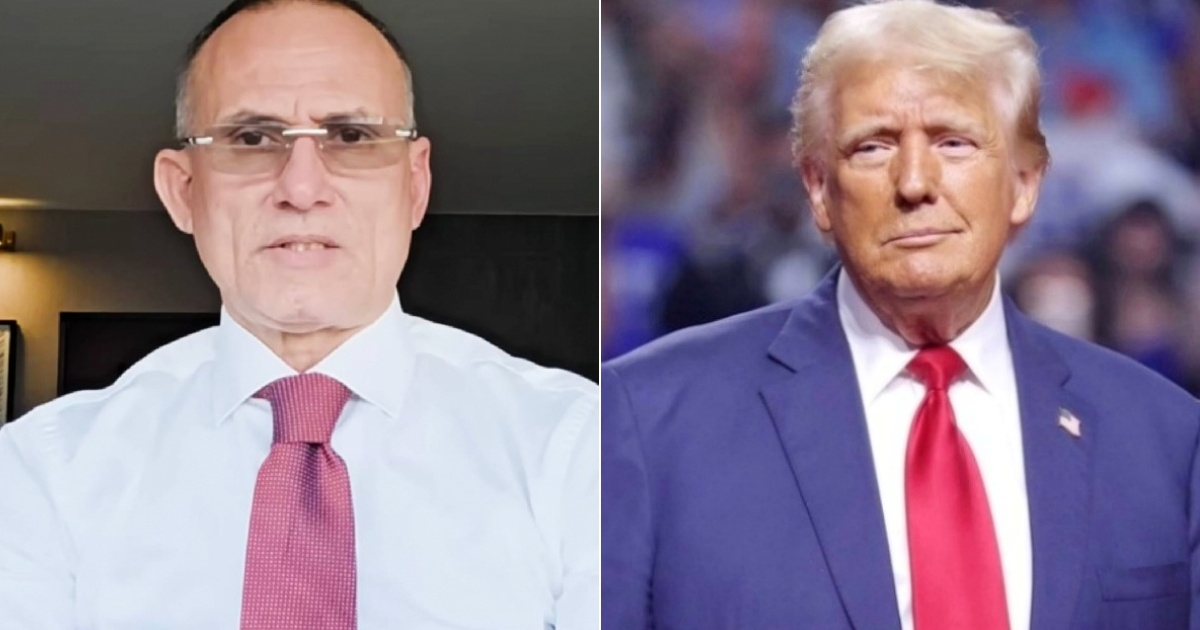
The Cuban opposition figure José Daniel Ferrer, who has been in exile in the United States since 2025, believes it is feasible for the administration of President Donald Trump to implement a strategy in Cuba similar to the one used in Venezuela.
This was stated on Tuesday during the virtual presentation of the First Comprehensive Report on Digital Surveillance in Cuba, prepared by the NGO Prisoners Defenders, in response to a question posed by the agency EFE.
Ferrer, the leader of the opposition organization Patriotic Union of Cuba (UNPACU), stated that he believes it is possible for the United States to promote a transition on the island using pressure mechanisms similar to those applied in Venezuela.
In that regard, he stated:
"In the case of Cuba, I believe that the U.S. president, Donald Trump, could force a transition in which the island's executive has no other option, just as (the acting president of Venezuela) Delcy Rodríguez does not have to act according to what the United States dictates."
The statement suggests a view of U.S. foreign policy as a force capable of intervening in political change processes within authoritarian regimes, and places Cuba in a hypothetical scenario of transition driven from the outside.
A possible scenario of limited intervention in Cuba
Although Ferrer reiterated his preference for a change led from within Cuba, he did not rule out external intervention as a last resort.
In light of the possibility that Cubans may not be able to achieve political change on their own, he expressed a pragmatic stance:
"Cubans will be able to lead the change without the need for the United States to bring it about. However, if that does not happen, if I have to choose between the current Cuba […] and a surgical action of minimal access to remove that tyranny from power […] then I will choose the second option."
With this statement, the opposition figure presents a dilemma that reflects both the frustration over the political stagnation on the island and their willingness to accept low-intensity external intervention as a means to break away from the current regime.
Parallelisms with Venezuela
Ferrer referred to the Venezuelan case as an example to illustrate the type of strategy he believes is feasible in Cuba.
According to the activist, the White House's plan regarding Venezuela—under Trump's leadership—has had a clear objective of restoring democracy, and he expressed his support for that approach.
"Continue believing" that Washington's plan will "lead to the return of democracy to Venezuela."
This positioning adds to the statements that Trump himself has made about the situation in the South American country, where he has praised the leader Delcy Rodríguez, calling her "a fantastic person," while publicly asserting that the United States supports her mandate as acting president.
Venezuelan context and the role of the United States
In the same vein of comparison, Ferrer referenced the current context in Venezuela, characterized by the capture of President Nicolás Maduro by the United States, which led to the swearing-in of Rodríguez as interim president.
From her new position, the chavista leader has emphasized that the response to any external aggression will be exclusively diplomatic.
In parallel, the interim Venezuelan government, which Trump considers under U.S. oversight, has undertaken significant economic opening measures: it has sent millions of barrels of oil to the U.S. for marketing and has encouraged foreign investment in the oil sector, all with direct support from the Republican administration.
Additionally, Washington has maintained a skeptical attitude towards other figures of the Venezuelan opposition, such as María Corina Machado, whom it has indicated lacks sufficient internal support, despite the fact that Machado herself presented Trump with the medal of the Nobel Peace Prize during her recent visit to the White House.
Conclusion: between the desire for internal change and international pressure
José Daniel Ferrer's statements reveal a constant tension in the Cuban opposition discourse: on one hand, the aspiration for a democratic transformation driven from within; on the other, a strategic acceptance of international intervention as a potential catalyst for change.
By equating the Cuban situation with the Venezuelan one and pointing to a possible "formula" of pressure from Washington, Ferrer places Cuba's political future within a complex international scenario, where geopolitical balances, decisions from foreign powers, and citizen action could intertwine to determine the country's fate.
Filed under: