
Related videos:
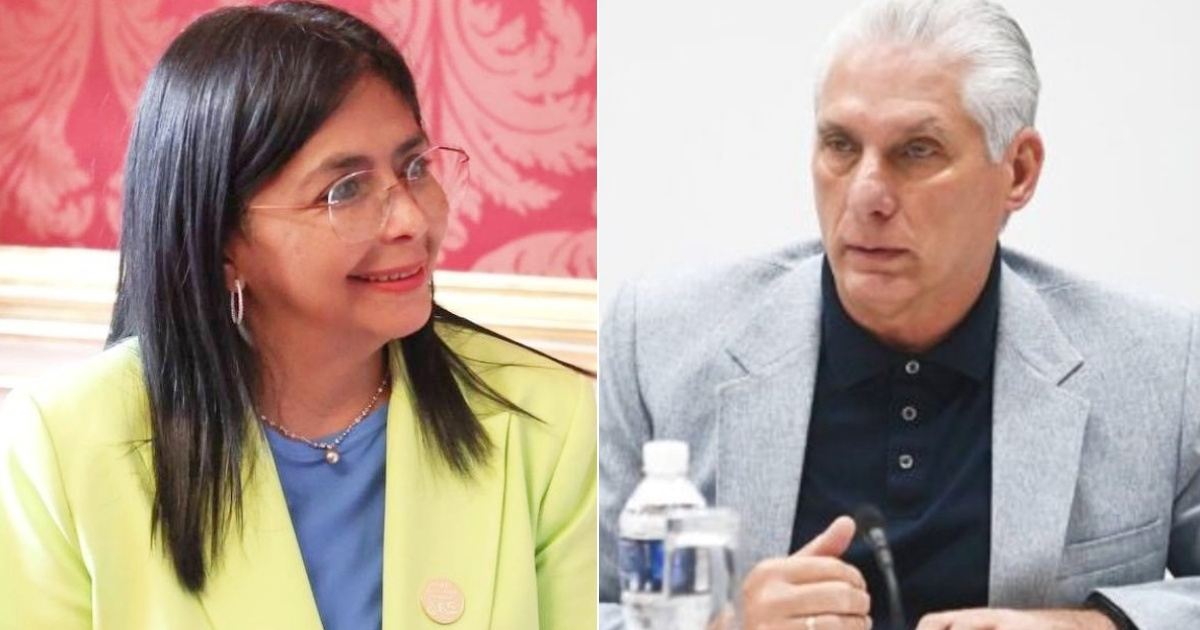
Miguel Díaz-Canel revealed this Thursday that he had a phone conversation with Venezuela's interim president, Delcy Rodríguez, in which he expressed his "strong condemnation" of the U.S. military intervention in Caracas and the "kidnapping" of Nicolás Maduro and his wife, Cilia Flores.
The statement, published on social media on January 22, comes 19 days after the events of January 3, which shook the Latin American geopolitical landscape.
“I held a telephone conversation with the Acting President of #Venezuela, Delcy Rodríguez. I reiterated our strong condemnation of the military aggression from #US and the kidnapping of the Constitutional President Nicolás Maduro and his companion Cilia Flores,” Díaz-Canel wrote in a message shared on Facebook and X.
In his post, the Cuban leader also expressed Havana's support for the current Venezuelan government, in a gesture of continuity of the historic ties between the two countries
“I expressed our support and solidarity with the Homeland of Bolívar and Chávez, its people, and the Bolivarian government; as well as the decision to continue strengthening the historic ties of brotherhood and cooperation,” he added.
In his message, Díaz-Canel did not mention what Rodríguez would have said to him.
A call with no clear date
The Cuban leader did not specify the exact date of the phone dialogue.
However, according to Delcy Rodríguez herself, the exchange is said to have taken place the day before her participation in the first Federal Government Council of 2026, held on Monday of this week. This means that the publication from the Cuban leader is quite delayed.
In the first Federal Government Council of Venezuela, the acting president revealed some details of the first official contact with Díaz-Canel.
"Yesterday, I spoke with the President of Cuba, Miguel Díaz-Canel Bermúdez, and the first thing he conveyed to me was his heartfelt condolences to the Venezuelan people, the families and friends of our heroes and heroines who died in combat on January 3," he said.
Rodríguez also highlighted the reciprocity of the gesture:
"I also returned them, because 32 Cuban heroes died, but they died for Venezuela, for the concept of unity. To feel like sons and daughters of the great homeland."
In the U.S. attack, at least 32 Cuban soldiers died who - according to official sources - were in Caracas as part of bilateral cooperation agreements. Their remains were repatriated and received honors in Cuba.
A conversation, two narratives
Although the communication seems to have been cordial, the Venezuelan leader did not publicly confirm any of the political points highlighted by Díaz-Canel, such as the strengthening of bilateral relations or a common cooperation agenda.
The message from Delcy, shared by the network Telesur, focused more on Latin American unity and the shared mourning for those who have fallen.
“I thank you for the call, because knowing we are united in the just causes of Latin America inspires us. It uplifts our esteem as Venezuelans,” said Delcy.
These statements, along with the recent meetings between Rodríguez and U.S. officials—including the CIA director—have fueled speculation about a strategic shift in Venezuelan foreign policy, which could impact relations with Cuba.
Reactions and skepticism online
Díaz-Canel's announcement has sparked a flood of comments on social media, many of which are mockeries and questions about the purpose and outcome of the call.
The label #CubaConVenezuela was replicated by several users, while others expressed doubts about the sincerity of the dialogue or its usefulness in light of Cuba's serious energy and internal political crisis.
"I maintained. I reiterated. I expressed. That’s a monologue, Migue, are you sure you didn't get hung up on?" warned an internet user.
"He called her because she left him on read on WhatsApp," mocked another.
Sharply critical views have emerged from those who accuse Delcy Rodríguez of having handed over power to Maduro and of collaborating with the United States.
"Did Delcy tell you about her alliance with Trump? Troy is going to burn soon," another pointed out.
The call between Díaz-Canel and Rodríguez, rather than uniting them around a common strategy, seems to reflect a situation marked by uncertainties.
While Cuba reaffirms its "unconditional" support, Venezuela is exploring new diplomatic and political channels with the United States. Nineteen days after Maduro's fall, the call seems more like an attempt to mend the narrative of brotherhood rather than a confirmation of continuity in events.
Amid tributes to fallen Cubans, an internal energy crisis, and a region undergoing significant reconfiguration, the key question remains unanswered: What did Delcy Rodríguez respond to all of that?
As many comment on social media, "a conversation is measured by what is said... and by what is left unsaid."
Filed under: