
Related videos:
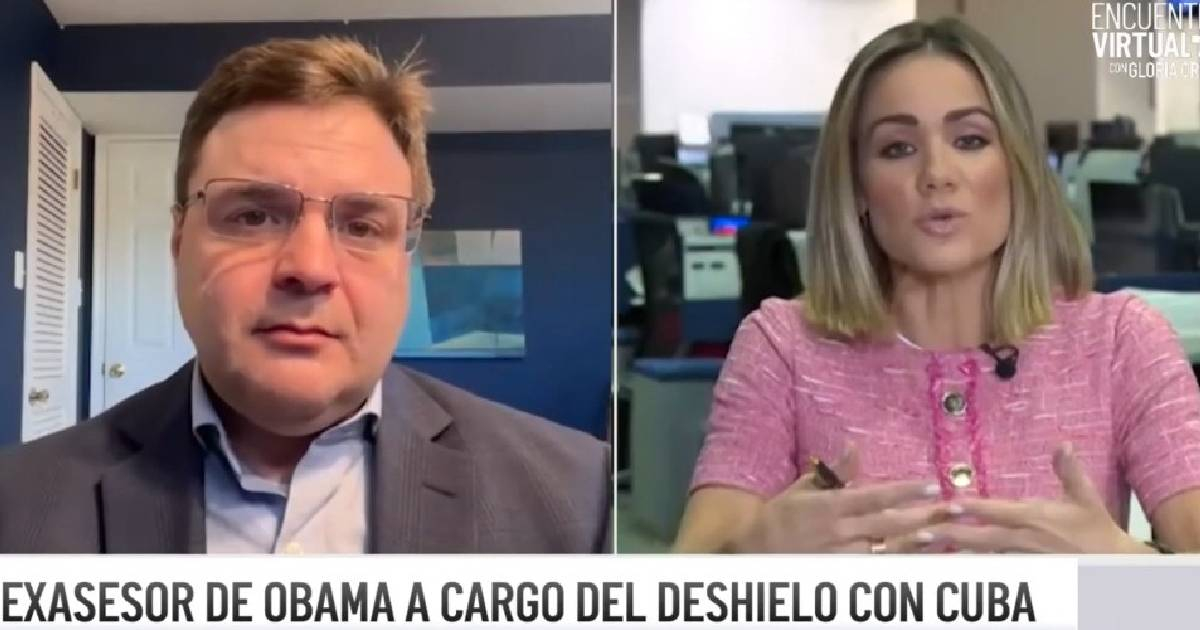
More than 10 years after the thaw, former advisor to President Barack Obama (2009-2017), Ricardo Zúñiga, stated this Saturday that there are no internal divisions in Cuba comparable to those in Venezuela that would allow for a negotiated exit of the regime.
In an interview with journalist Gloria Ordaz for the Virtual Encounter of Telemundo 51, Zúñiga stated that the current context of the island makes any negotiated transition from within the power structure difficult.
“There is no equivalent figure to a Delcy Rodríguez,” stated the direct participant in the secret negotiations for the thaw in relations with Cuba in 2014, referring to the role played by the Chavista leader and current interim president of Venezuela following the capture of Nicolás Maduro on January 3.
Zúñiga explained that, unlike Venezuela, in Cuba there remains a "hard core" that controls the security forces and the state apparatus, with no visible fractures that could be exploited in a political negotiation process.
That cohesion, he said, was one of the factors that frustrated the goals of the rapprochement driven by Obama, which was conceived as a long-term process aimed at improving the lives of citizens and healing a wound inherited from the Cold War.
The former official acknowledged that neither Havana nor the Trump administration took sustained steps to genuinely alleviate the situation of the Cuban population.
Ten years later, the result is a one-party dictatorship with a collapsed economy, increased political repression, and the largest migration exodus in its recent history, with more than a million and a half Cubans outside the country.
The statements come at a time when President Donald Trump has confirmed discreet contacts with Cuba, while media outlets like The Wall Street Journal reported recently that Washington is exploring a political exit before the year ends.
Zúñiga, however, emphasized that the Cuban scenario does not allow for a mechanical replication of the Venezuelan model.
This analysis contrasts with recent readings that identify Vice Prime Minister Oscar Pérez-Oliva Fraga as a possible interlocutor for a "phased" transition, considering his closeness to the military-family core of the Castro regime (great-nephew of Fidel and Raúl Castro) and his technocratic profile.
For Zúñiga, the lack of real fragmentation of power limits such bets and reinforces the idea that any change in Cuba will depend less on individual figures and more on a deeper collapse of the system.
Ten years after the thaw, concluded the former negotiator, the relationship between Washington and Havana has reached a critical point again, but with fewer hopes for internal reforms and a regime that continues to bet on resistance rather than transformation.
Filed under: