
Related videos:
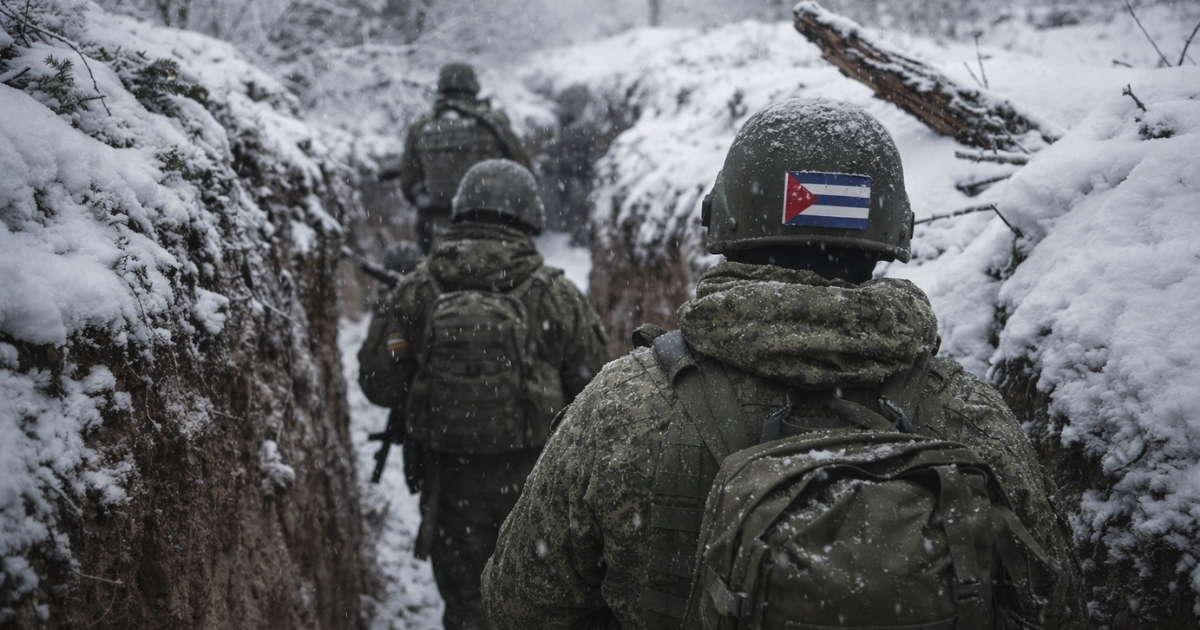
In the last two years, a complex web of recruitment of Cubans as mercenaries to bolster the ranks of the Russian army in the war in Ukraine has come to light. Below, we present a detailed timeline of the key milestones of this scandal—from the first reports in 2023 to the most recent revelations in 2025—based on journalistic sources and verified testimonies.
2023: Emergence of the scandal and initial response
In the summer of 2023, reports began to emerge that young Cubans were being recruited to fight in Ukraine under false promises of employment. A Russian official, Vladímir Shkunov—linked to the Russia-Cuba Friendship Society—was identified as a key recruiter who contacted Cubans, especially ex-military personnel, via social media. Shkunov managed the Facebook group "Russia for Cubans" and offered supposed jobs in construction with high salaries, which were actually military contracts. By the end of June 2023, he even attended official events in Moscow alongside Cuban Minister Álvaro López Miera, reflecting his close ties with the island’s leadership. These connections suggested a possible tacit consent: the Cuban ambassador to Russia, Julio Garmendía, stated at that time that the regime "did not oppose a legal participation" of Cuban citizens in Putin's "special military operation."
The scandal erupted in August 2023 when two young Cubans reported from Russia that they had been deceived: they left Cuba with contracts for construction jobs and ended up being recruited as soldiers. Their families confirmed that they had departed believing they were going for civilian work, never imagining they would end up on the front lines. This modus operandi—offering civilian employment to recruit them as mercenaries—was beginning to come to light.
On September 5, 2023, the Cuban government issued its first official statement, denying any connection to the sending of young individuals to the war and asserting that it was a human trafficking network operating from Russia. However, it acknowledged that the Ministry of the Interior had identified Cubans, both residents in Russia and those coming from the Island, among the recruits. Cuba promised to act "vigorously" against those involved.
Two days later, on September 7, the first arrests were announced: 17 individuals detained for their connection to the network. Some confessed to having enlisted voluntarily in exchange for residency and money. They were charged with human trafficking and mercenarism. Meanwhile, the independent press continued to reveal details pointing to the involvement of Cuban officials and the regime's tolerance of the phenomenon.
2024: Undercover Recruitment and Emerging Evidence
In 2024, the issue almost completely vanished from official media, but recruitment continued covertly. Dozens of young people continued to travel to Moscow with tourist or study visas, only to be sent later to military camps. The criminal investigation promised by Havana was never made public, which fueled suspicions of state complicity.
International investigations identified Yelena Smírnova, a Russian citizen linked to the FSB, as one of the main operators. Her network, based in the city of Ryazan, is said to have recruited over 3,000 foreigners—mostly Cubans—with promises of salaries of up to $2,000 per month and expedited Russian citizenship. Once in Russia, recruits were forced to sign military contracts in a language they did not understand, and their salaries were withheld. Smírnova was arrested in April 2024 for fraud, but the recruitment networks continued to operate under other intermediaries, including Cubans residing in Russia.
2025: International Confirmation and Diplomatic Consequences
In May 2025, the Ukrainian humanitarian project "I Want to Live" published a list of 1,028 Cubans recruited by the Russian army, confirming the magnitude of the phenomenon. In June, the U.S. Department of State labeled the recruitment as "state-sponsored human trafficking." According to their report, the regime allegedly facilitated the departure of citizens by issuing passports rapidly and omitting immigration controls.
In September, Ukrainian military intelligence (GUR) estimated that Russia had recruited at least 20,000 Cubans, turning the island into the primary source of foreign fighters serving Moscow. By October, the issue became a focal point of diplomatic tension among Cuba, Ukraine, and the United States. Washington accused Havana of actively cooperating with the Russian invasion, while the Cuban government strongly denied this. However, investigations by international media documented regular flights between Moscow and Varadero transporting groups of young men.
In November 2025, the Ukrainian Parliament revealed that it had identified the bodies of 39 Cubans who died in combat. Additionally, Ukraine was holding four Cubans captured alive as prisoners and expressed its willingness to consider their release if Cuba freed political prisoners. This humanitarian gesture highlighted the connection between the tragedy of mercenaries and the human rights situation on the Island.
By December 2025, the situation was dire: hundreds of recruited Cubans were abandoned by the Russian army, without payment or assistance. Many disappeared without a trace, and their families in Cuba live in silence and uncertainty. The majority of those recruited were young men, drawn in by the promise of a salary twenty times higher than what they would earn in Cuba, only to find themselves in a brutal war, lacking training or rights. Meanwhile, the Cuban regime remains silent in the face of a tragedy that showcases the desperation of its people and the complicity of those who should be protecting them.
Consulted sources
- CiberCuba
- CubaNet
- Reuters
- Radio Free Europe / Radio Liberty (RFE/RL)
- Ukrainian intelligence reports
- Official statements from the Cuban MINREX
- U.S. Department of State
Filed under: