
Related videos:
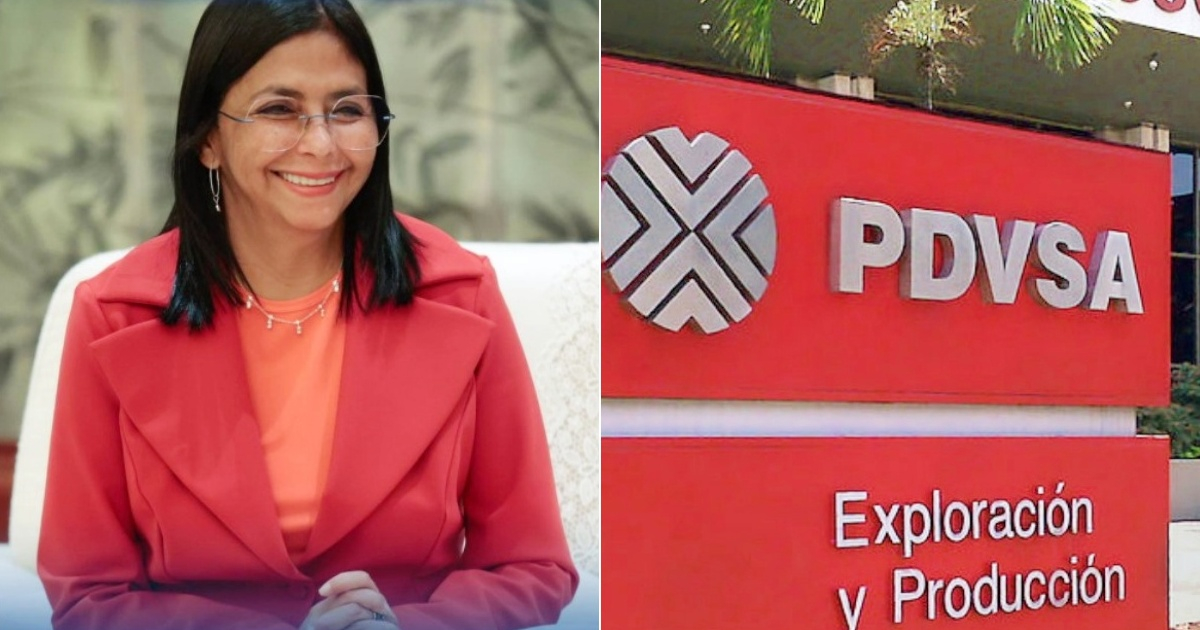
The acting president of Venezuela, Delcy Rodríguez, announced that the South American country plans to invest 1.4 billion dollars in the oil sector by 2026, a figure that significantly exceeds the nearly 900 million invested in 2025.
The announcement was made during a public consultation regarding the reform of the Organic Hydrocarbons Law, which is currently being debated in the National Assembly of the South American country.
"Last year, the investment was almost 900 million dollars, and for this year, an investment of 1.4 billion dollars is estimated and projected", Rodríguez stated during the meeting, which was broadcast by the state channel Venezolana de Televisión (VTV).
The investment projection is part of a new government drive for the country's energy development, through contractual mechanisms enabled by the controversial Anti-Blockade Law, approved in 2020 to circumvent international economic sanctions.
Productive contracts, joint ventures, and oil ambition
In his remarks, Rodríguez highlighted the central role that Productive Participation Contracts (CPP) play in the strategy for the recovery and expansion of the sector, viewing them as an effective means to strengthen production and attract capital.
Currently, Venezuela has 29 active productive participation contracts, coexisting with models such as mixed companies and technical-financial alliances.
Although he did not elaborate on the technical details of these mechanisms, he emphasized that they all form part of a legal and economic framework aimed at circumventing sanctions and revitalizing the country's main industry.
“We need to move from being the country with the largest oil reserves on the planet to being a giant producer (...). It's time to stop holding the title of having the biggest reserves without that translating into development for Venezuela,” Rodríguez stated, appealing for a more pragmatic vision of Venezuela's oil wealth.
Oil reform in progress: Between consultations, expectations, and urgencies
The proposed reform to the Organic Hydrocarbons Law, which has already been approved in the first discussion by the Venezuelan Parliament, must now undergo a second round of voting, article by article.
In that process, changes may be made to the final text.
As part of the public consultations, Rodríguez participated in a meeting with workers from the Puerto La Cruz refinery in the Anzoátegui state.
Also present was his brother, Jorge Rodríguez, president of the National Assembly, who led a similar consultation with other sectors the previous Saturday.
The oil reform takes place in a context of intense political movements, both domestic and international.
The capture of Nicolás Maduro and Cilia Flores in Caracas on January 3 has reconfigured relations with the United States, where the Trump administration has openly expressed its interest in controlling the fate of Venezuelan oil.
Chevron and the Return of Energy Giants
One of the key moments of the event was the participation of Mariano Vela, representative of the American company Chevron in Venezuela.
Vela expressed the company's commitment to the country and its willingness to collaborate in the new phase of reforms and energy revitalization.
"We are ready to continue contributing our experience in managing operations through technological innovation, hard work, and the goal of creating a more competitive oil and gas sector," the executive stated.
Chevron, with a century-long presence in Venezuela, has historically been a key player in the development of the national industry.
Despite the sanctions in recent years, the company has managed to maintain limited operations, and its new position could pave the way for greater flexibility in commercial and technical relations with Washington, if the reform process solidifies.
Vela also thanked the work of the Energy and Oil Commission of Parliament, responsible for coordinating consultations and evaluating proposals for the legal reform.
The executive emphasized that the company will maintain its focus on the safety of personnel and the integrity of the assets it has managed for decades.
"Our focus remains on the safety of our people; that does not change, and on the integrity of the assets we have managed for so long," he emphasized.
Perspectives and Challenges: Between Sanctions and Reforms
The investment announced by Delcy Rodríguez represents a significant leap compared to the previous year and an attempt to restore dynamism to the Venezuelan oil industry, which over the last decade has faced a structural crisis exacerbated by institutional collapse, corruption, and foreign sanctions.
The success of this new plan will depend, among other factors, on the legal security, the effective implementation of legal reforms, and the ability of the Venezuelan state to create conditions of trust for both domestic and foreign investors.
The evolution of relations with the United States and other strategic players will also be key.
If the oil reform manages to overcome the political and technical challenges it faces, and if the projected investment materializes, Venezuela could begin a slow but steady recovery of its productive capacity, turning its natural wealth into a lever for development.
Filed under: