
Related videos:
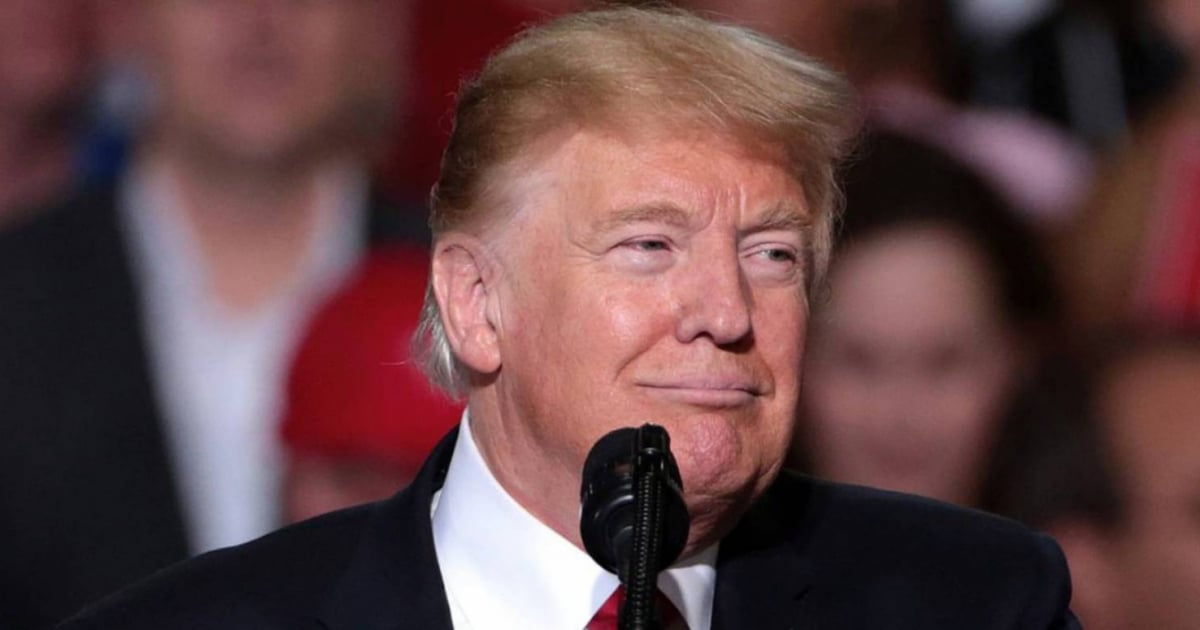
Social media has been flooded with messages following the signing of the new executive order by the President of the United States, Donald Trump, which expands the national emergency regarding Cuba and paves the way for imposing tariff sanctions on countries that supply oil to the island.
Although the emergency declaration is not new—it is a continuation of the decree issued in 1996 following the downing of two civilian planes and renewed each year by various presidents—the new text introduces a mechanism that allows for sanctions against third countries to restrict energy supplies to the Cuban regime.
The White House asserts that Cuba maintains ties with Russia, China, Iran, Hezbollah, and Hamas, and hosts "the largest Russian intelligence facility abroad." According to Washington, the regime "spreads its communist policies throughout the region" and poses a threat to hemispheric stability.
“Tic tac” and “real lockdown”: social media explodes
The official pages of the regime, such as Cubadebate, were filled with openly critical or sarcastic comments after the measure. "Negotiate now, because just look what happened with Maduro," wrote one user. Another responded, "It's coming soon," and someone else commented, "Well, the time is approaching."
The ironic tone was predominant. “Cubadebate isn’t sleeping today. And neither is Canelo,” wrote another. “The law of attraction, they called for the blockade so much that it was granted to them,” read a comment with dozens of reactions.
The expression "tic tac" was repeated in various conversation threads, alongside phrases like "The giveaway is over," "Time to cry to maternity and walk," "Now they really have a blockade," and "Finally."
Other comments were more direct: "Take away everything you have stolen, leave the island, and let democracy start from scratch"; "The Castro cartel, that is the biggest threat to the United States"; "Let go of power already, Cubans want dignity and freedom, leave now."
A group of users recalled the internal situation of the island: “There’s no evil that lasts 100 years; I believe Willy will sing at the malecón very soon”; “So much talk about the blockade that doesn’t exist, in the end, they’ve finally been appeased”; “They’ve spent their lives asking for a blockade. Now they get it and start crying.”
There were also those who criticized the U.S. government. “Another news story on the table, claiming that Cuba is a threat to the U.S. government, how audacious,” commented a woman. Another wrote: “Cuba is not a danger to any country. The only one that is a threat to the entire world and to the U.S. itself is Trump.”
Amid the discussions, some messages focused on the need for dialogue: “I think it's time for the Cuban government to sit down and negotiate with the Americans. Everything except sovereignty is negotiable. In the end, there's been neither revolution nor socialism here for a long time.”
"Already on its way" and "the night will not be eternal."
In the same threads, others celebrated the measure with festive phrases: “Willy Chirino, play that song that goes like this...”, “Here it comes, oh oh oh”, “The night will not be eternal”, “The Cuban people have already lost their fear.”
Critical messages directed at the government mixed with calls for an end to repression and a change of system. "The shamelessness of the PCC is over," wrote one. Another commented, "Their time is running out, and they know it."
A user summed up the feelings of many: “They are scared, and they have every reason to be. The Castro-communist regime is very brave when repressing an unarmed people, but now they don’t look so brave.”
There were also those who mocked the official speech: "The blockade is now real, not your invention"; "See you tomorrow in the stands," quipped another.
The posts on CiberCuba Noticias also received thousands of comments, most celebrating the pressure on the regime, although some expressed concern about the impact on the population. “Things have to get really bad before they can get better,” wrote one user. Another urged caution: “Let everything be resolved without war, like it was in Venezuela.”
"Cuba a threat to the United States, in what way? If Cuba is nothing but misery and hunger," wrote another. Among the most shared phrases were "End the dictatorship. Long live a free Cuba" and "Cuba urgently needs freedom and annexation to the United States, with a democratic Cuban government."
Others expressed skepticism: "National emergency and Cuba is to blame, that's the liberator of Cuba," wrote an internet user. "What ignorance, how can Cuba be a threat? They should stop being so stupid as to believe those rumors," responded another.
A survey on the CiberCuba Noticias Facebook page, for its part, showed a clear divide: 67 percent of voters opposed suspending flights and remittances, while 33 percent supported "cutting everything that keeps the dictatorship alive." The result illustrates a general consensus against the regime, but also a widespread concern about the potential impact of these measures on the population.
The response of the Cuban government
Chancellor Bruno Rodríguez described the decision as a "brutal act of aggression" and accused Washington of "blackmail and coercion" against other governments. "We condemn in the strongest terms the new escalation of #US against #Cuba. Now they intend to impose a total blockade on the supply of fuel to our country," he wrote on platform X.
Rodríguez stated that "the only threat to the peace, security, and stability of the region is the one posed by the United States government against the nations and peoples of Our America," according to the official response of the Cuban regime.
The Cuban-American congressman Carlos Giménez responded directly: “Bruno, you still have time to return to your homeland of Mexico. What President Trump is doing is no game. He keeps his word. You have little time left. This is until the end.”
A scenario of maximum tension
The executive order expands the powers of the U.S. government under the National Emergencies Act and the International Emergency Economic Powers Act. It empowers the Department of Commerce and the Department of State to identify the countries that continue to supply oil to Cuba and determine the potential imposition of tariffs.
The document keeps open the possibility of modifying the measures if Havana takes "significant" steps to align with the national security and foreign policy interests of the United States.
The measure adds to the restrictions already imposed in recent years, aimed at increasing pressure on the regime and accelerating political change.
Amid power outages, fuel shortages, and a deep economic crisis, social media has become a barometer of social discontent. In recent days, Cubans have spoken openly. One message encapsulates it with a straightforward phrase: “They should get ready, because the Cuban people have already lost their fear.”
Filed under: