
Related videos:
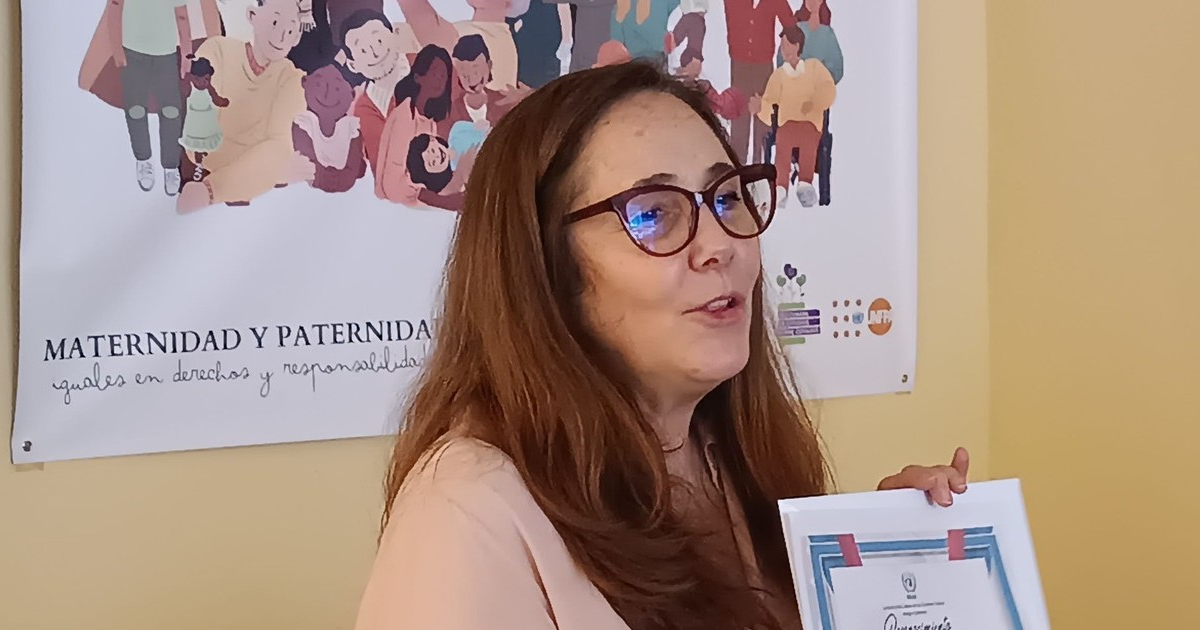
Mariela Castro, director of the National Center for Sex Education (CENESEX) and a political figure closely linked to power in Cuba, stated in an interview that there is "no possibility of negotiation" with the United States, echoing one of the historical slogans of Castroism.
The official, daughter of General Raúl Castro, reiterated her defense of the discourse of permanent confrontation that has characterized the relationship between Havana and Washington for over six decades.
In statements to Resumen Latinoamericano, Mariela Castro explained that the Cuban government is actively maintaining a "defense strategy" based on the so-called "doctrine of total people's war."
According to him, this strategy is revitalizing tasks aimed at the entire population, so that "everyone knows what to do in the face of different types of aggression," with an emphasis on the use of new technologies by the U.S. military.
Castro stated that Cuba is not an aggressor country, but rather one that prepares to defend itself while also "supporting other peoples in their defense."
His speech reflects the logic of a besieged square that the regime has used for decades to justify the militarization of society, political control, and the absence of civil liberties, while the country faces an unprecedented economic, social, and migratory crisis.
The official insisted that, following Fidel Castro's ideological line, "principles are not negotiable," and that with what she describes as "imperialism and all its facets," there is no room for negotiation, only for dialogue.
For Mariela, the sovereignty of nations is a non-negotiable concept, which in practice has served as an argument to close off any avenue for real understanding that involves internal reforms or political changes in Cuba.
In his statements, he also lashed out at the current U.S. president, whom he accused of wanting to seize wealth such as Venezuelan oil.
In the case of Cuba, she stated, Washington's main interest would be to "dismantle the example" of a country that, according to her, has resisted the "empire" for 67 years.
"They have done everything, as Trump himself said, and they have not been able to destroy this revolution. And the people, with more aggressions, become more united; the defensive capacity of our people and our ability to respond are strengthened," he stated.
Castro reiterated another of the usual slogans of the official discourse: that the more external pressures the country faces, the stronger the unity of the people and their defensive capacity become.
However, that narrative ignores that this supposed "unity" is sustained by the repression of dissent, the lack of free elections, and the absolute control of power by a political and military elite that has been governing for decades without accountability.
His intervention not only reflects the continuity of the more rigid thinking of Castroism but also the disconnect between official discourse and the daily reality of Cubans, who today face shortages, blackouts, inflation, mass emigration, and a collapse of public services.
While millions of citizens seek practical solutions to their daily crisis, the powers that be continue to rely on ideological slogans that fail to provide concrete answers to the country’s problems.
In line with the MINREX
Mariela's statements align with those of Deputy Foreign Minister Carlos Fernández de Cossío, who stated that the Cuban government is not currently in dialogue with the United States, although he showed willingness to engage in one if certain criteria are met.
The statements were made on Monday to AP, amid the rising tension between both countries, and the assertion from Donald Trump regarding the proximity to an agreement with the Cuban regime.
Fernández de Cossío stated that there is no "dialogue table" with Washington and clarified that, for now, there is no discussion of a formal negotiation.
"We are open to dialogue. If we can have a dialogue, perhaps that will lead to negotiation," the official stated.
The diplomat stated that Cuba is ready to engage in an "informal dialogue" aimed at ensuring a respectful and serious coexistence, despite the differences between both governments.
However, he emphasized that there are matters that are not under discussion for Havana, such as the Constitution, the economy, and the socialist system.
"But there are many other topics that we can discuss," he added.
What does Trump say?
The vice chancellor's statements came just days after the U.S. leader said his administration had started talking to Cuban leaders, after threatening to impose tariffs on countries supplying oil to the Island.
Trump described Cuba as "a failed nation" and stated that the country "no longer receives money from Venezuela or anywhere else."
"I would like to take care of the people who came from Cuba, those who fled on rafts across shark-infested waters. Many would like to return, at least to visit their relatives. And I believe we are very close to achieving that. We are dealing directly with the leaders of Cuba right now," he added.
His words confirm that there are active contacts with Havana, although the White House has not disclosed details about the possible content or terms of the negotiation.
Trump had already indicated on Sunday his willingness to reach a "deal with Cuba" that benefits both the Cuban people and Americans, but he clarified that any rapprochement would be made "from a position of strength."
"Cuba is a nation in crisis, without oil or money. We want to help the Cuban people, not the regime," he said.
Filed under: