
Related videos:
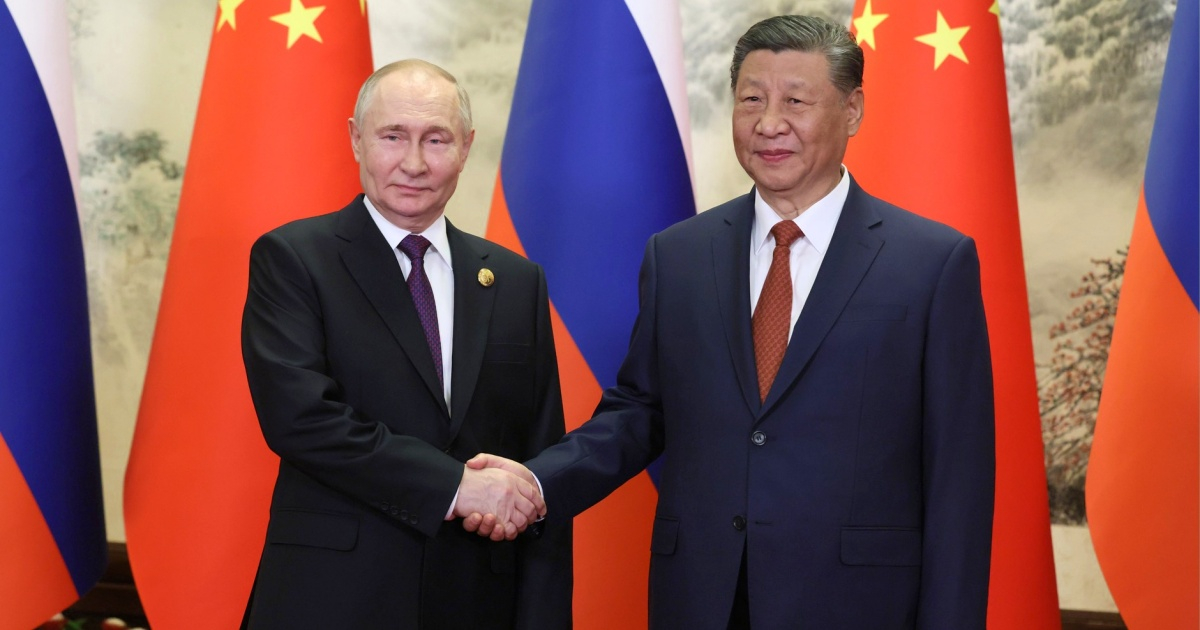
In a strong show of support for their allies in Latin America, the presidents of Russia and China, Vladimir Putin and Xi Jinping, stated in recent hours that they will continue cooperation with Cuba and Venezuela, despite increasing pressures from the United States government.
This was stated during a high-level videoconference held on Wednesday, where they also discussed the international situation, with emphasis on Iran, and the strategic role of their alliance in the current world.
Rejection of U.S. pressures and explicit support for Caracas and Havana
During the meeting, both leaders discussed the situation regarding Venezuela and Cuba, agreeing that it is essential to maintain the level of cooperation achieved with both nations, despite the sanctions and threats coming from Washington.
According to Russian presidential advisor Yuri Ushakov, in statements reported by EFE, the leaders shared their views on the situation regarding Venezuela and Cuba. They expressed their support for maintaining the level of cooperation with Caracas and Havana achieved by both countries.
For decades, Cuba and Venezuela have been subjected to economic sanctions, diplomatic pressures, and even military threats from the United States.
The Russian president was emphatic in stating that “the alliance in foreign policy between Moscow and Beijing remains an important stabilizing factor in a context of increasing turmoil in the world”.
For his part, Xi Jinping stated that "the international situation has become increasingly turbulent," and that "China and Russia must work together to maintain global strategic stability."
Tensions have recently escalated under the administration of Donald Trump, especially following the military incursion in Caracas on January 3rd that culminated in the capture of Nicolás Maduro and his wife, Cilia Flores.
Condemns the unilateral actions of Washington
Putin and Xi not only reaffirmed their commitment to Havana and Caracas but also condemned the unilateral actions of the United States.
During the dialogue, Putin emphasized that “the strategic cooperation between Russia and China serves the fundamental interests of our peoples and contributes to international stability,” as revealed by the network Telesur.
In the case of Cuba, the leaders condemned Trump’s new measures, including the executive order from January 29 that prohibits the sale or supply of oil to the island, a measure described as a hostile act by the Cuban government.
An expanding geopolitical axis
Against the backdrop of the situation in Latin America, the message from Xi and Putin was clear: neither Venezuela nor Cuba will remain isolated as long as Moscow and Beijing maintain their support.
In the words of advisor Ushakov, both leaders reiterated "their willingness to continue working as great powers for a more balanced international order."
In a world characterized by confrontation between blocs, the Russia-China axis solidifies its influence with a message of sovereignty, multilateralism, and strategic cooperation.
For Cuba and Venezuela, this support today translates into a network of assistance against the pressures from Washington and an effort to curb the economic and diplomatic isolation imposed by the White House.
Strategic alliance and multipolarity
During the videoconference, Putin and Xi emphasized that this year marks the 25th anniversary of the Treaty of Good-Neighborliness, Friendship, and Cooperation, which is the legal foundation of their bilateral relationship.
Both reaffirmed that their partnership is "strategic, stable, and structural," and announced the development of a new comprehensive cooperation plan.
“It is time to strengthen strategic cooperation and move forward together in the right direction of bilateral development,” stated Xi Jinping, as quoted by Telesur.
The Chinese leader also urged to "assume joint responsibilities as major powers in building a more balanced international order."
Putin, for his part, described the alliance with China as an "exemplary model of cooperation between great powers," and emphasized the importance of coordination in multilateral forums such as the UN, BRICS, and the Shanghai Cooperation Organization.
Economic, educational, and cultural dimension of the Russian-Chinese relationship
In addition to the political component, Putin emphasized that bilateral trade has exceeded 200 billion dollars for the third consecutive year, with joint projects in key areas such as peaceful nuclear energy, aerospace industry, artificial intelligence, high technology, and scientific research.
Russia continues to be China's main energy supplier, thanks to the Power of Siberia pipeline, and agreements have been signed to increase the annual supply of natural gas to 44 billion cubic meters.
A growth in agricultural trade of over 20% was also reported in the last year.
Putin detailed that in 2025 more than 400 binational cultural activities were held, and that currently over 56,000 Chinese students are studying in Russia, while more than 21,000 young Russians are studying at Chinese universities.
The president expressed gratitude for the implementation of the reciprocal visa exemption regime, which allows stays of up to 30 days for tourism, business, and academic activities.
Filed under: