
Related videos:
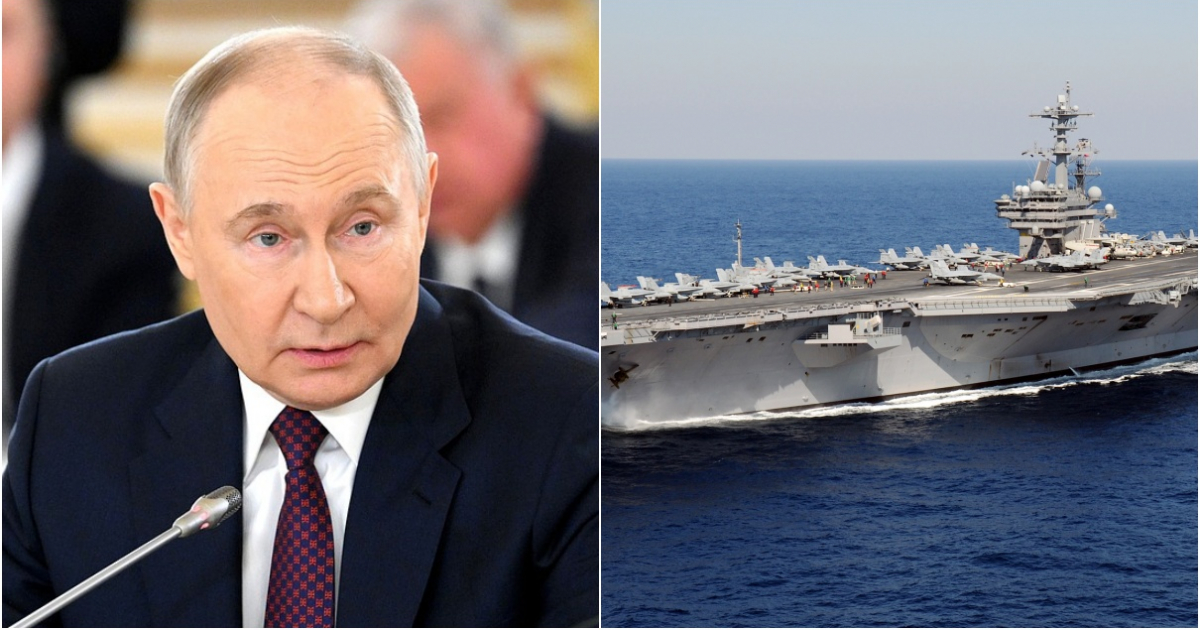
The Russian government has described as "alarming" the information circulating in U.S. media regarding an alleged plan by the Donald Trump administration to impose a total naval blockade on Cuba, as part of a strategy to force a political change on the island.
Moscow, a traditional ally of the Cuban regime, has responded firmly to this possibility, reaffirming its commitment to Havana amid a regional escalation that includes the recent U.S. military operation against Venezuela.
"It is alarming information."
Dmitri Peskov, the Russian presidential spokesman, warned this Sunday that the Kremlin is closely monitoring reports about a potential blockade maneuver by Washington.
“We have read a lot of information regarding this matter. It is alarming information,” Peskov stated to the local press, as reported by the agencies EFE and Interfax.
The spokesperson emphasized that Russia is not indifferent to Cuba's stance regarding a potential U.S. offensive.
“We know that our Cuban comrades are fully committed to defending their interests, defending their independence,” he stated.
Moreover, it reiterated the strategic value that Moscow places on its ties with the government of Miguel Díaz-Canel.
“We also highly value our bilateral relations with Cuba”, Peskov concluded.
Post-Maduro scenario and energy threat
Peskov's statements come at a time of heightened tension following the overthrow of Venezuelan leader Nicolás Maduro by U.S. forces, who carried out a military operation on January 3rd.
United States, according to reports from Politico and The Wall Street Journal, is considering repeating the formula in Cuba: energy pressure, maritime blockade, and direct negotiations with sectors of the Cuban government.
On social media, Trump himself threatened Havana with cutting off all oil supplies, which could escalate into a naval blockade.
"I strongly urge you to reach an agreement before it's too late (...). There will be no more oil or money for Cuba. Zero!" warned the U.S. president after Maduro's capture was finalized.
U.S. media have described this new plan as an extension of the offensive in Venezuela, where, in addition to military deployment, a no-fly zone and an oil embargo were imposed.
The goal in Cuba would be to apply pressure until some members of the Executive seek an agreement with Washington that leads to a political transition.
Moscow strengthens its support for Havana
Russian support for Cuba is not limited to statements. In March 2025, both countries signed a military cooperation agreement, further strengthening their bilateral alliance.
Last week, the Russian Interior Minister, Vladímir Kolokóltsev, visited Havana and met with Raúl Castro.
In that context, he strongly condemned the U.S. intervention in Venezuela, describing it as a "military aggression."
Kolokóltsev also expressed his condolences to the families of the victims: “We extend our sympathies to the relatives and loved ones of the agents of the Ministry of Interior and the Revolutionary Armed Forces who lost their lives during these tragic events.”
For his part, Russian President Vladimir Putin has expressed his solidarity with the island.
"Moscow stands in solidarity with the determination to defend its sovereignty and independence," he recently stated from the Kremlin, although he avoided direct criticism of Trump over Maduro's downfall.
A strategic alliance under pressure
Russia is currently one of Cuba's main trade and strategic partners.
The possibility of a U.S. naval blockade rekindles the ghosts of the Cold War, when the Caribbean island was the epicenter of one of the greatest international crises of the 20th century.
Today, although the context has changed, the threat of direct intervention in Cuba again places the country at the center of tensions between major powers.
Moscow, which has increased its diplomatic and military presence in Latin America in recent years, views with concern any attempts by Washington to redefine the regional geopolitical landscape through force.
The stance expressed by Peskov reinforces the message that Russia will not remain indifferent to a possible escalation against Havana.
Filed under: