
Related videos:
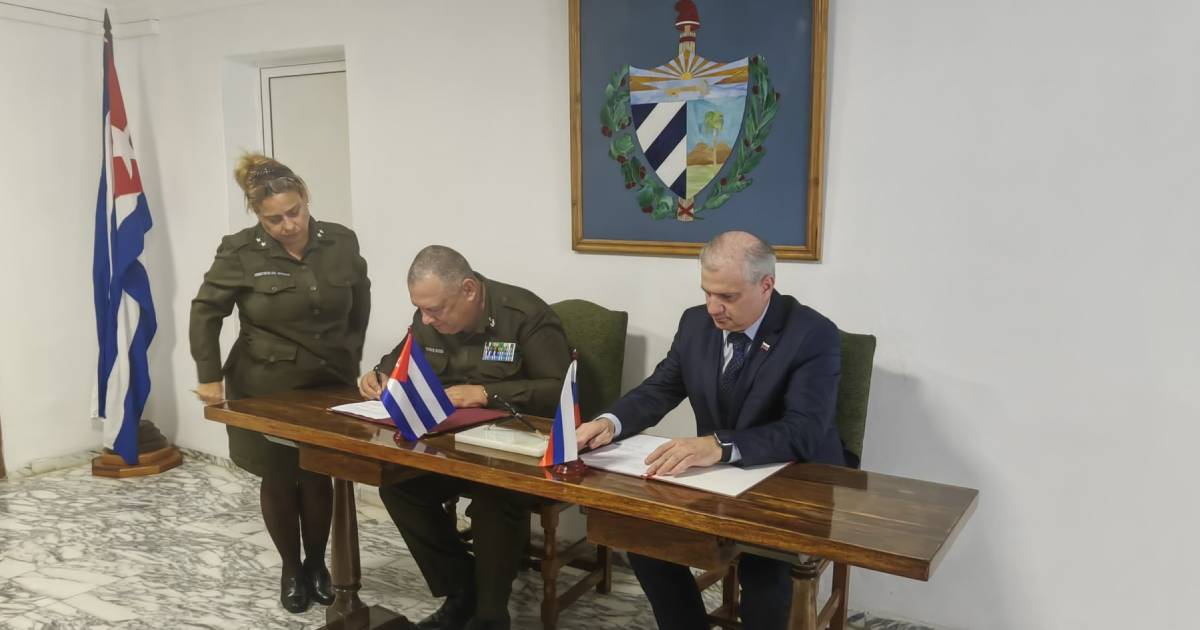
Cuba and Russia signed a cooperation agreement in the penitentiary sector for the period 2026-2028, at a time marked by increasing pressure from the United States on the island and the explicit support of the Kremlin for the Cuban regime against any scenario of internal breakdown.
The work program was signed in Havana following the visit of a delegation from the Federal Penitentiary and Correctional Service of Russia, led by its Deputy Director, Andrei Kochukov. The event was attended by the Russian ambassador to Cuba, Víctor Koronelli, and representatives from the Cuban Ministry of the Interior.
According to reported by the Russian Embassy in Cuba, the agreement was finalized after several rounds of discussions between both parties, focusing on the exchange of experiences in the management of prison systems and the strengthening of institutional cooperation.
Although presented as a technical understanding, the announcement arrives in a politically charged context filled with symbolism. In recent days, Moscow made it clear that it will not allow a scenario similar to that of Venezuela to unfold in Cuba, where, according to the Kremlin, an "internal betrayal" facilitated the capture of Nicolás Maduro through an operation authorized by the U.S. president, Donald Trump.
"That little number won't work in Cuba," stated Russian Ambassador Vasili Nebenzia from the United Nations, asserting that there are no fissures within the power structure on the island or high officials willing to collaborate with Washington.
The statements coincide with new sanctions from the Trump Administration, which declared a national emergency, considering the Cuban regime an "unusual and extraordinary" threat to the security of the United States, and pointed to its alignment with hostile countries and actors, including Russia.
In that context, penitentiary cooperation takes on a meaning that goes beyond the administrative. For thousands of Cuban families, both on the island and abroad, the prison system is not a diplomatic abstraction, but a reality marked by reports of overcrowding, lack of medical attention, and punishment of political prisoners, including protesters from the 11J demonstrations.
As Moscow reinforces its political and diplomatic support for Havana—albeit with recognized limitations in the economic sphere—the prison agreement adds to a series of gestures that strengthen the alliance between the two governments in sensitive areas such as security and internal control.
Filed under: