
Related videos:
The United States issued an urgent warning to all its citizens in Iran to leave the country "now" or, if that is not possible, to seek safe shelter within their homes and prepare an exit plan that does not rely on assistance from the U.S. government.
The message was shared on X by the U.S. virtual embassy in Iran, as Washington has not maintained a physical diplomatic presence in Tehran since the break in relations in 1980.
In its statement, the embassy indicated that the security situation has deteriorated rapidly.
"Security measures are being intensified, roads are being closed, public transportation is being interrupted, and the Internet is being blocked," he warned.
It was also noted that the Iranian government continues to restrict access to mobile and fixed networks, as well as to the national connection, while airlines limit or cancel flights to and from the country.
In this context, the United States advises its nationals to anticipate ongoing internet outages, plan alternative communication methods, and, if it is safe to do so, consider leaving Iran by land to Armenia or Turkey.
The embassy emphasized that flight cancellations and interruptions may occur with little notice, complicating any attempts at aerial evacuation.
For those who cannot leave immediately, the message is clear: they should find a safe place within their residence or another building and have supplies of food, water, medication, and essential items.
Additionally, the U.S. government insists that all its citizens have a plan to leave Iran that does not rely on U.S. assistance, due to operational limitations on the ground.
The statement includes a special section for individuals with dual U.S. and Iranian nationality. They are advised to use their Iranian documents, as presenting a U.S. passport or demonstrating ties to the United States could be sufficient grounds for Iranian authorities to detain someone.
The embassy also provides information about the border crossings that remain open and through which Americans can attempt to leave the country.
The warning comes at a time of heightened tension between Washington and Tehran.
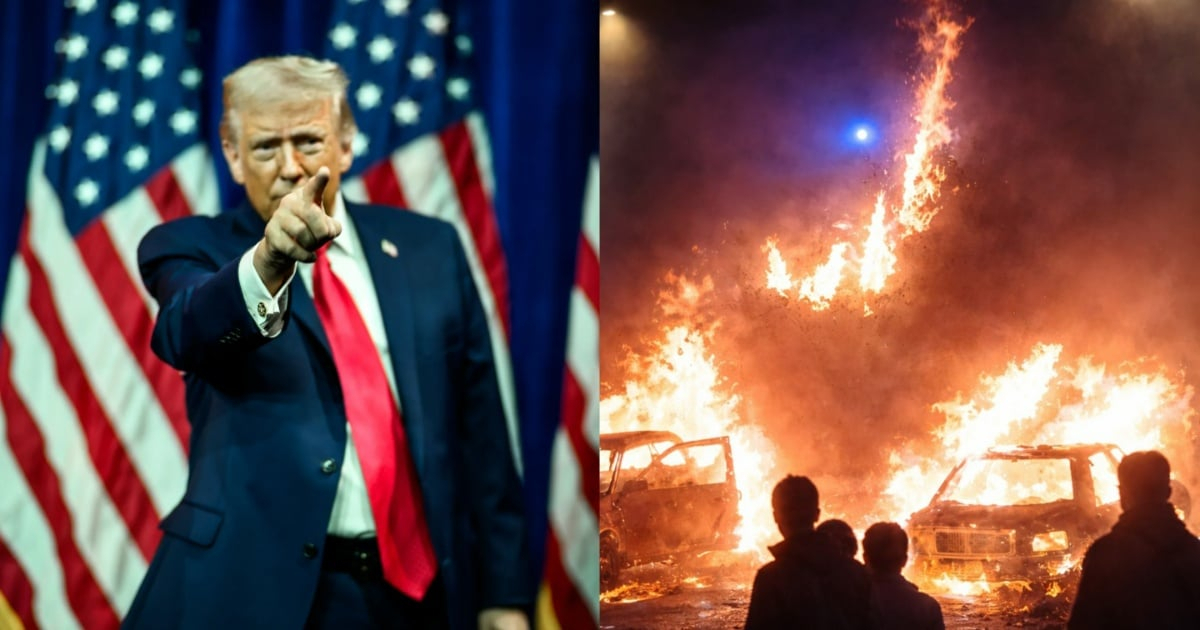
President Donald Trump has threatened on several occasions to attack Iran if it continues to suppress protests against the regime.
At the same time, negotiations between both countries began in Oman this Friday, marking the first meetings between senior Iranian and American officials since the 12-day war between Iran and Israel, during which the U.S. participated by bombing Iranian nuclear facilities.
The conversations are taking place under the shadow of a possible military intervention. Trump has deployed the aircraft carrier USS Abraham Lincoln and its strike group—consisting of three guided missile destroyers—near Iranian waters in the Persian Gulf.
Trump has reiterated that he is willing to use force if Tehran does not change its behavior, both domestically and regarding its nuclear activities.
Alongside these diplomatic and military maneuvers, Iran's internal situation continues to be marked by a deep social crisis.
Washington has pressured the regime over the repression of protesters and has stated that, thanks to its intervention, hundreds of recent executions may have been prevented.
In mid-January, Trump warned that the United States would act "very vigorously" if Iranian authorities carried out hangings against those who were protesting.
The protests began in December as expressions of desperation in the face of a severe economic crisis, with a currency in free fall, relentless inflation, and increasingly harsh living conditions.
As the weeks went by, they transformed into a massive demand against the political system that has governed Iran for decades.
Amid the information blackout caused by internet outages, testimonies and videos circulated describing lines of body bags and thousands of fatalities.
Sources cited by CBS News feared that the death toll could be at least 12,000 and possibly exceed 20,000.
Trump publicly expressed his support for the Iranian citizens who are taking to the streets and stated that there is "a lot of help on the way," including economic assistance.
He also announced that he had canceled all meetings with Iranian officials until the violence against the population stopped. "We don't want to see what is happening in Iran, and when thousands of people are being killed... we'll see how it goes for them. It's not going to end well," he stated.
Days later, the U.S. government imposed new sanctions against Iranian officials and entities linked to the regime.
The State Department and the Treasury designated the Fardis prison, noted for serious abuses against women, as part of the measures, and sanctioned high-ranking security officials for their role in the repression.
At the end of January, Trump went even further by announcing on Truth Social that "a massive armada" is heading toward Iran and that "time is running out" for Tehran to agree to a new nuclear deal.
According to the president, the deployment, led by the USS Abraham Lincoln, is larger than the one sent to Venezuela weeks ago.
Sources from the Pentagon cited by AP News and The Guardian indicated that the fleet is conducting military exercises in the Middle East and has deployed fighter jets, destroyers, and support units in the Persian Gulf and the Arabian Sea, in an operation called Iron Resolve.
Trump recalled the U.S. attacks from last June against Iranian nuclear facilities and warned that a new offensive would be "much worse" if the regime does not agree to a "fair deal without nuclear weapons."
"She is ready, willing, and capable of carrying out her mission swiftly and violently if necessary," he wrote.
In this context of diplomatic pressure, sanctions, military threats, and internal repression, the warning issued by the U.S. Embassy to its citizens reflects the seriousness of the moment.
Washington not only fears for the safety of Americans in Iran, but also assumes that the situation could deteriorate rapidly and unpredictably.
Filed under: